Introduction
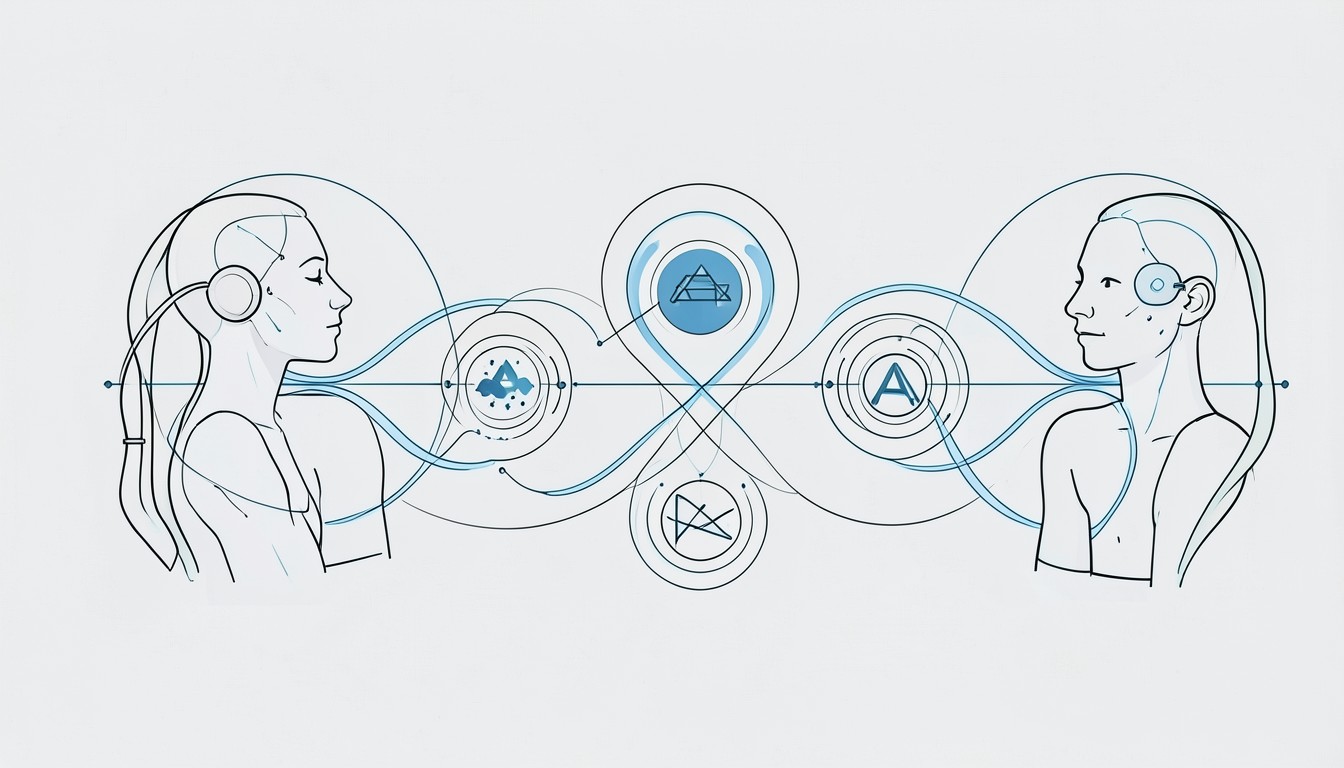
Humans and artificial intelligence (AI) both utilize two distinct but interconnected learning systems: in-context learning and incremental learning. In-context learning refers to the ability to adapt quickly to new tasks or contexts without extensive prior training, while incremental learning involves gradual improvement through repeated exposure and practice. This article explores the parallels between these learning mechanisms in humans and AI, examining their respective trade-offs and implications for the development of trustworthy AI systems.
The research, conducted by Jake Russin and colleagues at Brown University, along with Michael Frank and Ellie Pavlick, and published in the Proceedings of the National Academy of Sciences (PNAS), provides compelling evidence that humans and AI share a similar interplay between these two learning systems. The study involved meta-learning AI models through 12,000 tasks, which enabled them to demonstrate in-context learning capabilities similar to those observed in humans.
In-Context Learning in Humans
In-context learning in humans is characterized by the ability to rapidly adapt to new tasks or environments based on immediate context. For instance, a person can learn to solve a novel puzzle after being shown just a few examples, leveraging their existing knowledge and cognitive flexibility. This form of learning is closely tied to working memory and fluid intelligence, enabling quick problem-solving in novel environments.
Research by Jake Russin and colleagues has demonstrated that humans can engage in in-context learning through subtle cues and contextual patterns. This ability is crucial for everyday tasks, such as navigating new environments or understanding nuanced social interactions. For example, a person can quickly learn to use a new tool or adapt to a different social setting by observing and processing contextual information.
In-Context Learning in AI
In AI, particularly in large language models (LLMs), in-context learning is a key feature. LLMs can perform tasks without explicit fine-tuning by leveraging examples provided in the input prompt. This few-shot learning capability allows AI to adapt to new tasks with minimal additional training, mirroring human in-context learning to some extent.
For instance, an LLM can be given a few examples of a task in the prompt and then apply that pattern to new inputs. This flexibility is a significant advantage, enabling AI to handle diverse tasks without the need for retraining. However, this flexibility comes at the cost of potential instability or inconsistency when the context changes, as the model may not generalize well beyond the provided examples.
Incremental Learning in Humans
Incremental learning, on the other hand, involves gradual improvement through repeated exposure and practice. Humans build knowledge over time, refining their understanding through experience. This process is closely linked to long-term memory and consolidation, where repeated exposure strengthens neural connections.
For example, a person learning a new language will gradually improve their vocabulary and grammar through consistent practice and exposure. This incremental approach allows for deep, durable learning but may be slower than in-context learning. The trade-off between speed and durability is a fundamental aspect of human learning.
Incremental Learning in AI
AI systems also engage in incremental learning through training on large datasets. Machine learning models are typically trained on extensive data over multiple epochs, allowing them to gradually improve their performance. This process is analogous to human incremental learning, where repeated exposure leads to better performance.
However, AI systems often require substantial computational resources and time to achieve significant improvements through incremental learning. Moreover, the trade-off between flexibility (in-context learning) and retention (incremental learning) is evident: while in-context learning allows for quick adaptation, it may not lead to long-term retention, whereas incremental learning ensures durability but requires more time and data.
Trade-offs Between Flexibility and Retention
The interplay between in-context and incremental learning reveals a fundamental trade-off in both humans and AI. In-context learning offers flexibility and rapid adaptation but may lack the stability and retention of incremental learning. Conversely, incremental learning provides robustness and long-term retention but may be slower to adapt to new situations.
This trade-off is mirrored in human cognition, where working memory (short-term, flexible) and long-term memory (stable, retention-focused) work together. Similarly, AI systems must balance the ability to quickly adapt to new tasks (via in-context learning) with the need to retain knowledge over time (via incremental learning).
Implications for AI Development
Understanding these learning dynamics has important implications for developing AI systems that are both flexible and reliable. For instance, in sensitive domains like mental health, AI assistants need to be able to adapt to individual user needs (in-context learning) while also maintaining consistent, evidence-based recommendations (incremental learning).
The research suggests that future AI systems could benefit from hybrid approaches that combine the strengths of both learning mechanisms. By integrating in-context learning for rapid adaptation and incremental learning for long-term stability, AI can become more trustworthy and effective in complex, real-world scenarios.