

SEOs all know how important reviews are as a local SEO ranking factor and decision maker for users. But how many SEOs are actually using the review content to help with their roadmapping and content updates?
Reviews are typically looked at as a reputation task, and the focus is on the quantitative data — number of reviews, star rating, review velocity. The work that's done with reviews is more reactive: make sure reviews are responded to, notice when reviews are missing, figure out what happened there. While all of that is important, SEOs often forget they are sitting on a goldmine of information that comes directly from users: the review text.
Reviews are where customers who felt very strongly one way or another left their feedback and experience out for the business and other potential customers to see. It happens with our clients, and it happens with our competitors.
Why Competitor Reviews Are The Data You're Missing
Google Business Profile reviews are essentially a free, always-updating focus group. The real opportunity is knowing why your client's top competitor has 56 one-star reviews about pricing opacity — and turning that into a conversion lever.
Here's what competitor review analysis surfaces:
- Customer language: The exact phrases real customers use to describe their problems. These complaints are a positioning opportunity for your client.
- Service delivery failures: No-shows, communication gaps, pricing surprises, rushed jobs. This is a public record of what frustrated customers wish someone else had offered them.
- Trust gaps competitors haven't addressed: The anxieties showing up in reviews that aren't being answered anywhere in a competitor's messaging.
- What "good" actually means in that market: What customers praise tells you the standard they're measuring against.
The Framework: Export → Analyze → Cluster
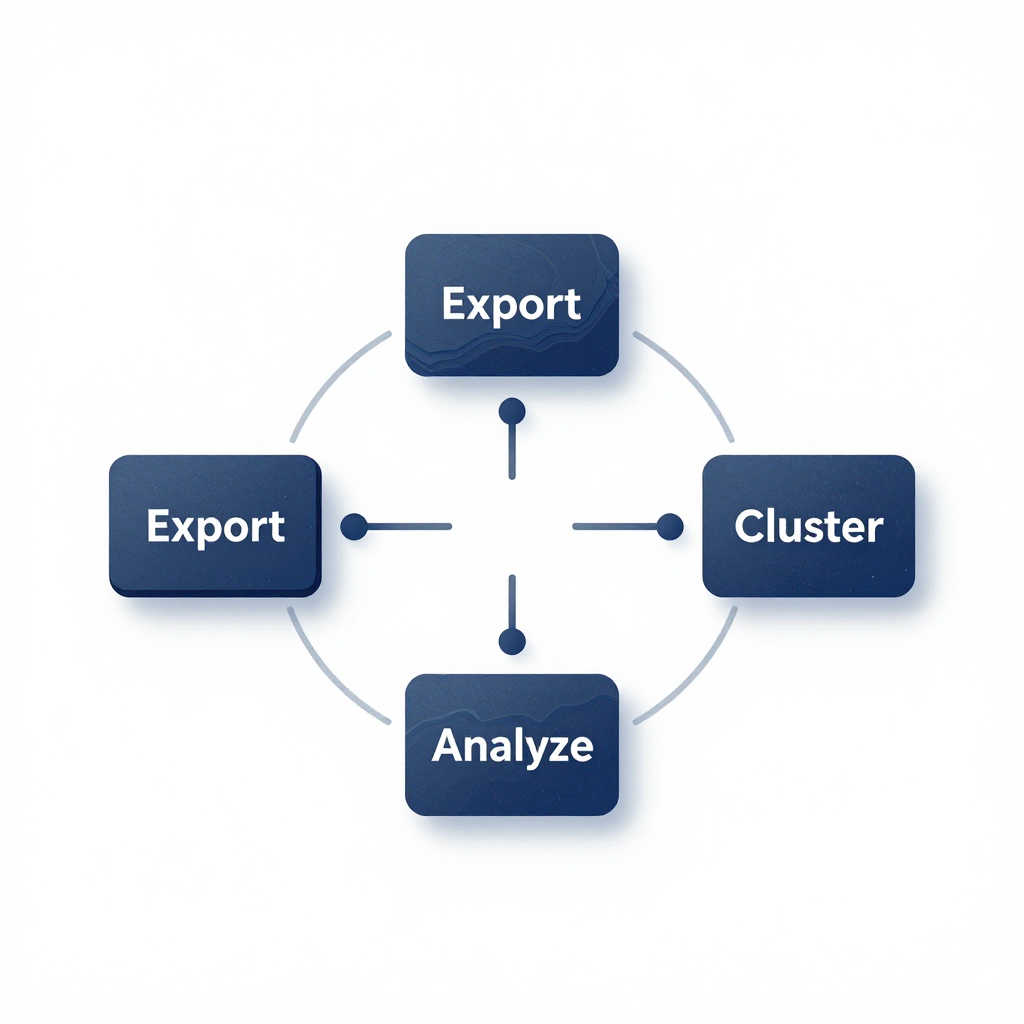
The framework is straightforward: export competitor reviews, analyze sentiment, cluster themes. Use competitor shortfalls to your advantage by highlighting the things your client does well in that area.
But why should you do this? AI systems in local SEO can summarize based partly on the specific language in their GBP reviews and business descriptions. Think of Ask Maps, "Know before you go," and all of these new AI features on Google Maps — they pull from review text. Review patterns shape how these AI features characterize a business.
Step 1: Pick The Right Competitors
Don't pull every business in the local pack. You want the two to three competitors your client is actually losing jobs to — the ones showing up consistently for your client's core services/products.
The easiest way to identify them: Run your client's three to four highest-value searches in Google Maps and note which names keep appearing. Check with your client, too. They usually know exactly who they lose bids to.
Step 2: Export Reviews
Once you've identified your targets, decide how you want to pull the data. You can build your own tools to pull competitor reviews, use a GBP Reviews Sentiment Analyzer Chrome extension, or any other tool that allows you to pull competitor reviews.
Step 3: Run Sentiment Analysis
No matter how you grab the reviews, use AI to help run sentiment analysis. This categorizes reviews into positive, negative, and neutral buckets, making it easier to filter through in spreadsheets.
You can approach sentiment analysis many ways: use the Google Cloud Natural Language API if you're comfortable working with APIs, or use a custom GPT to help. If using a Chrome extension, sentiment analysis runs during the data pull and is part of the export.
If you prefer starting from scratch and running prompts in your LLM of choice, use a prompt like this:
I'm going to paste a CSV of Google reviews for [Competitor Name], a [business type] in [city].

Please:

1. Identify the top 5-7 recurring themes (both positive and negative)
2. Count how many reviews mention each theme
3. Flag any patterns in the negative reviews that suggest operational failures or unmet customer needs
4. Pull 3-5 direct quotes that best represent each theme
5. Summarize the biggest gap between what customers praise and what they complain about

Here is the data: [paste CSV]
Adjust as needed for your client's situation, but the core task stays the same: themes, counts, language, gaps.
Step 4: Build Your Topic Cluster Map
Once you have the analysis output, organize recurring themes into clusters based on credibility factors:
- Quality: Workmanship, results, expertise
- Communication: Responsiveness, updates, follow-through
- Pricing: Transparency, value, billing surprises
- Speed: Arrival times, turnaround, scheduling
- Trust: Reliability, honesty, doing what they said
- Staff/Team: Professionalism, friendliness, knowledge
The gap between "what customers love about my client" and "what customers hate about competitors" is where the real opportunity lives.
What To Look For In The Data
Having the data is one thing, but knowing how to read it is another.
Start with review velocity and volume
A competitor with 129 reviews at 5.3 reviews per week tells a completely different story than one with 28 reviews at 0.9 per week — and that's before you've read a single word. Velocity signals active, ongoing trust-building. Volume signals a business customers feel compelled to talk about.
When sentiment scores are close, differentiation comes from messaging specificity
A 4.7 vs. a 4.8 isn't a meaningful difference to a customer. The words you use to describe what you do, and whether those words reflect what customers actually care about — that's the difference.
Ask these four questions of every competitive review set
- What do customers consistently praise about this competitor that your client also does well, but doesn't say anywhere in their messaging?
- Where do customers express frustration that your client's operations genuinely solve?
- What language do reviewers use that your client's website doesn't reflect at all?
- What's the underlying fear or desire behind the complaint?
That last one is the most important. Negative reviews are a map of customer anxieties in that category:
- "They overcharged me": fear of being taken advantage of.
- "They said they'd come between 9 and 11. They showed up at 3": fear of wasted time.
- "I had to chase them for updates": fear of being ignored or dismissed after signing.
Each of those anxieties is a conversion lever, if your client genuinely resolves it and their messaging says so directly.
Turning The Gaps Into Real Deliverables
USP Extraction
The language customers use to praise your client is the raw material for H1s, meta descriptions, GBP descriptions, and homepage hero copy. Language real customers used, unprompted, to describe their experience.
Competitor Gap Messaging
For every recurring competitor complaint, write a direct-response positioning statement that's a clear, specific answer to the anxiety:
| Competitor Complaint Pattern | Direct Positioning Response |
|---|---|
| "They never gave me a price up front." | "Upfront pricing on every job – no surprises on your invoice." |
| "They said they'd be here at 9. They came at 3." | "Exact arrival windows, not four-hour guessing games." |
| "The work looked rushed, and they just left." | "We don't leave until the job is done and you're satisfied." |
Website Copy And Structure Updates
Once you have your topic clusters and gap analysis, you have a clear brief for website copy changes:
- H2 variants: Grounded in top review clusters, run some SEO A/B tests and see how they affect user behavior data and conversions.
- Testimonial selection: Don't just pick the most enthusiastic reviews — pick the ones that speak directly to the gaps competitors are failing on.
- FAQ content: Proactively neutralize the anxieties surfaced in competitor negatives. If 200 reviews across your competitors mention pricing surprises, your FAQ should include "How is pricing determined?" before a customer even has to ask.
GBP Profile Updates
Your client's GBP description, posts, and services list are all conversion touchpoints, and they can all be updated to reflect what you've learned:
- Description: Pull language directly from top positive review clusters — the words real customers used.
- Posts: Feature the specific trust signals competitors are consistently failing on. If competitors have a communication problem, post about your client's same-day callback guarantee.
Content Series Opportunities
Review clusters often point directly to content gaps. If tons of reviews across your analysis mention customers feeling confused about the process, that's a "What to Expect" video and informational page creation waiting to happen. If "explained everything clearly" shows up repeatedly as praise, that's a signal that the category has a clarity problem — and your client can own it.
Measuring What Changes
You can measure the impact of your changes in a few ways:
- If you run an H2 SEO A/B test, track scroll depth past the hero section, CTA click rate, and dead clicks before and after you swap in review-language-based copy.
- If you update your client's GBP, track call volume, direction requests, and website clicks in your GBP Insights dashboard before and after profile changes.
- For new content changes, track organic visibility for the informational queries tied to the review themes you called attention to.
- Consider looking at AI citations and grounding queries in Bing's AI Performance Dashboard to see if anything new appears after including the new language on your website and GBP.
Re-run the analysis periodically. Are the same complaints showing up in competitor reviews, or have your client's updates shifted how customers compare them? Are any new patterns emerging that you should address?
The Opportunity Most SEOs Are Leaving On The Table
Reviews are a research and strategy layer with a reputation management component.
The competitor who dominates local search isn't necessarily the one with the most reviews or the highest rating. It's the one whose messaging reflects what customers actually care about — the one who answers the anxiety before the customer even has to voice it.
You have free, public, always-updated customer research sitting inside every competitor's GBP right now. It's telling you exactly what customers in your client's market are afraid of, what they value, and what language they use to describe the experience they're looking for. That list is your client's next positioning opportunity.