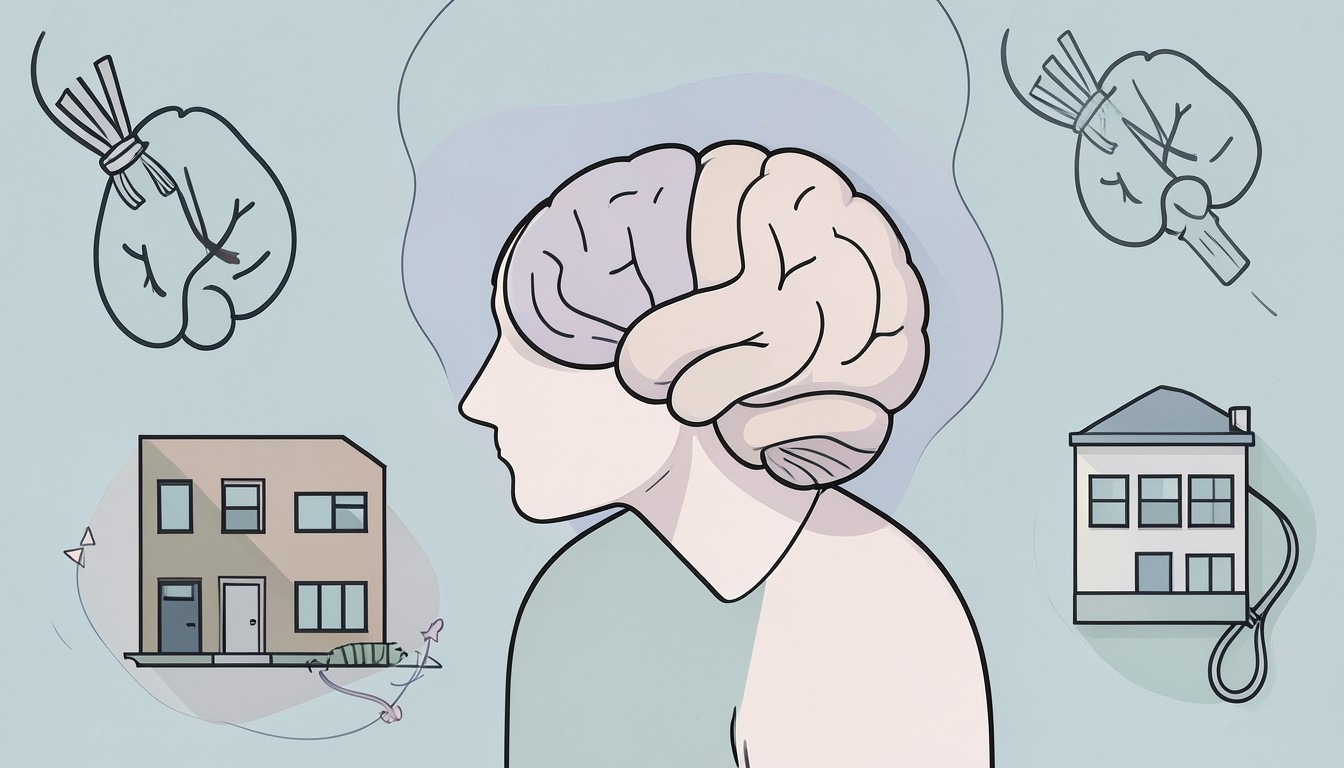
Your ZIP code might be doing more than determining your property taxes or your commute—it may be actively shaping the physical structure of your brain. A landmark clinical study of more than 2,800 brain MRIs reveals that residing in socioeconomically disadvantaged neighborhoods is directly linked to accelerated brain aging, reduced total brain volume, and microvascular white matter damage. When structural inequities leave measurable biological imprints on neural tissue, we have to rethink how environment dictates long-term cognitive health.
What is Cognitive Aging?
To understand how external environments impact the mind, we first need to define what is cognitive aging. Cognitive aging refers to the gradual, natural changes in mental processing speed, memory retrieval, and executive function that occur over a lifespan. Unlike neurodegenerative diseases such as Alzheimer's, normal cognitive aging does not prevent an individual from living an independent, vibrant life. Words might take a fraction longer to recall, and multitasking might become slightly less effortless, but core knowledge, wisdom, and personality remain intact.
Yet, this natural trajectory is not experienced equally across populations. External stressors—ranging from chronic financial instability and housing insecurity to environmental toxins and lack of green spaces—accelerate these baseline biological clocks. When chronic stress places the central nervous system in a perpetual state of high alert, cellular wear and tear compounds far faster than nature intended.
Mapping the Physical Environment: The Area Deprivation Index
For years, public health researchers suspected that geography played a silent role in neurological health, but proving it across a massive clinical cohort remained elusive. Published in Radiology, a retrospective study led by researchers at the University of Wisconsin School of Medicine and Public Health examined 2,826 clinical brain MRI scans from patients aged 18 to 96.
To quantify local socioeconomic hardship, the research team utilized the Area Deprivation Index (ADI), a census block-level metric integrating 17 markers of income, employment, housing quality, and education derived from ZIP codes. By correlating ADI scores with neuroimaging data, while controlling for age, sex, and underlying neurological pathologies, the investigators uncovered two unmistakable biological signatures:
- Increased Brain Age Gap: Individuals residing in the most economically deprived neighborhoods exhibited a substantially larger discrepancy between their chronological age and their predicted biological brain age. Their neural tissue quite literally looked older on scans.
- Vascular Microvascular Damage: MRIs revealed significantly higher volumes of white matter hyperintensities, radiological markers of small vessel injury and chronic ischemic stress, among residents in high-deprivation zones.
Senior author Dr. John-Paul J. Yu and his colleagues demonstrated that the living environment exerts an outsized, measurable impact on the human brain at the molecular and cellular level. Structural inequity is not merely a social concept; it is a neurobiological reality.
Structural Vulnerability: Aging Memory Loss vs Dementia
When evaluating cognitive shifts in clinical settings, clinicians frequently encounter the diagnostic challenge of differentiating aging memory loss vs dementia. Normal age-related memory lapses, such as occasionally misplacing car keys or forgetting an acquaintance's name temporarily, are distinct from the progressive, debilitating cognitive erosion characteristic of dementia syndromes.
However, environmental disadvantage acts as an accelerant across this spectrum. Chronic exposure to neighborhood deprivation elevates systemic inflammation, spikes cortisol levels, and impairs cardiovascular health. Because the brain depends on a pristine vascular network to deliver oxygen and glucose, microvascular damage from neighborhood stress creates fertile ground for cognitive decline. When white matter hyperintensities accumulate, neural communication pathways fray. What might have remained benign, age-related memory slowing can be exacerbated into pathological impairment when compounded by structural disadvantage.
Early Life Roots and the Global Exposome
The imprints of environment on neural architecture begin long before late adulthood. Data from the Adolescent Brain Cognitive Development (ABCD) study, which follows nearly 12,000 children, reveals that socioenvironmental factors significantly shape early neurodevelopment. Disadvantaged living conditions during formative years disrupt sleep architecture and heighten chronic stress loops, altering cortical thickness and emotional regulation circuits before a person even reaches adulthood.
Scaling this perspective globally, a 34-country exposome study published in Nature Medicine underscores that these vulnerabilities are not isolated to single cities or regions. Syndemic amplification, where socioeconomic hardship, pollution, and inadequate healthcare intersect, creates a compounding global burden on brain health. Geography dictates vulnerability from cradle to grave.
How to Maintain Cognitive Health in Older Age
Given that environmental headwinds can accelerate brain aging, how to maintain cognitive health in older age becomes an urgent clinical and personal priority. While individuals cannot always instantly relocate away from disadvantaged environments, neuroscientific research highlights several powerful, modifiable buffers that protect neural plasticity:
- Cardiovascular Management: Because small vessel disease is a primary bridge between neighborhood stress and brain aging, aggressive management of blood pressure, cholesterol, and blood sugar preserves cerebral blood flow.
- Cognitive and Social Stimulation: Lifelong learning, complex problem-solving, and robust social engagement build cognitive reserve, an alternative neural scaffolding that helps the brain compensate for structural wear and tear.
- Physical Exercise: Regular aerobic activity stimulates neurogenesis in the hippocampus, improves vascular endothelial function, and directly counters the inflammatory cascades triggered by chronic stress.
- Sleep Hygiene: Prioritizing restorative sleep allows the glymphatic system to clear metabolic waste products, including amyloid-beta, reducing the burden of cellular debris.
Neighborhood disadvantage leaves a profound mark on human biology, but understanding these mechanisms empowers both public health policy and individual resilience strategies. Protecting the brain requires looking far beyond the clinic door and addressing the physical spaces where we live, work, and age.