
You Can't Tickle Yourself. Here's Why.
Try it right now. Reach for your own ribs. Go ahead — I'll wait.
Can't do it? Of course not. Your brain already predicted the touch before your fingers made contact, and it dialed down the sensation accordingly. That's corollary discharge in action: an internal copy of your motor command that tells your sensory system to mute self-generated input. Without it, every movement you make would feel like being pummeled from the inside.
This mechanism isn't unique to humans. It's found in every animal with a nervous system worth anything at all — from fish to frogs, from flies to primates. It solves a universal problem: how do you tell the difference between something happening to you and something you caused?
But here's what nobody really understood until now. Bodies don't stay the same. They grow. They age. Hormones surge and recede like tides. Species diverge over millions of years, bodies reshaping along the way. And yet this prediction machinery keeps working — perfectly calibrated, millisecond by millisecond.
How? That's the question that drove Martin Jarzyna and Bruce Carlson at Washington University in St. Louis to dig into the brains of weakly electric fish, and it led them straight to a tiny cluster of neurons they're calling the MCA — the mesencephalic command-associated nucleus. A single hub. One structure handling timing recalibration across hormonal, developmental, and evolutionary timescales simultaneously.
The finding is elegant in a way that makes you wonder why nobody thought to look for it sooner.
The Fish That Lights Up the Dark
Weakly electric fish — specifically Brienomyrus brachyistius and several species of Campylomormyrus — generate brief electrical pulses called electric organ discharges, or EODs. These aren't the knockout-blow shocks you'd find on an electric eel. They're subtle, more like a flashlight beam in murky water: the fish sends out a pulse and reads the distortions bouncing back to navigate, communicate, and sense predators.
But there's a catch. Every time the fish fires its own pulse, it also "hears" itself — and its sensory system is so exquisitely sensitive that the self-generated signal would completely blind it if left unfiltered. Imagine wearing noise-canceling headphones that somehow amplified everything except the music you wanted to hear.
So the brain deploys corollary discharge. The moment it sends the command to produce an electric pulse, it also fires a predictive cancellation signal — essentially telling the sensory neurons, "Don't bother responding to what's coming. We know it's us."
This works beautifully, until the body changes.
Testosterone surges can stretch an EOD over the course of just a few days. As fish age, their pulses naturally grow longer — sometimes dramatically so between species that look nearly identical on the outside. And across evolutionary timescales, different mormyrid lineages evolved wildly different pulse durations.
Here's where it gets interesting. If the brain had to recalibrate dozens of independent neural pathways every time a hormone shifted or a body grew, the system would be drowning in complexity. Instead, Jarzyna and Carlson discovered something far simpler — and far more revealing about how brains actually work.
The MCA: One Hub, Three Timescales
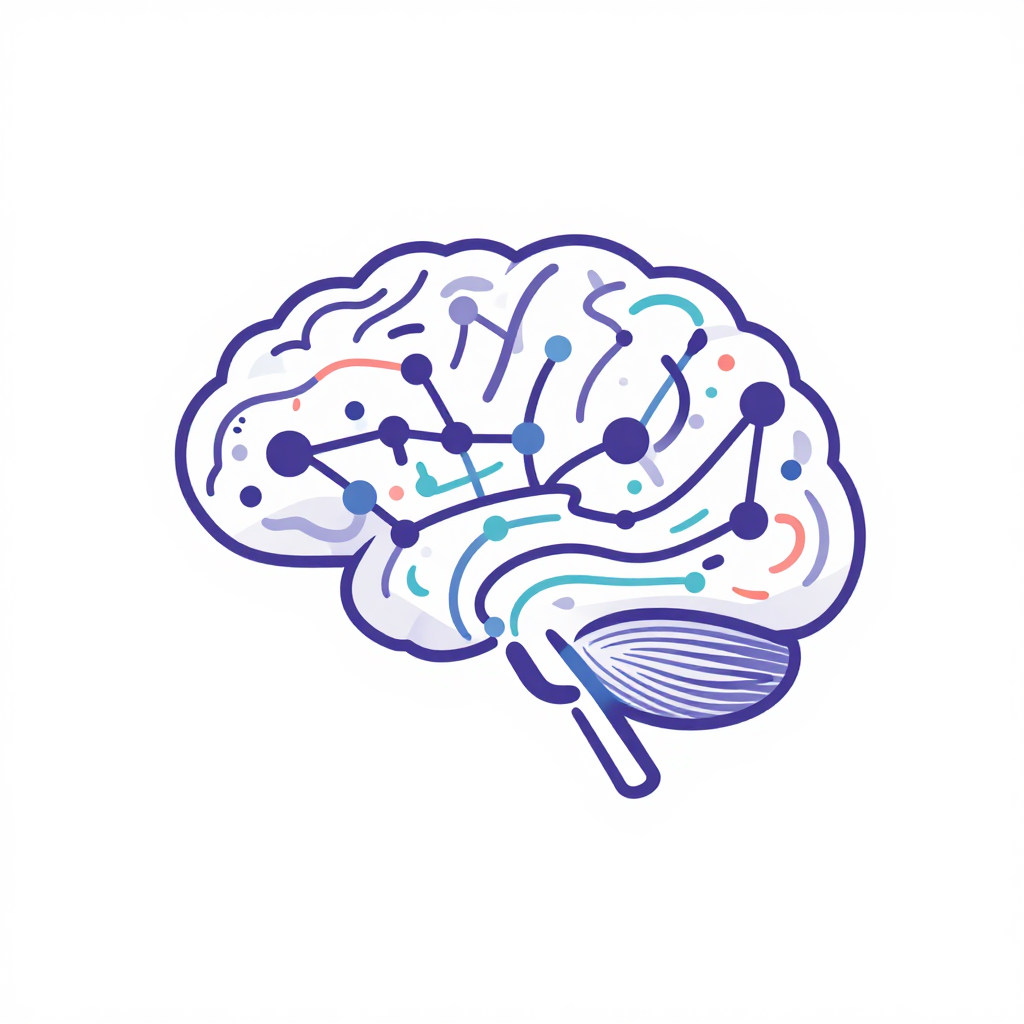
The mesencephalic command-associated nucleus is small. Tiny, really — a subcortical cluster of neurons buried deep in the fish brain's midline. But its job is disproportionately massive.
Jarzyna and Carlson tested three kinds of change, each operating on a completely different clock:
Hormonal timescale (days): They treated Brienomyrus brachyistius with testosterone and watched how the corollary discharge pathway adapted. Testosterone delayed and elongated field potentials specifically in the MCA, which then shifted downstream activity across the entire circuit.
Developmental timescale (years): They compared Campylomormyrus species with short-duration EODs against those with long-duration EODs — and within individuals of the long-pulse species, they tracked how signals stretched as fish aged. Both inter- and intraspecies variation mapped directly onto MCA field potential onset and duration.
Evolutionary timescale (millennia): The same MCA structure appeared as the critical timing node across species that had been diverging for millions of years, despite dramatic differences in body size and pulse characteristics.
All three converged on the same tiny cluster of neurons. The brain wasn't recalibrating independent pathways in parallel — it was funneling everything through a single junction box.
And the MCA doesn't just sit there taking orders. It branches into three distinct anatomical pathways: one devoted to processing peer communication signals, one optimized for environmental sensing, and a third that directly regulates the physical production of electric pulses. One structure, three outputs, all kept in lockstep.
"A common solution evolved that can maintain these accurate sensory predictions, such that new solutions don't need to be reinvented," Jarzyna said. That's not just efficient engineering — it's a fundamental principle of how nervous systems scale across time.
Recording the Unrecordable
The corollary discharge pathway in mormyrid fish is a tortuous route from motor area to sensory area, twisting through multiple nuclei before reaching its destination. Historically, scientists could record from one or two stations along this path — enough to get a sense of the overall flow, but never the full picture.
Jarzyna did something that had simply never been done before: he recorded intracellular electrical activity at every single step of the corollary discharge pathway within individual animals.
"Never before has anybody recorded from each area within an individual animal," he said. "We never had the full picture of activity across the entire circuit."
This wasn't a minor technical upgrade. It was a completely new vantage point. By measuring exactly when neural activity occurred relative to the fish's motor command at each node, they could pinpoint where timing shifts first appeared — and that was the MCA. The moment testosterone changed a fish's pulse duration, the MCA responded first. When evolutionary divergence stretched EODs across species, the MCA was where the difference showed up.
The technical achievement here deserves its own category. Intracellular recordings in wild fish brain nuclei require steady hands, patience bordering on obsession, and a level of preparation that most neuroscientists would find terrifying. And they did it across multiple individuals, comparing hormone-treated fish against controls, short-pulse species against long-pulse ones.
Carlson put it simply: "We've known about corollary discharge for a long time, but we know very little about the mechanisms operating that pathway." This work changes that. For the first time, we have a complete circuit-wide map of how the brain predicts and cancels self-generated sensory input — and we know exactly where the timing calibration happens.
Evolution's Lazy Shortcut
Here's a thought that might make you uncomfortable: evolution is fundamentally conservative. It doesn't redesign from scratch when something works well enough. It patches, extends, and reuses.
The MCA finding is a textbook example of what the researchers call "neurocentric path dependency" — the idea that once a neural solution evolves, it tends to get reused rather than replaced, even as bodies and behaviors diverge wildly.
When a new mormyrid species evolved with longer electrical pulses, evolution didn't build an entirely new timing circuit. It tweaked the existing MCA hub and called it a day. When testosterone reshaped pulse duration within an individual's lifetime, the same structure handled that recalibration too.
This is profound because it suggests a constraint on how complex nervous systems can evolve. You don't get infinite flexibility. You get a few good solutions, and you keep coming back to them.
"Studying animals that have unique behaviors can inform general questions in neuroscience," Carlson said. "Whatever it is that's unique about their behavior can make them suited to asking certain sorts of questions that you couldn't ask in another system."
The electric fish's unusual sensory ability — generating and detecting its own electrical field — created a natural experiment that would be impossible to set up in any other animal. You can't give a mouse testosterone and watch its corollary discharge pathway shift in real time the way you can with these fish. The uniqueness of their biology made the discovery possible.
When the Prediction Machine Breaks
Corollary discharge isn't just a fish thing. It's essential to human sensory processing, and when it fails, the consequences are severe.
Think about your own inner voice. The thoughts you "hear" in your head — that running commentary of opinions, memories, and plans — are generated by your brain. Your corollary discharge system tags them as self-generated so you don't mistake them for external voices. It's the same mechanism that prevents you from tickling yourself.
In schizophrenia, this system appears to break down. Patients can't distinguish their own inner thoughts and speech from external auditory inputs. The brain fails to send the predictive copy that marks internal signals as self-generated, and suddenly your own thoughts sound like someone else is speaking.
"Our study, while not directly addressing these conditions, is helping us to better understand the normal mechanism by which these sensory predictions operate," Jarzyna noted.
Carlson was more direct: "This type of neuroscience research can help uncover mechanisms that afflict human sensory processing and prediction. Once scientists understand a brain circuit inside and out, they can better fix broken circuits."
The MCA discovery provides a blueprint — not a diagnosis, not a treatment, but a map of where to look. If schizophrenia involves corrupted corollary discharge signaling, then understanding how timing calibration works at the circuit level is the first step toward identifying where that calibration goes wrong in humans.
Whether a comparable hub exists in the mammalian brain remains an open question. But the principle — that a single structure can coordinate timing across multiple timescales and output pathways — may be more universal than we realized.
What Comes Next
The Carlson lab is already moving forward. The next phase of research will drill down into what's actually happening at the cellular and molecular level inside MCA neurons during these timing shifts.
Future work will involve intracellular recordings directly from MCA neurons — not just field potentials, but the individual synaptic events that constitute the recalibration. The question is no longer where these changes happen, but what is actually happening during them. Which neurotransmitters? Which ion channels? How does a hormone signal translate into a millisecond-level timing adjustment?
These are hard questions. They require the same kind of meticulous, circuit-spanning recording that Jarzyna pioneered — but now focused on a single structure rather than an entire pathway.
The broader implication, though, is what makes this work genuinely exciting. We now know that a single hub can maintain sensory predictions across hormonal, developmental, and evolutionary timescales. That changes how we think about neural plasticity — not as a diffuse, distributed process, but as something that can be centralized, coordinated, and potentially targeted.
If you want to understand how the brain keeps its act together while everything around it changes, start with the MCA. It's small, it's deep, and it does more work than most of us realize.