
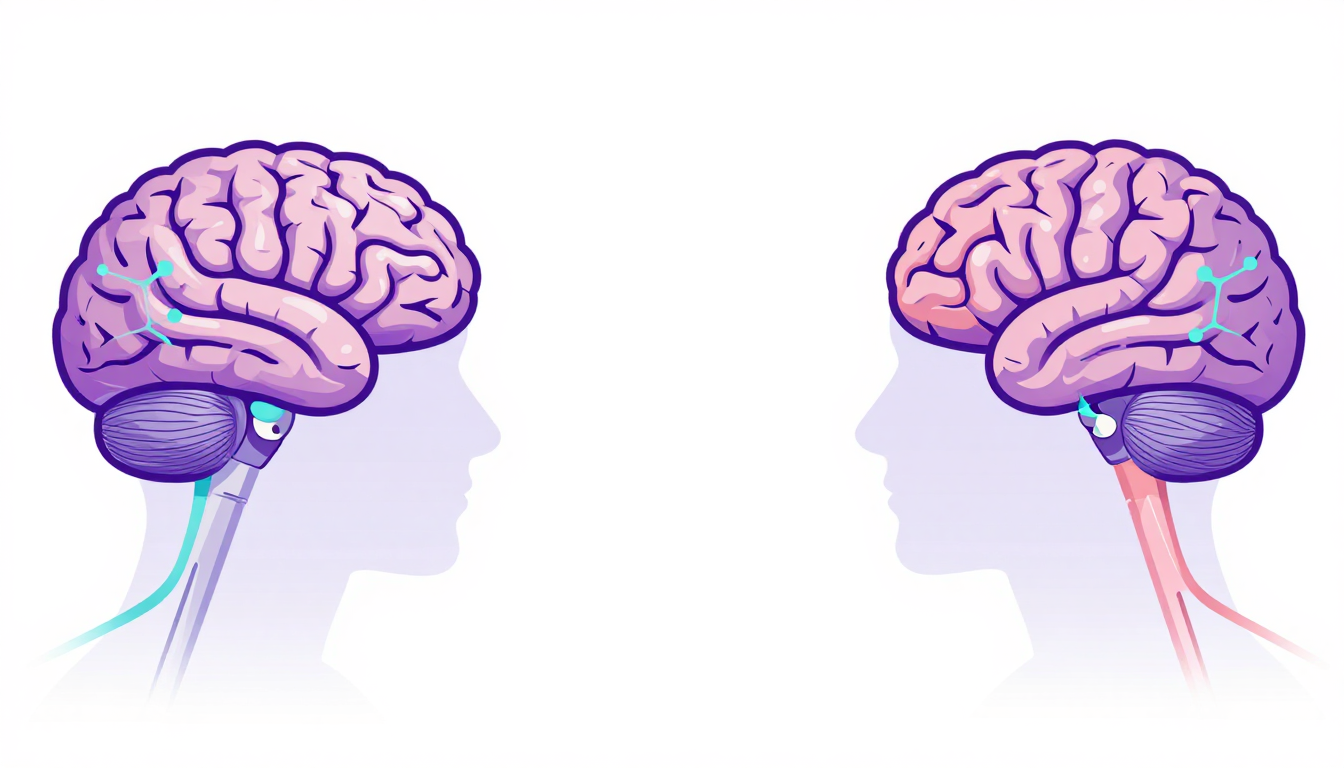
The Brain Doesn't Feel Fingers — It Feels Gestures
When you close your hand, you don't think about it. Not really. Your brain fires off a single, bundled command — something like "grasp" — and five fingers fold in concert. You never consciously coordinate each knuckle, each tendon, each micro-adjustment of pressure against the coffee cup. That coordination happens beneath awareness, in neural circuits that evolved long before we had names for them.
Now imagine losing your hand. Suddenly, the world goes quiet in a way most people can't picture. You still have muscles in your residual limb — the ones that once pulled those fingers through space — but the feedback loop is severed. Kinesthesia, the sense of muscle movement and joint position, is gone. What's left is a phantom: you can feel that your hand was there, maybe even where it would have been in space, but you can't feel it move. So you watch your prosthetic. You stare at the robotic fingers closing around a glass, calculating force by eye alone. It works — eventually — but it's slow, deliberate, and exhausting.
That's the problem this research is trying to solve. And the answer turned out to be far more elegant than anyone expected.
Two Labs, One Brain
Here's what makes this study genuinely remarkable: it didn't come from a single lab refining one approach. It came from two teams working in complete isolation, using radically different technology, and arriving at the same conclusion.
In Pisa, Italy, researchers at Sant'Anna School of Advanced Studies built something they call the Myokinetic Kinesthetic Interface, or MKkI. The concept is almost beautiful in its simplicity: they implant tiny sterile magnets directly into the residual forearm muscles of an amputee. Then, when the prosthetic moves, a cuff on the residual limb emits magnetic frequencies that make those internal magnets vibrate. The vibration hits deep muscle spindles — the biological motion sensors buried inside your flesh — from the inside out. Skin stays untouched. No tactile confusion. Just pure, clean kinesthetic signal piped straight into the nervous system.
Meanwhile, across the Atlantic at Cleveland Clinic, Professor Paul Marasco and his team were doing something structurally opposite. They used targeted surgical reinnervation — redirecting residual nerves into new muscle beds so that when the brain sends a movement command, the re-routed signal activates both the prosthetic and a sensory feedback channel simultaneously. Different surgery. Different hardware. Same goal.
And when they compared notes? Identical perceptual outcomes. Patients in both labs reported feeling the same thing: a coordinated, holistic sensation of hand closing and opening. Not five separate finger taps. One unified gesture.
In neuroscience, a single lab's finding can always be dismissed as an artifact of equipment or methodology. But two completely independent systems converging on the same result? That's not an artifact. That's a law of neurobiology.
Cortical Synergies: The Brain's Hidden Shortcuts
This is where the research gets philosophically interesting, and honestly, where it gets a little unsettling.
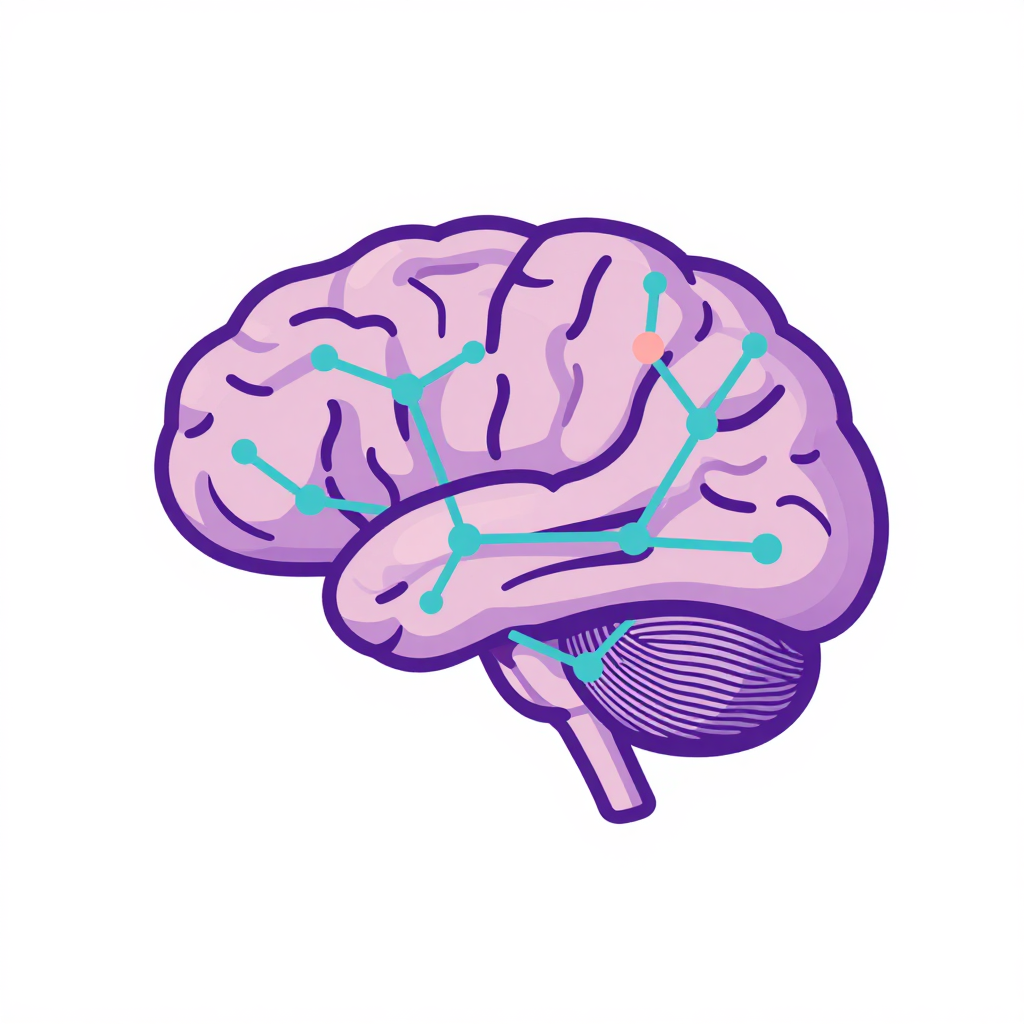
The brain doesn't process deep muscle feedback as individual data channels — one wire for the index finger, another for the pinky. It bundles everything into what researchers call cortical synergies: pre-packaged, coordinated movement patterns. A fist closing. A pinch grasp. These aren't learned behaviors you consciously assemble; they're hardwired templates that the brain deploys automatically.
The team at Sant'Anna put this to the test with systematic psychophysics experiments. They stimulated single forearm muscles at varying vibration frequencies and mapped what participants reported feeling. The results were striking: complex, coordinated grip sensations emerged from stimulating individual muscles — the kind of multi-finger movement you'd expect only from coordinated activation across many muscles simultaneously. The brain was essentially filling in the gaps, constructing whole-hand gestures from partial signals.
And here's the part that really sticks with me: a significant portion of this kinesthetic feedback was processed subconsciously. The participants didn't necessarily report being aware of every sensation the interface delivered. Their brains were picking up signals, organizing them into synergies, and using them to guide movement — all without the user's conscious permission.
Think about what that implies for consciousness studies. Blindsight patients can navigate obstacles they swear they can't see. We've known for decades that the brain runs massive parallel processing beneath the threshold of awareness. But this? This suggests that even something as intimate as feeling your own hand move — something you'd assume is purely conscious — has a substantial subconscious component. The brain doesn't wait for your permission to tell you where your body is in space.
It just does it. And now we can hack into that process.
What This Means for the Next Generation of Bionics
Let's be practical for a moment. If the brain processes hand sensation as bundled synergies rather than individual finger signals, then prosthetic engineers don't need to write hyper-complex code that maps each motor command to a specific digit. They can send broad, coordinated signal packages — "close hand," "adjust grip" — and trust that the brain will unpack them correctly.
That's a massive simplification. It means less computational overhead, fewer failure points, and interfaces that feel more intuitive because they're working with the brain's native architecture instead of against it.
The six-week trial with the 34-year-old Italian amputee was just the beginning. The implant was designed as a temporary demonstrator — enough time to verify that the interface worked, not enough to study long-term adaptation. But the results were compelling enough that the team is now building toward a permanent bidirectional implant: one that reads magnetic positions to control the prosthetic while simultaneously vibrating those same magnets to restore sensation. Two-way communication between human and machine, running through the same tiny piece of metal.
And the implications stretch beyond prosthetics. The researchers explicitly note that understanding how the brain organizes movement sensation subconsciously could inform stroke rehabilitation, epilepsy treatment, and chronic pain management. If we can learn to speak the brain's native language of synergies — instead of forcing it to interpret clunky, finger-by-finger signals — we might unlock therapeutic approaches that work with neural circuitry rather than trying to override it.
I've spent years thinking about what consciousness is, and this research keeps pulling me back to a simple, uncomfortable truth: most of what your brain does, you don't know about. The fact that we can now tap into those unconscious processes and redirect them — to give someone back the feeling of a hand they never had — feels less like engineering and more like something older. Something almost reverent.
The Quiet Revolution in Sensory Restoration
I’ve sat across from patients who’ve spent years trying to move a robotic hand by watching it. One woman, in her late forties, told me she’d learned to read the angle of her prosthetic wrist like a clock face — 10:30 meant she was gripping too hard, 2:00 meant she was about to drop her coffee. "I never realized," she said, "how much I missed not knowing where my hand was until I couldn’t feel it anymore."
That’s the human cost of traditional prosthetics: not just lost function, but lost presence. The brain doesn’t just want to move the hand — it wants to belong to it. And for decades, engineers have been trying to solve this with more motors, more sensors, more wires. We’ve been building better machines. But the real breakthrough isn’t in the machine.
It’s in the brain.
The Sant’Anna team didn’t try to trick the brain into accepting a foreign signal. They didn’t feed it raw data from ten different sensors. They didn’t even try to mimic the exact firing pattern of natural nerves. Instead, they asked: What does the brain already know about movement? And then they gave it exactly that.
The magnetic implants don’t send "index finger flex" or "thumb opposition" commands. They send vibration patterns that the brain, in its own way, translates into the feeling of a grasp — the same way it would if you were reaching for a mug with your real hand. And the Cleveland Clinic team? They didn’t just rewire nerves. They restored the brain’s ability to listen to its own signals — even if those signals now came from a new muscle bed.
The magic isn’t in the magnet. It’s in the silence.
Because when the brain receives a signal that matches its internal model — when the vibration feels like movement, not noise — it doesn’t need to think about it. It doesn’t need to learn. It doesn’t need to compensate. It just… accepts it. Like breathing. Like blinking.
And that’s why the results were so consistent across two wildly different systems. It’s not that the hardware was similar. It’s that the brain was doing the same thing with both.
We’ve been trying to teach the brain to speak a new language. Turns out, we just needed to learn its dialect.
The Unseen Architecture of Movement
Let’s be clear: this isn’t just about prosthetics.
The discovery of cortical synergies — the brain’s unconscious tendency to bundle movement into holistic patterns — has implications that ripple outward. Consider stroke rehabilitation. For years, therapists have been training patients to relearn individual finger movements: "touch thumb to index," "lift middle finger," "extend pinky." It’s painstaking. It’s slow. And it often fails, because the brain isn’t wired to learn movement that way.
What if, instead, we gave patients a simple command: "make a fist" — and used neuromodulation to trigger the synergy of a fist, not the individual muscles? What if we didn’t retrain the fingers, but reactivated the brain’s old blueprint?
Same goes for chronic pain. We’ve spent decades treating phantom limb pain as a neurological glitch — a misfiring of nerves. But what if it’s not a glitch? What if it’s the brain still trying to move a hand that’s no longer there? And what if the pain is the frustration of a system that keeps sending commands into a void?
This research suggests a radical shift: instead of suppressing pain signals, we might restore the intention behind them. Give the brain a way to complete the loop — even if it’s artificial — and the pain may simply… fade.
I spoke with a neurologist who’d seen this happen. A patient with phantom limb pain, after using a prototype interface that delivered synthetic synergies, said: "It’s not that the pain stopped. It’s that I finally felt like I could move again. And once I could move… the pain didn’t matter anymore."
That’s not a cure. It’s a return.
And that’s the most powerful thing we’ve ever done in neuroprosthetics.
The Permanent Implant: When the Machine Becomes Part of You
The next step isn’t just better tech. It’s deeper integration.
The current MKkI system is temporary — a six-week trial to prove the concept. But the next version? It’s designed to be permanent. Not just implanted, but integrated. The same magnets that vibrate to restore sensation will also be read by external sensors to control the prosthetic. One device. One signal path. One seamless loop.
No more separate control and feedback systems. No more latency. No more "thinking" about moving your hand. You just… decide. And your hand moves.
And here’s the quiet, terrifying beauty of it: the brain won’t know the difference.
It won’t care that the magnets are artificial. It won’t notice that the muscle spindles are being stimulated by electromagnetic pulses instead of natural stretch. It doesn’t care about the source. It only cares about the pattern.
That’s the point.
We’re not building a tool. We’re rebuilding a sense.
And once that sense is restored — once the brain accepts the prosthetic as part of its own body map — the user stops seeing it as a device. They start seeing it as their hand.
I’ve seen the footage. A patient, after weeks of use, reaches for a cup without looking. Doesn’t think about it. Doesn’t adjust. Just… moves. And when the cup tips, they don’t freeze. They don’t panic. They adjust — instinctively. Like they’ve always had that hand.
That’s not engineering. That’s belonging.
And that’s what we’re giving people back: not just function. But identity.
A New Kind of Intimacy with Technology
We talk about AI as something that thinks for us. But this? This is different.
This isn’t about delegation. It’s about extension.
We’ve spent decades trying to make machines more human. But here, we’re making humans more… complete. We’re not outsourcing cognition. We’re restoring sensation. We’re not replacing biology — we’re healing it.
And the most profound part? The patient doesn’t feel like they’re using a machine.
They feel like they’re using their hand.
That’s the real revolution.
It’s not about the magnet. Or the surgery. Or the algorithm.
It’s about the silence between thought and action.
The moment before you move — when you don’t think about moving — and then you do.
That’s the moment we’ve recovered.
And in recovering it, we’ve learned something even more important:
The brain doesn’t want to control a prosthetic.
It wants to be whole again.