
The Brainstem’s Secret: How an Ancient Filter Defines Focus
The Prefrontal Cortex Isn’t the Only Command Center
For decades, we’ve been obsessed with the prefrontal cortex. That highly evolved, sophisticated region in the front of our brain is, according to traditional thinking, where the magic happens. We’ve been told it’s the seat of complex decision-making, the master planner, and crucially, the architect of our attention. It’s a compelling narrative, especially for humans proud of our intelligence, but it’s incomplete.
It turns out that our reliance on the prefrontal cortex as the supreme arbiter of focus overlooks a massive piece of the evolutionary puzzle. If the prefrontal cortex were the only seat of attention, how would simpler organisms—birds, fish, turtles—manage to focus in a crowded environment? How do they avoid predators while hunting prey without the high-level infrastructure we possess? The answer, as researchers at Johns Hopkins University have just demonstrated, lies much deeper, in an ancient circuit nestled in the brainstem. It’s an attention engine that predates our complex cortex by hundreds of millions of years. This discovery doesn't just change our textbooks; it significantly alters our understanding of how fundamental survival mechanisms are wired into our biology, and it provides a new, grounded starting point for exploring the roots of cognitive processes like ADHD and autism, which have long been misunderstood through a strictly cortical lens.
The Discovery of a Latent Attention Engine
The research team, led by neuroscientist Shreesh Mysore and postdoctoral fellow Ninad Kothari, identified a specific group of inhibitory neurons in the brainstem—the PLTi (posterior lateral tegmentum inhibitory) neurons. They aren't just background actors; they form a sophisticated, conserved circuit that acts as an 'attentional selection engine.'
The team tested this in mice using a human-like visual attention task. The creatures had to focus on a central target to earn a reward while facing peripheral distractions. Under normal conditions, they were quite good at it. They demonstrated a remarkable ability to prioritize the central, goal-relevant target over competing, high-salience distractors in their field of view. Then, the researchers inhibited the PLTi neurons. The transformation was immediate and startling.
The mice didn't become clumsy, and their visual systems didn't fail. They could still physically locate objects, and their movement was perfectly fine. Instead, they became hyper-distractable. They were unable to filter out the peripheral noise, despite the stimulus being strong enough that they would normally ignore it. Think of it as if they lost their mental 'mute' button; every peripheral spark or flicker pulled their eyes toward it, regardless of its relevance to the task. When the researchers reactivated those neurons, the mice regained their ability to focus, almost instantly. It was a clean, reversible demonstration of why these brainstem neurons are mission-critical for selective spatial attention. And the fact that they were able to induce and then reverse this behavior is a testament to the circuit's functionality. This wasn't just a loss of function; it was a loss of selectivity, proving that the mechanism of selective attention itself, at its most fundamental level, was temporarily broken.
How This Ancient System Filters Distractions
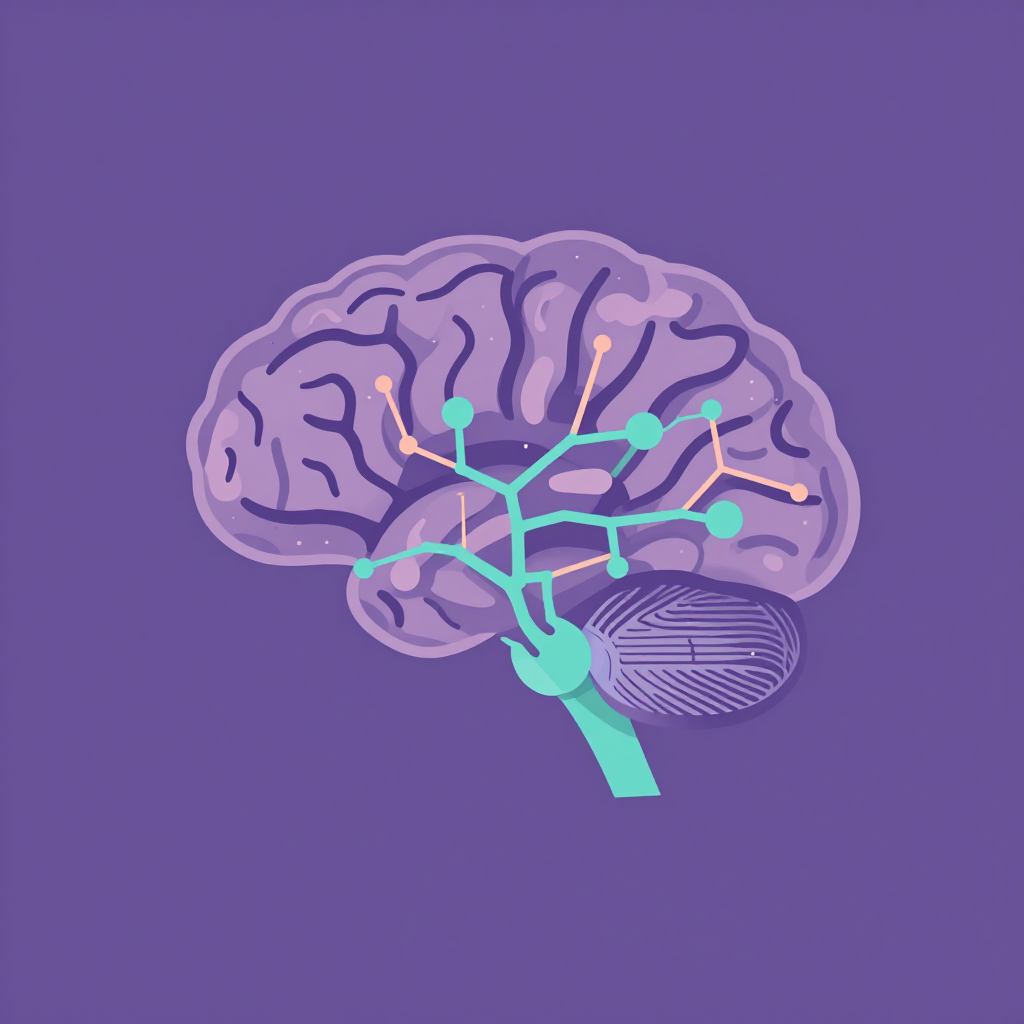
For a long time, the scientific community has grappled with the 'winner-take-all' problem in spatial attention. When you're in a crowded room, how does your brain pick one conversation out of the background buzz? It turns out the PLTi circuit performs this filtering act by comparing competing stimuli before they even reach higher-level processing.
This is not an abstract concept; it's a measurable neural process. Think of the superior colliculus as an established attentional hub in the brainstem. The PLTi neurons exert direct control over how information is represented there. They don’t just dampen signals blindly; they are sensitive to goal-directed information. This allows the brain to sort through competing inputs, prioritizing the target that matters most while suppressing the rest. It’s an elegant solution—a primary filter that ensures the higher brain centers aren’t overwhelmed by useless stimuli.
The team's work revealed that the PLTi circuit’s core contribution is in controlling the accuracy and the categorical precision of the decision boundary that separates the target from the lower-priority distractors. It's not just that the attention is there; it’s that it’s precise. When the PLTi is active, the brain can clearly demarcate what is "target-relevant" and what is "distractor-background." When it's silenced, that boundary fuzzes out. The brain cannot determine what is important, so it treats everything as potentially important. This shift in the categorical precision explains the hyper-distractibility. The mouse isn't blind; it just can't prioritize its own awareness of the world.
Potential New Paths for ADHD and Autism Treatment
The most exciting implications go far beyond mice. If this ancient circuit exists in all vertebrates, it’s functionally present in humans, too. This is not just a structural fact; it’s a potential medical breakthrough. ADHD and autism are often treated by looking at the prefrontal cortex or by applying broad pharmacological interventions—often targeting dopamine or norepinephrine pathways across the brain. These treatments work for some, but they often come with a heavy side effect profile because they are acting on general, brain-wide neural systems.
If deficits in this brainstem attention engine are a key factor in ADHD or autism in humans, we have an entirely new set of targets to aim for. Imagine if, instead of flooding the system, we could develop precision treatments that restore function to these specific inhibitory circuits in the brainstem. This is still a hypothesis—we’ve yet to measure these neurons in people struggling with these conditions—but the evolutionary evidence is compelling.
The researchers are now looking to see if these neurons are responsible for selective spatial attention in humans. If that's the case, then measuring the activity of this circuit in patients with ADHD or autism might reveal entirely new types of physiological signatures for these conditions. This could pave the way for a whole new generation of highly localized, precision drugs that treat attention disorders at their evolutionary source. It is, to be sure, a long-term prospect, but the possibility of moving from systemic, brain-wide treatment to targeted, circuit-specific modulation is the holy grail of modern neuroscience and, for clinicians and patients, it represents a potential shift in the therapeutic landscape they haven't seen in decades.
Looking Ahead: The Future of Cognitive Research
This research is a reminder that we shouldn't confuse evolutionary complexity with operational primacy. Our prefrontal cortex is incredible, but it sits atop a foundation of far older, highly perfected, and largely ignored brainstem systems. The JHU team’s next hurdle is to confirm these findings in humans. Are these neurons really why some of us struggle with attention more than others? If the answer is yes, then our understanding of the clinical landscape for developmental attention disorders is about to undergo a significant, and perhaps overdue, shift. We are just beginning to appreciate the full weight of the brainstem in this context, and it’s a story worth watching closely as researchers begin to explore the human diagnostic implications. This isn't just about understanding the past; it's about defining the future of how we treat the human brain when its most foundational ability—the ability to focus—goes off target.