The Architectural Bottleneck of Unified Multimodal Models
For years, building an AI model that could both look at an image and draw one felt like forcing a concert pianist to wear oven mitts. Traditional autoregressive frameworks tried to shove visual understanding and image generation through a single, shared visual encoder. It sounded elegant on paper—one unified transformer handling any-to-any modalities seamlessly. In practice, it was a constant tug-of-war.
Visual understanding demands rich, semantically dense representations that capture high-level concepts, spatial hierarchies, and abstract relationships—much like how a vision encoder such as SigLIP operates. Conversely, image generation requires low-level pixel fidelity, sharp edge definition, fine-grained color quantization, and precise spatial layout tokens that discrete VQ-tokenizers or generative codecs provide. When forced to share a single bottleneck encoder, the model inevitably compromised: generation quality suffered from semantic smoothing, and understanding performance degraded from quantization artifacts.
DeepSeek’s introduction of the Janus framework—and its powerful successor, Janus-Pro-7B (detailed in arXiv:2501.17811)—fundamentally resolves this dilemma through a deceptively simple yet transformative architectural insight: decoupling visual encoding into separate pathways while retaining a single, unified transformer backbone for reasoning and generation.
Decoupled Pathways: SigLIP Meets Custom Tokenizers
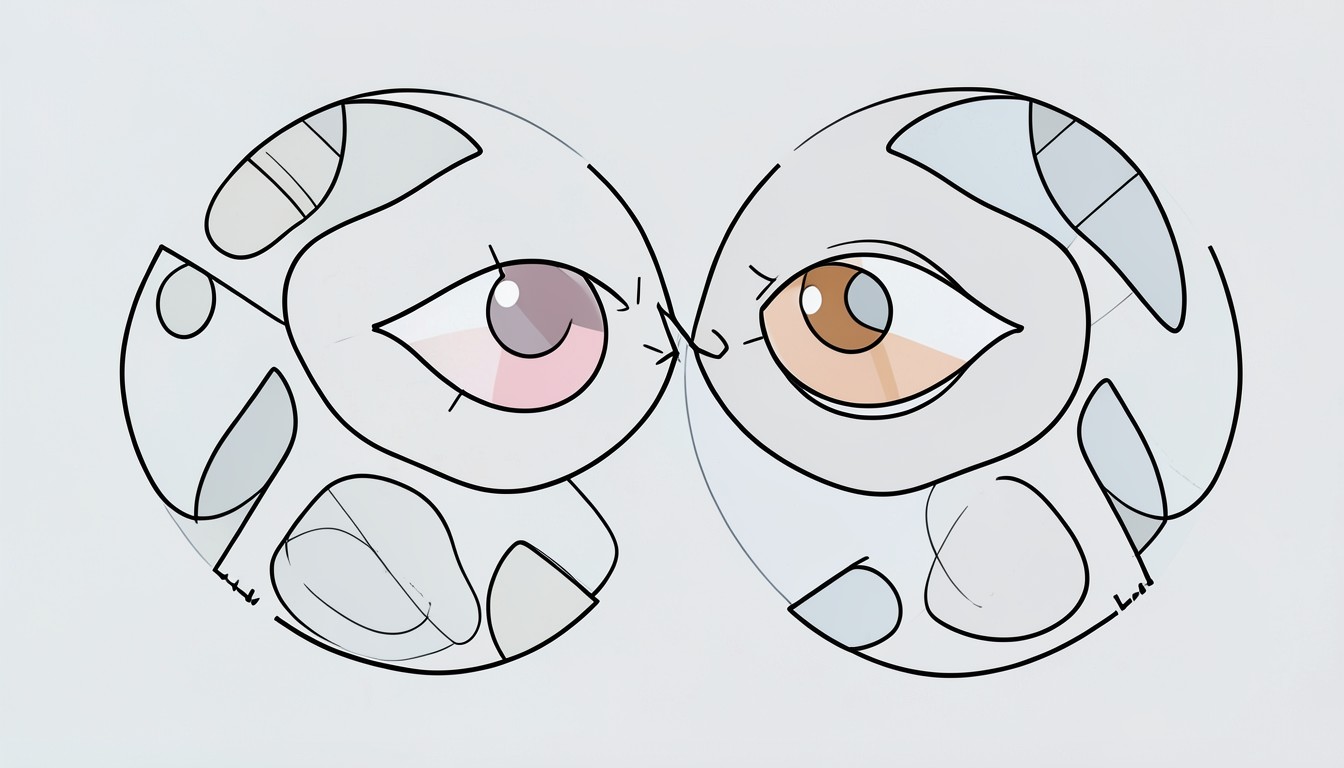
At the heart of Janus-Pro-7B lies its decoupled visual encoder architecture. Rather than forcing one encoder to wear two hats, Janus-Pro separates the visual input pipeline into two specialized streams:
- The Understanding Pathway: For multimodal comprehension tasks, such as visual question answering, OCR, chart analysis, and dense captioning, Janus-Pro employs robust external vision encoders like SigLIP. These encoders project high-resolution images into rich semantic embedding spaces that the unified language model can seamlessly interpret alongside text tokens.
- The Generation Pathway: For text-to-image instruction following and visual synthesis, Janus-Pro utilizes a dedicated vector quantization (VQ) tokenizer. This tokenizer breaks images down into discrete visual tokens that the autoregressive transformer can predict and generate sequentially.
Crucially, despite having separate encoder eyes, both pathways feed into a single, shared Transformer-based Large Language Model backbone. This unified backbone handles text generation, multimodal reasoning, and visual token prediction within the exact same parameter space. By decoupling the encoders at the input stage, Janus-Pro eliminates the conflicting gradient updates that historically crippled unified vision-language models, allowing both understanding and generation to operate at peak efficiency.
What Changed in Pro: Data Scaling, Optimization, and 7B Scaling
Building upon the foundational Janus architecture, Janus-Pro introduces three critical enhancements that dramatically elevate its capabilities across all benchmarks:
- Expanded Training Data: The dataset curation pipeline was substantially broadened and refined, incorporating higher-quality instruction-following pairs, diverse visual-text alignment corpora, and cleaner filtering to enhance text-to-image fidelity and complex reasoning.
- Optimized Training Strategy: Fine-tuning the loss balancing between autoregressive language modeling and discrete visual generation token prediction enabled more stable training dynamics and reduced artifacts in synthesized images.
- Model Scaling (1B to 7B): While earlier iterations focused heavily on lightweight efficiency (such as the 1.3B and 1B variants), scaling the architecture up to 7 billion parameters unlocked unprecedented emergent reasoning capabilities, finer instruction adherence, and vastly superior zero-shot generalization.
These combined upgrades directly addressed earlier stability quirks in text-to-image generation, such as classifier-free guidance misalignment, resulting in robust, high-fidelity visual synthesis that rivals specialized diffusion models.
Benchmark Dominance Over Task-Specific Models
One of the most remarkable findings presented in the Janus-Pro technical report is its ability to match or surpass specialized, task-specific models while maintaining the versatility of a unified framework.
On multimodal understanding benchmarks, spanning MMStar, MMBench, MathVista, and ScienceQA, Janus-Pro-7B consistently outperforms many dedicated vision-language models of comparable scale. Simultaneously, on text-to-image generation benchmarks measuring prompt adherence, aesthetic quality, and layout consistency, it holds its own against dedicated latent diffusion models and autoregressive image generators.
By unifying these modalities without compromising performance, Janus-Pro proves that generalist architectures do not need to sacrifice specialist competence. Developers no longer have to stitch together a disparate ensemble of a vision encoder model, a chat model, and a diffusion pipeline; a single 7B model handles the entire multimodal workflow.
Practical Integration and Inference
Deploying Janus-Pro-7B in production and research environments is streamlined through standard Hugging Face transformers and the official DeepSeek repository (deepseek-ai/Janus).
The model relies on VLChatProcessor to handle multimodal prompts, where image placeholders (<image_placeholder>) are seamlessly integrated into conversational turns:
import torch
from transformers import AutoModelForCausalLM
from janus.models import MultiModalityCausalLM, VLChatProcessor
from janus.utils.io import load_pil_images

model_path = "deepseek-ai/Janus-Pro-7B"
vl_chat_processor = VLChatProcessor.from_pretrained(model_path)
tokenizer = vl_chat_processor.tokenizer

vl_gpt = AutoModelForCausalLM.from_pretrained(
    model_path,
    trust_remote_code=True
).to(torch.bfloat16).cuda().eval()
This clean integration pattern enables developers to execute complex multimodal chats, extract rich image embeddings, and generate novel images using standard PyTorch inference pipelines with a 4096 sequence length support.
Open Science, MIT Licensing, and Democratization
Beyond technical metrics, the true legacy of Janus-Pro-7B lies in its commitment to open science and permissive licensing. Released under the permissive MIT license for code and model weights, DeepSeek has made state-of-the-art multimodal AI accessible to independent researchers, academic labs, and commercial enterprises alike.
Democratizing artificial intelligence requires more than publishing papers; it requires lowering the barrier to entry for high-performance models that can run on accessible hardware configurations or scale efficiently across clusters. By open-sourcing Janus-Pro-7B alongside reproducible evaluation code integrated into frameworks like VLMEvalKit, DeepSeek empowers the global community to audit, adapt, and build upon robust unified architectures.
As the AI landscape shifts away from closed silos toward open-science collaboration, Janus-Pro-7B stands as a milestone achievement, proving that open-source models can pioneer novel architectural paradigms, shatter benchmark ceilings, and truly put advanced multimodal intelligence into the hands of everyone.