
The Counterintuitive Truth About Model Size
Liquid AI just dropped something that should make every CTO pause. Their newest model, LFM2.5-230M, packs only 230 million parameters — a number that sounds almost embarrassingly small in an industry where everyone's bragging about 3B+ parameter systems solving advanced calculus and complex reasoning tasks. But here's the thing: this tiny model outperforms systems four times its size at structured data extraction.
I know what you're thinking. Smaller must mean weaker, right? Wrong. Liquid AI, founded by former MIT researchers, has essentially proven that for specific production workloads, bigger isn't better — it's just more expensive. And in enterprise AI, expense matters a lot more than most people admit.
The implications here are significant. We've been in this arms race for so long that forgetting what actually matters for real-world deployment has become almost comfortable. Liquid AI's research is a reminder that the optimal model size depends entirely on what you're trying to do.

Data Extraction: Where Small Actually Means Superior
Let's talk about what LFM2.5-230M actually does well, because that's where the real story lives. Structured data extraction — converting unstructured text from emails, reports, and documents into clean JSON or XML output. This isn't some academic exercise. It's the kind of work that keeps enterprise pipelines running and drives real business value.
Here's what makes this achievement notable: despite having only 230 million parameters compared to the 900M+ of its predecessors, this model beats larger systems on exactly this task. And I don't mean by a hair. We're talking about meaningful, production-ready performance gains.
This matters because data extraction is one of those unglamorous but critical tasks that power agentic workflows. Every AI agent that needs to pull information from documents, parse emails, or structure data for downstream processing relies on this capability. Getting it right at scale — and doing it efficiently — is what separates production systems from prototypes.

The Agentic AI Pipeline Problem
There's a crucial insight buried in all this that most people miss. While 3B-parameter models excel at open-ended reasoning and complex problem-solving, they're overkill for executing structured tool calls and keeping agentic pipelines running smoothly.
Think about it. When you're building AI agents that need to extract data, make API calls, and orchestrate workflows, you don't need deep reasoning. You need speed. Reliability. Low latency. Tasks that demand precision without requiring the full cognitive horsepower of a massive model.
This is where LFM2.5-230M shines. It's not trying to be everything to everyone. It's optimized for a specific job, and it does that job better than systems that are trying to do everything. For enterprises building AI agents, this represents a more efficient architecture than simply scaling up parameter count.
The agentic AI space is getting crowded fast. Every company wants to build the next great agent, but most are over-engineering the foundation models. Liquid AI's work suggests that sometimes the smartest move is to use a smaller, more specialized model for the heavy lifting and save the big guns for when you actually need them.
Running Anywhere: The Edge Deployment Revolution
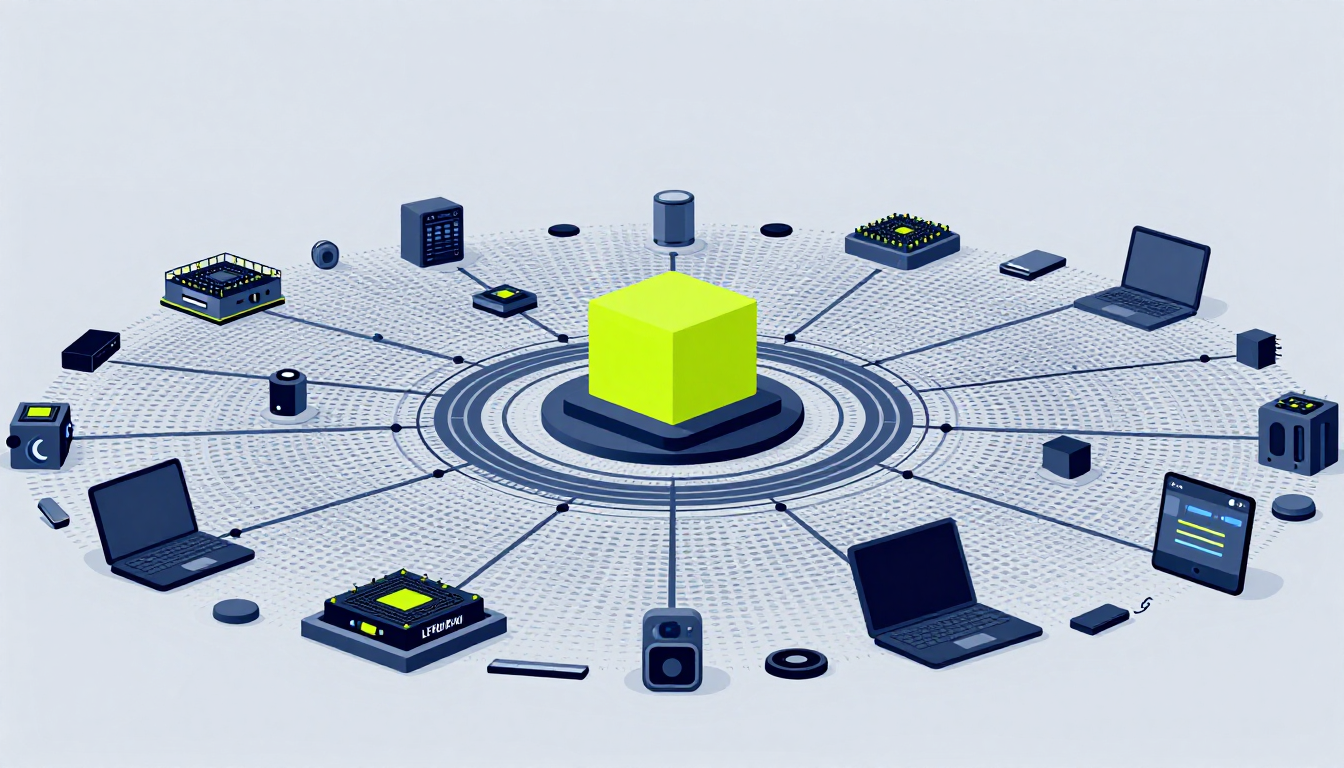
Here's where things get really interesting. LFM2.5-230M can run on smartphones, laptops, robotics hardware, and embedded systems. No cloud dependency required.
I've been saying this for a while now, but the cloud dependency problem is one of the biggest barriers to enterprise AI adoption. Privacy-sensitive data processing in healthcare, legal, and financial sectors can't always leave the premises. Offline or low-connectivity environments need AI that works without a network. Real-time inference requirements demand latency that cloud round-trips can't always guarantee.
Liquid AI is positioning this model as a solution to all of these problems. And the 230M parameter count isn't a limitation — it's the design feature that makes this possible. You can deploy this at scale with minimal infrastructure overhead. That's not just convenient; it's transformative for certain use cases.
The edge deployment angle is particularly compelling for robotics and IoT applications where every millisecond counts and cloud connectivity isn't guaranteed. If you're building autonomous systems or industrial automation, having AI that runs locally isn't a nice-to-have — it's essential.
Liquid AI's Architecture Philosophy
Liquid AI's approach reflects something broader happening in the industry: a shift away from one-size-fits-all foundation models toward task-optimized architectures.
Their earlier LFM2-Extract models (350M and 1.2B parameters) were already multilingual and optimized for structured data extraction. But LFM2.5-230M pushes the efficiency frontier even further. It demonstrates that you can go smaller and still achieve state-of-the-art results — if you optimize properly for your target workload.
This is the kind of work that should make foundation model developers uncomfortable. It's proof that parameter count isn't everything, and that thoughtful architecture design can outperform brute-force scaling. The industry's been so focused on making models bigger that it almost forgot about making them smarter for specific tasks.
Liquid AI's research suggests that the future isn't about choosing between small and large models. It's about using the right model for the right job, and having the infrastructure to deploy both at scale.
What This Means for Enterprise AI Strategy
For CTOs and AI leaders evaluating model architectures, LFM2.5-230M makes a compelling case for hybrid strategies that most organizations are ignoring.
Here's the playbook: use larger models (3B+) for complex reasoning, creative tasks, and open-ended analysis. Deploy tiny, task-specific models (230M or less) for high-volume structured data extraction, tool calling, and agentic pipeline orchestration. Leverage edge deployment to reduce latency, cost, and privacy risks.
This tiered approach could significantly reduce inference costs while improving reliability for production workloads. And I don't mean marginal savings — we're talking about order-of-magnitude improvements in cost efficiency for certain use cases.
The organizations that get this right will have a serious competitive advantage. They'll be able to deploy AI at scale without breaking the bank, while still maintaining the capability to handle complex reasoning when needed. It's not about choosing sides in the small-vs-large model debate — it's about recognizing that both have their place.
Most enterprises are still stuck in "one model to rule them all" thinking. That's going to get expensive, fast.
The Bigger Picture: Efficiency Over Scale
LFM2.5-230M arrives at a moment when the AI industry is finally grappling with the environmental, economic, and practical costs of ever-larger models. And Liquid AI's work demonstrates something important: for many production use cases, the optimal path forward isn't to build bigger models, but to build smarter ones.
Data extraction. Agentic workflows. Edge deployment. These aren't niche applications — they're the backbone of enterprise AI infrastructure. And for all of them, the 230M parameter count isn't a limitation. It's the design feature that enables deployment anywhere, at any scale, with minimal infrastructure overhead.
The environmental angle matters too. Every parameter you don't need is energy you don't have to burn. In an industry that's already under scrutiny for its carbon footprint, efficiency isn't just good business — it's responsible.
Liquid AI has essentially proven that the future of production AI isn't about scale. It's about task-specific optimization. And that's a message the industry needs to hear, even if it means admitting that sometimes smaller really is better.