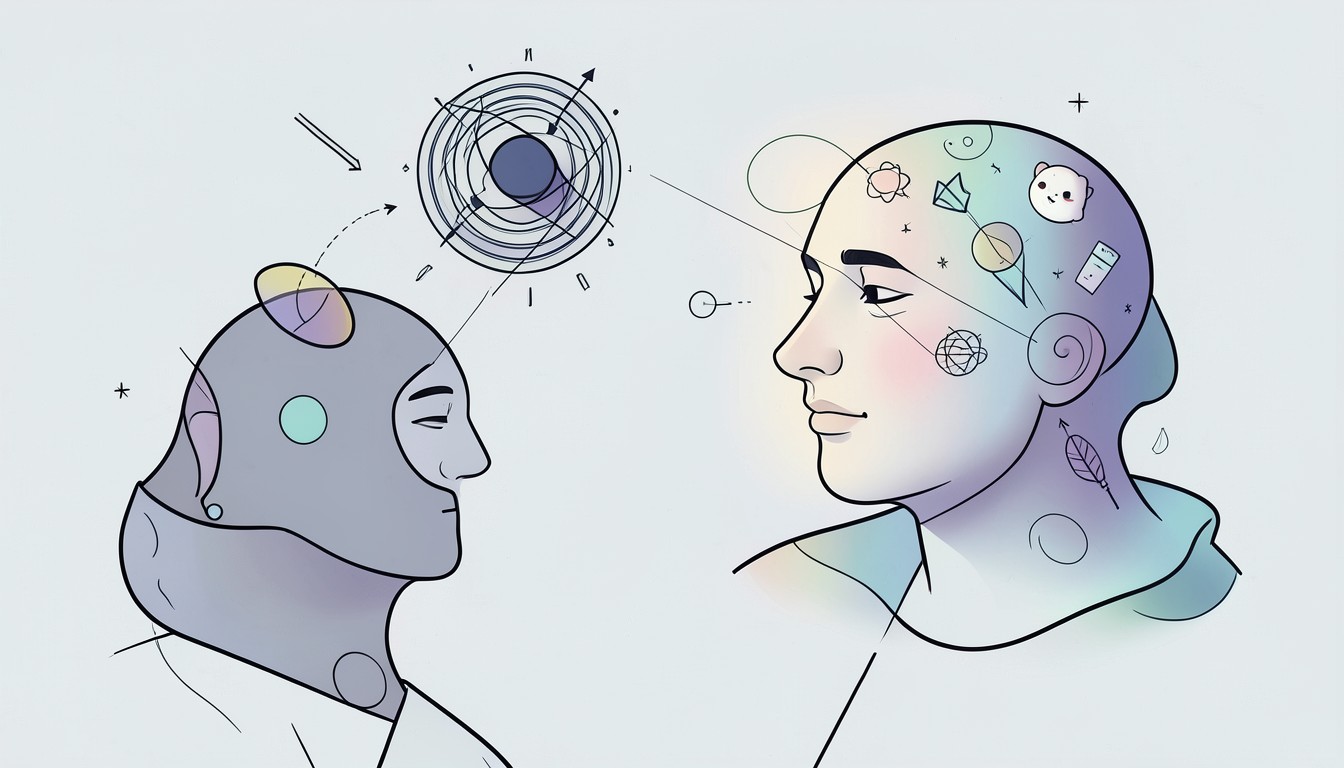
Introduction: The Clash Between Social Gossip and Direct History
Human social life is built on a delicate architecture of trust, reputation, and whispered consensus. For generations, evolutionary psychologists and sociologists have studied indirect reciprocity—the mechanism by which we evaluate someone's moral standing through third-party reputation before deciding whether to extend cooperation. But what happens when public consensus violently collides with private reality? Imagine discovering that a universally praised community pillar has treated you with cold indifference, while an individual burdened with a toxic social reputation once showed you genuine kindness when you were in need.
A landmark study recently published in Evolution and Human Behavior by researchers at Rissho University investigates this exact tension. Led by Professor Hitoshi Yamamoto, the research team examined how people resolve discrepancies between public reputation and direct personal experience. The findings reveal a striking psychological reality: when evaluating uncooperative acts, direct personal history triumphs over social gossip. Yet, this decision-making process operates through a deeply asymmetric moral calculus.
AI Impact on Human Psychology: Mapping the Asymmetric Moral Calculus
To uncover how human beings weigh these conflicting social signals, the research team conducted scenario-based experiments featuring realistic workplace and community interactions. Participants observed situations where an actor either agreed or refused a request for help, while researchers systematically manipulated both the target's public reputation and their direct personal history with the evaluator.
The results exposed a profound double standard in human moral cognition. When someone offered help, praise was universal and unconditional. The recipient's prior history or public reputation had virtually zero bearing on the positive evaluation; helping behavior is celebrated across the board.
However, when an individual refused to help, the evaluator's personal history with that person completely dominated judgment. If an actor held a negative public reputation but had previously helped the evaluator, observers judged a refusal far more harshly—a phenomenon the study highlights as the plight of the "favored wrongdoer." Conversely, if a person possessed a stellar public reputation but had previously slighted the evaluator, observers judged a refusal much more leniently.
Crucially, the study also uncovered a subtle boundary regarding retribution. Even when an individual faced someone with a terrible public reputation who had previously mistreated them—creating an open-and-shut case for justified refusal, observers did not rate the act of withholding help as a moral good. Instead, they viewed the refusal as entirely neutral. Human social cognition permits withholding cooperation from uncooperative actors, but it stops short of elevating punitive retaliation into virtue.
What Is AI in Psychology and Can AI Understand Human Moral Cognition?
As we examine these intricate findings through the lens of modern technology, a pressing question emerges: what is ai in psychology, and can ai understand human psychology for such complex moral trade-offs?
In contemporary scientific and clinical domains, artificial intelligence in psychology refers to the application of machine learning algorithms, natural language processing, and computational models to analyze behavioral patterns, simulate cognitive processes, and predict emotional responses. These computational systems ingest vast datasets, from clinical transcripts to online interactions, to map how humans think, feel, and make decisions.
Yet, answering whether AI can truly understand human psychology exposes the profound gap between algorithmic data processing and lived human experience. Current artificial intelligence models excel at aggregating quantifiable signals, such as star ratings, upvotes, transaction histories, and public sentiment scores. These automated reputation systems operate on explicit, transparent metadata.
However, as the Rissho University study demonstrates, human psychological trust is fundamentally nonlinear and deeply relational. AI systems struggle to replicate the asymmetric moral calculus where a single private act of kindness completely overrides a lifetime of public gossip. An algorithm looking at aggregate data evaluations would likely penalize a "favored wrongdoer" based purely on their negative public score, entirely missing the nuanced emotional weight of personal history. AI can model statistical tendencies and categorize behavioral trends, but it lacks the phenomenological anchor of lived experience, the felt sense of betrayal or gratitude that anchors human moral judgment.
Navigating Reputation in the Age of Automated Trust Metrics
The implications of this research extend far beyond academic behavioral laboratories into digital environments, decentralized networks, and automated trust metrics. Modern digital platforms increasingly rely on algorithmic scoring, reputation indexes, and automated moderation to govern social and economic interactions.
When decentralized protocols or online rating systems evaluate human reliability, they often assume that reputation is a uniform, objective currency. Yet human psychology operates on a much more sophisticated, subjective ledger. We do not evaluate cooperation in a vacuum; we filter every refusal and every favor through the lens of our unique, personal relational history.
Understanding these psychological dynamics is essential as we design the next generation of digital tools and interactive systems. If we want artificial intelligence to assist effectively in dispute resolution, community governance, or mental health applications, it must account for the reality that human trust cannot be reduced to simple aggregate scores. Lived experience will always retain its sovereign power over social reputation, reminding us that authentic human connection defies algorithmic simplification.