
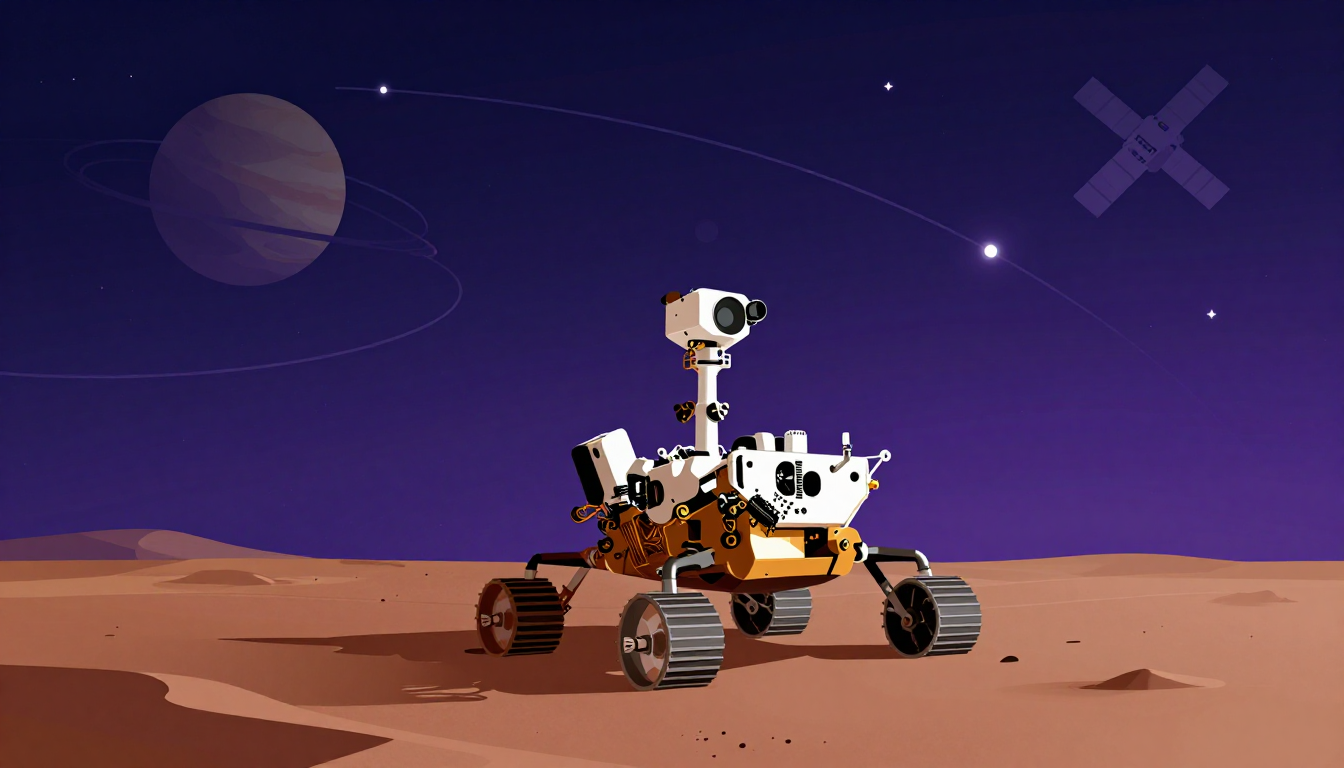
Curiosity Rover at 13: How JPL Engineers Keep the Mars Veteran Doing Science
Launched in 2011 and landing on Mars in 2012, the Curiosity rover was designed for a two-year mission. Thirteen years later, it continues to traverse Gale Crater on the Red Planet, having driven nearly 37 kilometers, drilled into and sampled 42 different rocks, and snapped nearly 763,000 photos. The fact that this robot is still hard at work getting real science done at the age of 13 is absolutely incredible.
The Longevity Challenge
Maintaining a robot 200 million kilometers from home is an unprecedented engineering challenge. Mars is an actively hostile environment for robots, and the only kind of maintenance that JPL engineers can do is send very careful software updates. Nevertheless, the clever folks at JPL have managed to keep Curiosity safe, warm, mobile, and sciencing, despite well-worn wheels and less and less power every day.
One of those folks is Alexandra Holloway, the assistant team chief for engineering operations for Curiosity. She spoke to IEEE Spectrum about keeping Curiosity roving, what its future looks like, and how JPL has used that experience to make rovers like Perseverance even more capable.
How Curiosity Survived 13 Years on Mars
Alexandra Holloway: I'm astonished! The longevity comes from a lot of ongoing work. It's not just that Curiosity was built robustly; it's also because we're continuously putting in effort to ensure it can continue to have that lifespan. I think about all the different kinds of embedded systems there are, from cars to refrigerators, and none of them have the kind of longevity that we have with the rover. It's mind-boggling, and it's inspiring.
Perseverance vs. Curiosity: Engineering Differences
Question: Is the Perseverance rover, which is nine years younger than Curiosity, significantly different in terms of its hardware and software?
Holloway: In terms of hardware, the rovers are actually very similar. Both use a RAD 750 processor and have the same amount of memory. However, Perseverance has an extra processor specifically for visual odometry, which allows it to drive autonomously. This difference reflects their primary mission designs: Perseverance was designed for driving long distances, while Curiosity is a mission focused on sampling as it goes. So Perseverance's onboard scheduling capabilities are there to optimize its driving.
In fact, just last year, Perseverance surpassed Curiosity's driving distance after only about three years on Mars.
Software Fixes That Keep Curiosity Rolling
Question: Do you have some examples of significant tweaks the team has made to keep Curiosity roving?
Holloway: [Answers questions about specific software updates and engineering workarounds for hardware wear]
The Future of Curiosity
Curiosity continues to make groundbreaking discoveries, finding organic molecules never seen before on Mars and providing insights into the planet's ancient habitable environments. As engineers continue to find new ways to keep the rover operational, Curiosity's mission keeps extending, offering more opportunities for scientific discovery.
The rovers' success is made possible by NASA's Deep Space Network, which provides the critical communication link between Earth and Mars. Without this global array of giant antennas, missions like Curiosity and Perseverance would be impossible.
Lessons Learned for Future Missions
The experience gained from keeping Curiosity operational for over a decade has directly informed the design and operations of Perseverance. JPL engineers have developed new techniques for remote maintenance, software updates, and hardware management that will benefit future Mars missions.
Thirteen years, zero oil changes. How JPL engineers maintain the Curiosity rover across 140 million miles is a testament to engineering ingenuity and continuous innovation. The rover that was designed for two years of science is now entering its second decade of discoveries, proving that with careful maintenance and creative problem-solving, robotic explorers can outlast even the most optimistic mission projections.