

A Silent Shadow in Geosynchronous Orbit
Something is stalking our missile-warning infrastructure, and the Pentagon is paying very close attention. A mysterious spacecraft has been detected performing highly precise, low-velocity proximity maneuvers near a critical US missile-warning satellite. This isn't a drill. It isn't a piece of dead debris drifting listlessly through the graveyard orbit, either. It is a controlled, calculated close-approach.
If you are a commander sitting at the Space Force operations center in Colorado, this is the nightmare scenario. You rely on these multi-billion-dollar warning platforms to spot infrared signatures of launches the split-second they happen. If those eyes in the sky are blinded, our national defense deterrent takes a hit. We can't talk about space as a contested domain in abstract, academic terms anymore. The threat is right in our backyard, executing maneuvers designed to probe for weaknesses.
Why Orbiter Proximity Tactics are Raising Alarms
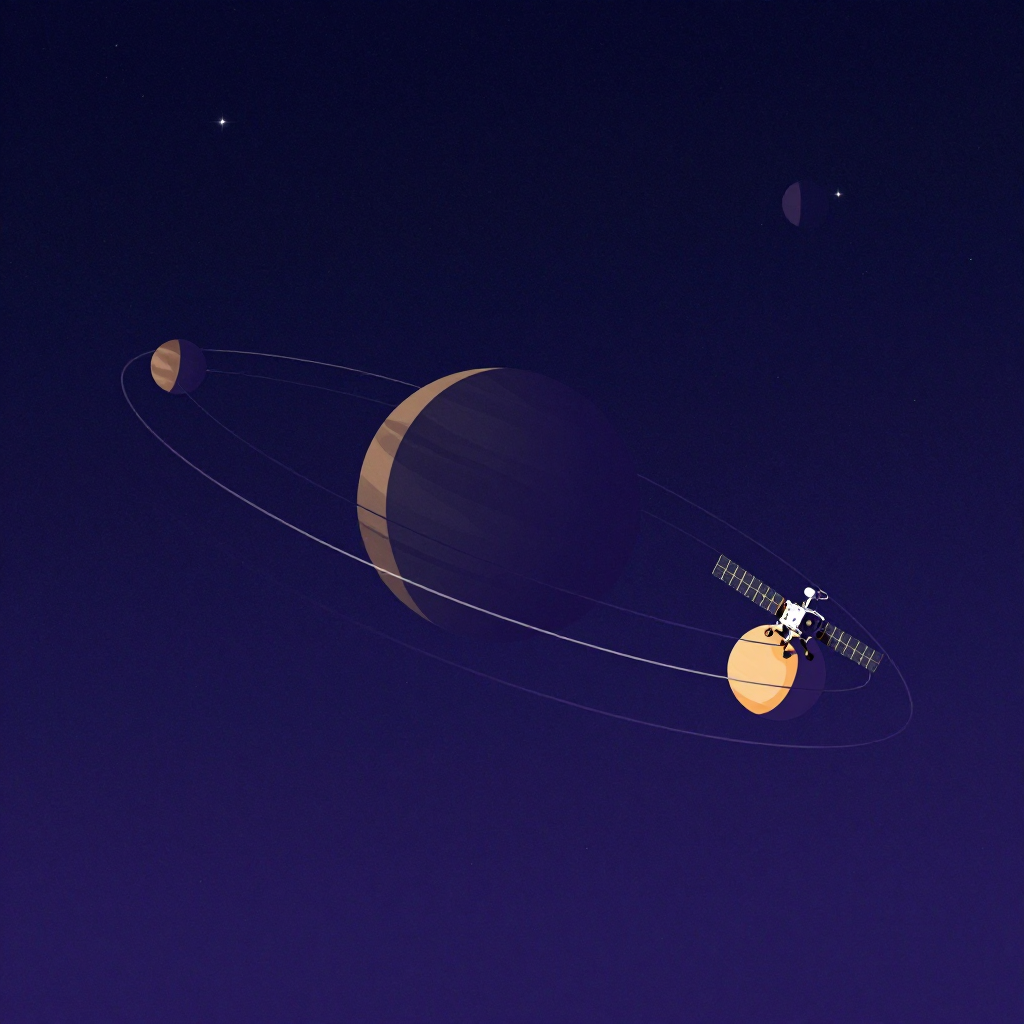
The target of this attention is a crown jewel. Missile-warning satellites sit in geosynchronous orbit, watching the planet below for the heat signatures of booster rockets. When a mysterious spacecraft starts creeping within shadowing distance, it raises a cascade of immediate questions. What is its payload? Does it have a robotic arm? Is it packing electronic warfare jammer arrays, or does it just want to take photos?
This isn't an isolated headache. Over the last few years, we've seen a quiet surge in proximity operations. We know this because the Pentagon has had to rapidly scale its space situational awareness. If you look at how the military tested its orbital inspection capabilities from New Zealand, you can see how badly the US wants its own eyes on these close-encounter incidents. An inspector satellite can swoop in, snap closeups, and tell you if the mysterious intruder has a mechanical arm or an explosive charge. But when an adversary does it to us first, we're stuck on the defensive.

Why Space and Defense Policy Struggles With Ambiguity
Here is the real problem: if that warning satellite goes dark tomorrow, how do you prove why? Space is a harsh neighborhood. Solar flares fry circuits. Micro-meteoroids punch holes in solar arrays. Old batteries explode. If a critical platform suddenly stops responding, a commander has to make a choice. Was it a hardware failure, or did the shadow satellite next to it do something nasty?
This ambiguity is the core challenge of modern space and defense policy. Our current frameworks are built for the Cold War, where a missile launch was obvious. But how do you retaliate against a cyber-hack or a stealthy microwave burst that leaves no physical evidence? Since 2020, when the Space Force completed its first full fiscal year, the service has struggled with this exact blind spot. Without clear attribution, you can't mount a credible defense. You can't even get allies to agree that an attack has occurred. Adversaries know this. They use that hesitation to their advantage.
Inside the Mitchell Institute Wargame Scenarios
The defense community isn't ignoring this. In a workshop run by the Mitchell Institute for Aerospace Studies, fifty experts sat down to game out these disaster scenarios. Led by retired Space Force Colonel Charles Galbreath and retired Air Force Colonel Jennifer Reeves, the wargame walked participants through a series of escalating orbital crises.
The scenarios didn't start with an overt space war. They began with a gray-zone maneuver. In the wargame, China docked one of its inspection craft with an inactive European commercial satellite and moved it without warning. It was a classic "show of force." From there, the timeline rolled forward: Day 0, Day 45, Day 90, Day 180. The threats expanded to involve Russia, Iran, and unidentified actors. The wargame showed that when space threats collide with terrestrial conflicts, the decision-making pipeline collapses under the weight of information overload. If you are interested in a deeper look at the wargame's structure and its uncomfortable conclusions, you can read our full summary of how the Pentagon plans to respond to dead satellites or check the original reporting from Ars Technica on the wargame scenarios.
The Boiling Frog Problem in Orbital Security
Reeves brought up a phrase during the post-game debrief that should make every policy planner sweat: the "boiling frog" dynamic. If an adversary jams a GPS signal or uses a ground-based laser to temporarily blind a sensor, it is annoying, but it is not an act of war. If they do it again next month, it starts to feel normal.
By 2024, the escalation of these gray-zone maneuvers had reached a point where the military began to normalize them. When we treat minor hostile acts as routine, we cede the initiative. We allow competitors to write the rules of orbit. This slow degradation of security means that the threshold for a response keeps shifting outward. By the time someone decides to act, the frog is already boiled. The wargame participants agreed that we need to define clear red lines now, rather than trying to invent them during a crisis.
Building a Resilient Space Defense Strategy
To survive this new era, the United States needs to shift its space defense strategy toward resilience. We can't rely on a few billion-dollar "lone wolves" in geosynchronous orbit. They're too tempting as targets. Instead, the focus is shifting toward proliferated low-Earth orbit (pLEO) constellations. If you have hundreds of smaller, cheaper satellites working in a mesh network, taking out one or two doesn't break the chain. Allied nations are aligning their defence space policy to mirror this architecture, ensuring a unified security standard.
But resilience isn't just about hardware. It is about decision-making. We're seeing a major push toward autonomous satellite missions, where satellites can detect threats and execute evasive maneuvers without waiting for a ground command. In space, light-speed communications still take time to travel to the ground and back. If a target is closing in, the satellite needs to think and act on its own. Ground stations must also be hardened against physical and cyber threats, and we must build the legal and diplomatic policy to back up our actions in orbit.