The AI Impact on Human Psychology and Biological Futures
Ask anyone on the street whether artificial intelligence will destroy civilization, and you'll get a rehearsed sci-fi monologue about killer robots or digital utopias. We are endlessly obsessed with Hollywood extremes—either extinction or eternal leisure. But evolutionary biologists and cognitive scientists are looking at something far quieter, slower, and infinitely more profound.
The real story isn't about Skynet. It's about how daily life alongside algorithms quietly alters our attention spans, emotional regulation, and social bonds. When we examine the ai impact on human psychology, we aren't just looking at screen fatigue or modern distraction. We are observing the early ripples of a new selective pressure—one where our minds adapt to machines that curate our desires, mirror our thoughts, and mediate our relationships. It is a vivid example of what The Great Inversion describes: technology turning inward to reshape the organism itself rather than the world around it.
Robert Brooks, an evolutionary biologist at the University of Chicago, recently published a paper in The Quarterly Review of Biology examining how AI might shape human evolution. Instead of invoking sensational panic, Brooks treats AI the way biologists treat any major environmental shift: as a novel dynamic that alters how we live, mate, and pass down cultural and genetic traits. And it starts right inside our heads.
What Is AI in Psychology and Cognitive Modeling?
To understand why algorithms are changing us, we first need to define our terms. So, what is ai in psychology? In practical terms, artificial intelligence in psychological contexts refers to computational systems trained to model, simulate, or interpret human thought patterns, affective states, and behavioral tendencies.
For decades, psychologists used statistical models and linear regressions to study human behavior. Today, machine learning models analyze vast datasets of human expression—from keystroke dynamics and vocal inflections to the subtle micro-choices we make on dating apps and social feeds. These systems don't just categorize us; they predict what will hold our attention, what will trigger outrage, and what kind of digital companionship we find comforting.
In research and clinical settings, computational tools act as high-speed mirrors. They parse behavioral data at a scale impossible for human clinicians, mapping cognitive drift and emotional resilience across populations. Yet, this brings us to a persistent friction point that researchers grapple with daily: the gap between simulation and genuine comprehension.
Can AI Understand Human Psychology or Just Mimic It?
It's the question every clinician and computer scientist debates over coffee: can ai understand human psychology, or is it merely running sophisticated parlor tricks?
The short answer is mimicry—but mimicry so advanced that its practical effects on human behavior are remarkably real. Large language models and predictive algorithms do not feel grief, anxiety, or affection. They possess no internal emotional life, no childhood trauma, and no subjective consciousness. When an AI chatbot offers empathetic phrasing or de-escalates a frustrated user, it is executing pattern-matching based on billions of parameters of human text.
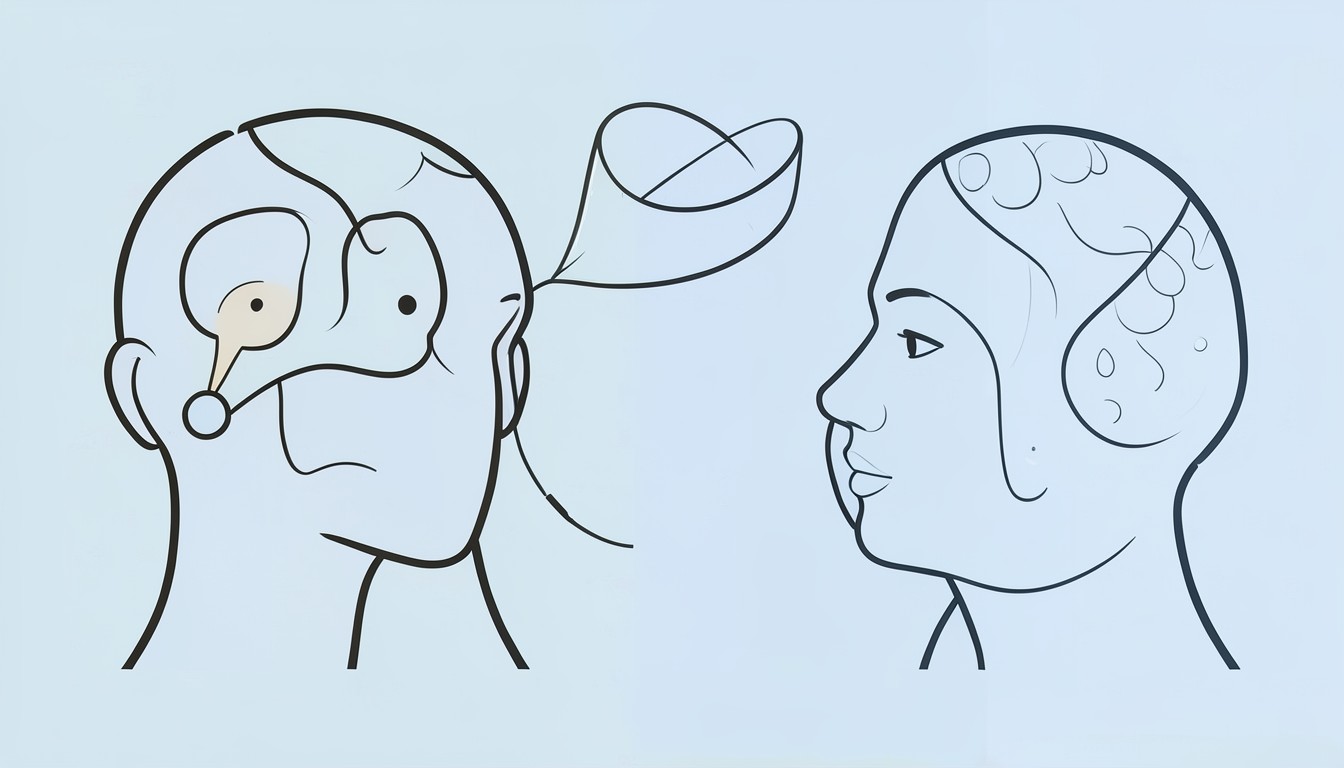
However, from an evolutionary standpoint, subjective understanding matters far less than functional impact. If a human user begins to rely on an AI companion for emotional regulation, validation, or social support, the psychological consequences are tangible. Researchers studying AI companionship and metaphysical delusions have seen how easily that mirror can bend a user's sense of reality. People alter their communication styles, outsource their introspection, and restructure their patience thresholds to match machine responsiveness.
Brooks' research highlights that these human-AI interactions increasingly mirror biotic relationships in nature—acting like symbionts, competitors, or environmental scaffolds. When machines become our primary sounding boards, our cognitive habits shift. We adapt our mental models to suit the algorithm, demonstrating that deep comprehension isn't required for an artificial system to reshape human psychology.
Evolutionary Pressures, Brain Size, and Daily Interactions
How does daily digital life translate into evolutionary trajectories? Critics often scoff at the idea that using apps or chatting with bots could alter human biology. After all, biological evolution operates across millennia and generations, not software update cycles.
Yet, human evolution has always been biocultural. For thousands of years, our ancestors shaped the evolution of crops, livestock, and domestic animals through intentional and accidental selection. In turn, our own biology shifted in response to agriculture, urban living, and social structures—much as our bodies once reorganized themselves in the great skeletal transition of Homo erectus. Brooks argues that AI-driven environments introduce similar selective pressures.
Consider ongoing discussions around brain size and cognitive specialization. Some paleoanthropologists note that human brain size has fluctuated over the last several thousand years as external storage systems—from writing to digital databases—relieved individuals of certain memorization and processing burdens. While predicting exact genetic outcomes in a fast-moving technological landscape is notoriously difficult, the immediate cultural and developmental shifts are undeniable.
When attention spans are monetized and fragmented by recommendation engines, the traits that ensure social and economic success shift. People who navigate hyper-connected digital ecosystems thrive differently than those who don't. While these cultural shifts operate much faster than genetic selection, they influence mating patterns, social dynamics, and developmental environments—the very crucible in which human traits are forged.
Navigating Our Cognitive Co-Evolution
We are not passive victims of silicon evolution. Recognizing how algorithms influence our minds gives us the agency to push back.
The transition we are experiencing requires intellectual honesty. We must stop treating AI as an external oracle or a demonic existential threat and start treating it as a powerful cognitive environment. By understanding the real mechanics of how technology alters our attention, emotional depth, and social instincts, we can design healthier boundaries.
The future of human psychology won't be dictated solely by what machines can do, but by how wisely we choose to engage with them. As we journey deeper into this age of algorithms, our greatest challenge is ensuring that in our rush to build smarter tools, we don't accidentally forget what makes human thought worth preserving.