
You Pull the Cork. The Real Work Starts Before That.
Most people think popping a cork is an ending—a celebratory punctuation mark to seal the deal on dinner or a special night. But let’s be honest: we don’t really look at the cork. It sits there, a brown nub in the neck of the bottle, looking more like an afterthought than a player. It’s not just what stays in the bottle that matters—it’s what sneaks through. Oxygen doesn’t burst through like a door swinging open. It trickles, seeps, and navigates tunnels no one even knew existed.
Natural cork is made of dead cells harvested from the bark of Quercus suber, the cork oak. Those cells are packed with suberin—a waxy, water-resistant substance that’s amazing for stopping liquids, but lousy at staying perfectly uniform. Which means oxygen doesn’t zip straight through like water through a straw. It snakes around, gets stuck, detours, and sometimes waits years before finishing the trip.
That’s why older wines don’t just taste old—they taste changed. The oxygen didn’t flood in. It arrived molecule by molecule, and every one brought a whisper of transformation to the wine inside.

The Quiet Chemistry of Aging
A good bottle of wine doesn’t just sit around waiting to be opened. Even sealed, it’s busy—aging. And aging needs oxygen. Not a lot—not enough to turn the wine sour—but just enough to coax out tannins, smooth rough edges, and let deep aromas unfurl like old paper in water.
Winemakers have known this intuitively for centuries. But the how? The physics of tiny air molecules finding their way through a natural plug that looks like cork but acts more like a labyrinth? That’s where things got murky.
Cork is famously inconsistent. Two corks from the same bag, same lot number, same producer? They might behave differently once sealed. That’s not a myth. It’s why some bottles age gracefully for decades while others go flat—or worse, turn vinegary—way too soon.
Micro-oxygenation is real. But it’s not a dial you can turn smoothly. Until now.

A Bottle That Whispers Its Secrets
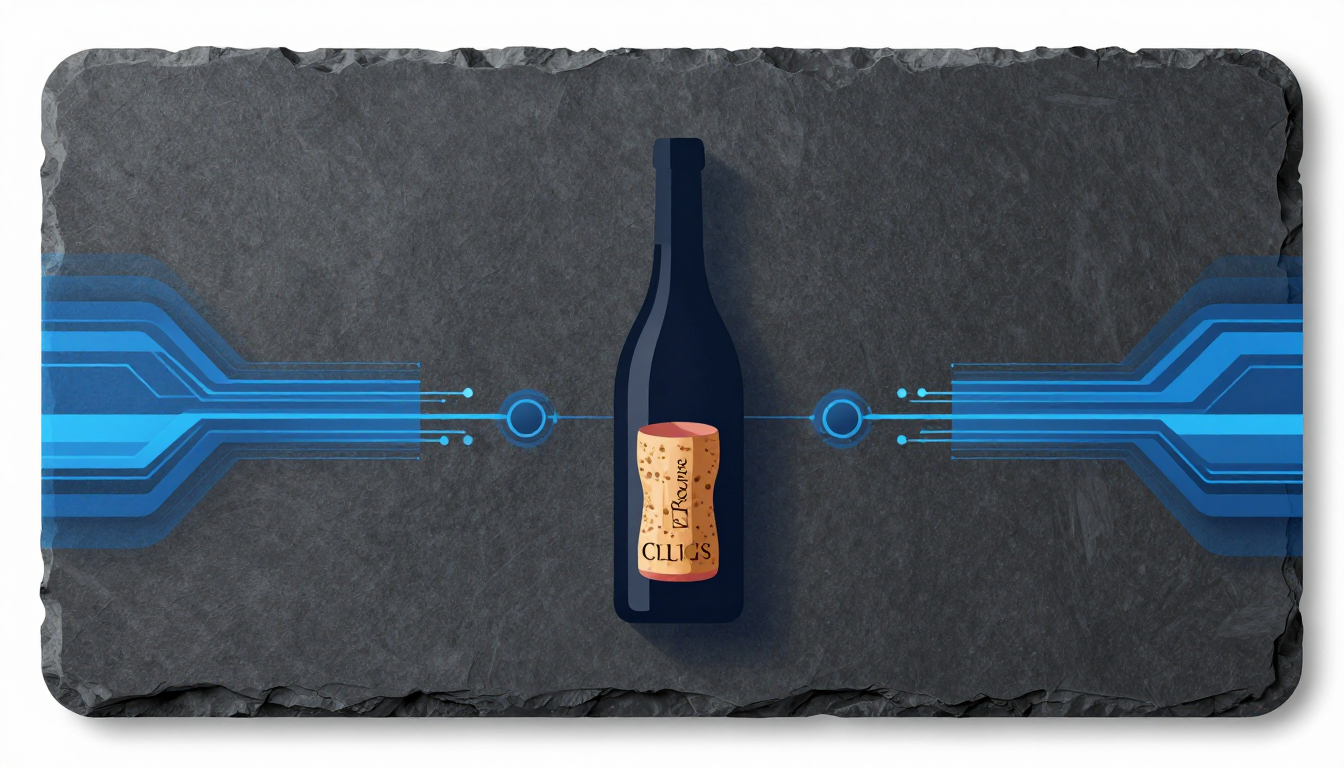
An experimental wine bottle design recently gave researchers a way to watch oxygen move—not guess at it, not measure it after the fact, but track in real time how molecules migrate through cork.
The setup isn’t sci-fi: it’s clever engineering. Sensors placed in or around the bottle catch oxygen flux as it happens. Researchers can see, for example, how temperature swings nudge oxygen through the cork at unexpected times—not just in steady drips, but in bursts tied to pressure shifts inside the bottle.
What’s revealing is how uneven the journey is. Some oxygen molecules slip through almost immediately; others linger in cork pores for months before finally reaching the wine. It’s not a steady trickle; it’s more like a choreographed mess of arrivals and departures.
The study behind this isn’t just about cork. It’s about the entire conversation between wine and time—the back-and-forth that defines what we call “aging” in a bottle.
Why This Changes What Winemakers Think
For winemakers, this isn’t just academic. It changes how they decide to seal a wine—and what they expect from that closure over time.
Cork has long been the default. But it’s a guessing game: How much oxygen will pass through? Will that batch of bottles age together—or veer off in opposite directions? With this new insight, winemakers can model oxygen transfer more reliably. They’ll know when a wine needs to breathe slowly versus locking it down tight.
And the implications stretch beyond cork. Screw caps, glass stoppers, synthetic closures—all of them manage oxygen differently. Some block it almost entirely; others leak at their own unpredictable rates. Real-time data means winemakers can match the right closure to the wine’s personality, not just its varietal.
A Pinot Noir that needs gentle aging? You’ll want a closure with steady, low oxygen exchange. A bold Cabernet that needs agitation to soften tannins? You might need a slightly higher flow rate. This isn’t guesswork anymore—it’s engineered intuition.
What Happens After the POP?
Think about how much speculation has happened over centuries, just before you pop the cork. People argue about optimal storage temperature, bottle position (upright vs. laid down), and even what kind of corkscrew to use.
But none of that matters if the oxygen’s already taken the scenic route through the cork during those long, silent years. The real drama happens in the dark—between the wine and the air it wasn’t supposed to meet.
Every bottle tells a story. But now, for the first time, we’re learning to read it—molecule by molecule. The next time you pull a cork and smell that first puff of wine, remember: it’s not the beginning of the story. It’s just when you finally catch up to what’s been going on all along.