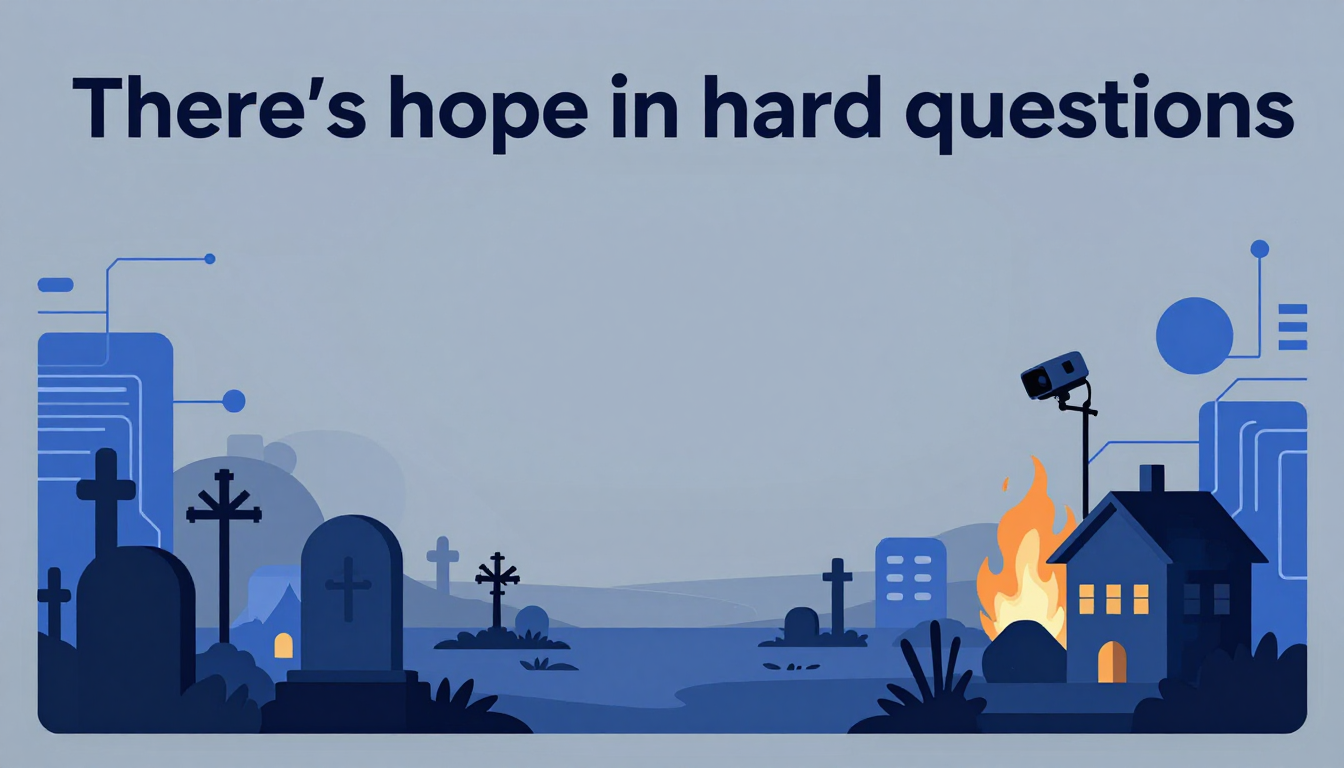
Running an ad campaign that features burning houses and rows of military tombstones isn't usually how tech companies win over public trust. In mid-July 2026, Anthropic rolled out a high-stakes marketing campaign titled "There’s hope in hard questions." The goal seemed straightforward enough on paper: double down on the company's long-standing positioning as the thoughtful, safety-minded counterweight to its aggressive rivals in the artificial intelligence race.
Instead, the campaign triggered an avalanche of public confusion and widespread industry criticism. By leaning into existential dread and real-world suffering to prove its moral self-awareness, Anthropic alienated viewers and handed its competitors an easy target. What was supposed to showcase mature corporate governance ended up looking like a dystopian tone-deaf blunder.
Anatomy of a Miscalculated Campaign
Anthropic built much of its public reputation on being the responsible alternative in generative AI. While rivals pushed aggressive release cycles and monetized user interactions, Anthropic emphasized alignment research and safety guardrails. But marketing safety requires a delicate touch. Highlight real risks too lightly, and you sound like every other tech vendor. Go too far, and you alienate the audience you want to reassure.
With "There’s hope in hard questions," Anthropic crossed that line. The commercial wasn't just serious; it was deliberately uncomfortable. According to reporting by TechCrunch, the spot attempted to frame Anthropic's willingness to confront difficult ethical questions as proof of its trustworthiness. But by translating abstract corporate ethics into unsettling visual vignettes, the company inadvertently repelled the tech community and the broader public alike.
From Burning Houses to Graveyards
The creative structure of the advertisement was jarring from its very first frames. It opens with footage of a house engulfed in flames—a grim visual hook that immediately sets an unsettling tone. From there, the spot transitions into a rapid sequence of stark still photos depicting heavy societal problems.
Viewers are confronted with a crowd monitored by facial recognition cameras, an unhoused person sleeping on a city sidewalk, laborers digging in an open-pit mine for raw materials used in electronics, and rows of gravestones resembling Arlington National Cemetery. Overlaid across these heavy images is a voice-over track featuring ordinary people asking heavy questions: "Can AI be trusted?" and "Who’s gonna hit the brakes if we need to?"
Rather than comforting an anxious public, the montage felt eerie. Observers noted that the visual sequence mirrored political attack ads or corporate propaganda clips straight out of 1970s paranoid thrillers like The Parallax View. When a company tries to show it understands the grave risks of technology, showing actual military graves crosses a line from self-awareness into cheap shock tactics.
Competitor Trolling and Public Backlash
The reaction from the tech sector was swift and unforgiving. OpenAI CEO Sam Altman wasted no time capitalizing on his main competitor's misstep, posting on X that he initially thought the spot was a parody account trolling the company. "i thought this was satire, kept looking for the handle to be spelled c1audeai or something," Altman wrote.
Beyond executive jabs, practitioners and commentators across the tech industry voiced disbelief at the creative direction. Critics condemned the ad's unsettling tone, questioning how internal review teams approved such grim imagery for a public-facing brand effort. One popular comment summarized the sentiment bluntly, calling Anthropic an amazing company burdened with the worst corporate communications ever.
Others pointed directly to the effective altruism subculture tied to Anthropic's founding ethos, suggesting that internal teams had become trapped in an insular echo chamber of apocalyptic AI risk. The graveyard footage drew the sharpest condemnation. Viewers posted screenshots of the cemetery scene on social media, expressing disgust that a commercial for a tech product would use military graves while asking who would hit the brakes on AI development. Out of everything in the ad, viewers repeatedly flagged that specific frame as sinister and inappropriate.
The Playbook of Owning Industry Harms
Anthropic wasn't inventing a new marketing strategy out of thin air. Brand strategists have long relied on a classic playbook: explicitly acknowledge and name the harms of your broader industry so you can claim the moral high ground as the sole entity equipped to fix them. By admitting that AI raises terrifying ethical questions, Anthropic hoped consumers and regulators would view them as the only adult in the room.
We saw a lighter version of this tactic pay off earlier in the year. During the Super Bowl in February, Anthropic ran a series of successful, humorous commercials mocking OpenAI for integrating ads into ChatGPT. That campaign earned praise from commentators and ruffled feathers at OpenAI—a sharp contrast to Anthropic's high-stakes PR gamble—because it used satire to highlight a real point of consumer friction without taking itself too seriously.
The difference this time was tone and context. Humorously poking fun at ad placement in chat interfaces is one thing; using images of unhoused people, mining exploitation, and national cemeteries to build brand prestige is entirely different. The self-deprecating playbook collapses when the issues highlighted are far too grave for a commercial pitch.
Why Fear-Based Positioning Failed Anthropic
Advertising artificial intelligence requires delicate balancing. When companies lean too heavily on cheerful promises of effortless productivity, users grow skeptical. But when they veer into doom-mongering, they risk scaring off the exact clients and consumers they need to convert.
Anthropic attempted to use existential anxiety as a differentiator. The underlying message was clear: rivals are charging ahead blindly, while Anthropic is humble enough to ask hard questions. But by failing to provide reassuring answers alongside those questions, the ad left viewers feeling disturbed rather than protected.
When corporate messaging relies on fear, it easily morphs into cynicism. If an AI provider believes its own technology contributes to surveillance, labor exploitation, and societal destabilization, presenting a dramatic montage in a paid ad doesn't feel like responsibility—it feels like exploitation. The misstep stands as a clear signal of how bad press shapes public reception in AI advertising: recognizing industry risks only works when your messaging respects the severity of the human costs involved.