Canadarm2 Reportedly Unable to Move After Walk-Off
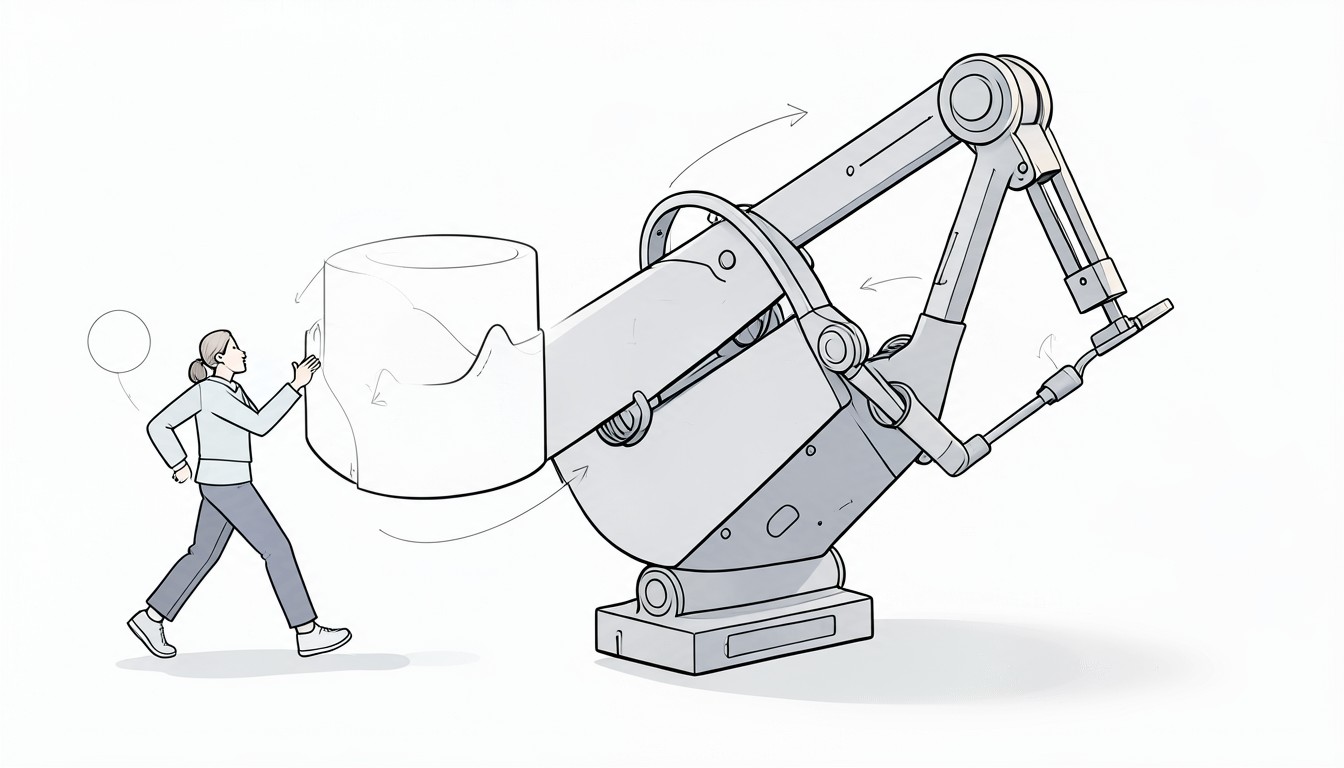
A report published by Ars Technica in September 2026 said the International Space Station’s 58-foot Canadarm2 could not move after astronauts performed a routine “walk-off” maneuver, a relocation in which the arm traverses between work positions. The available account describes NASA and its partners assessing the problem and adjusting operations as needed. It does not identify the failed component or establish a root cause. The report is therefore evidence of a reported mobility interruption, not a diagnosis or a complete account of operational consequences. Ars Technica, September 2026
The phrase “NASA Commercial Crew Program” appears in this discussion because it is a useful programmatic comparison, not because the arm is part of that program. Commercial Crew supports crew transportation to and from low Earth orbit through NASA’s commercial-provider arrangements. Canadarm2 is a station robotics system, developed through an international partnership led by the Canadian Space Agency. A problem with arm mobility is not, by itself, evidence of a Commercial Crew spacecraft or service failure.
What the September report establishes
The reported sequence is straightforward but limited: the arm had performed a walk-off and was then described as unable to move. The report characterized NASA and partner teams as assessing the issue and making operational adjustments where needed. Those details support saying that operators were responding; they do not support inferring a particular fault, repair plan, duration, or effect on a named mission. Ars Technica, September 2026
That distinction matters because “unable to move” is a functional description, not a technical explanation. A system may be unavailable to perform its normal movement while teams evaluate its state and manage work around it. Without a public technical finding, it would be premature to attribute the condition to a joint, power supply, software, control, or another subsystem. Nor does the report alone show that the arm was permanently disabled.
The June wrist-joint repair was a separate event
NASA’s June 30 account documents an earlier, specifically identified Canadarm2 fault. On May 27, during normal operations, the arm drew elevated motor current and did not move as expected. NASA and the Canadian Space Agency chose to replace a malfunctioning wrist joint. Astronauts Chris Williams and Jessica Meir carried out the replacement during a 7-hour, 20-minute spacewalk, completing the primary objective before concluding the excursion at 3:40 p.m. EDT. NASA, June 30, 2026
After the work, Mission Control powered up the arm and successfully completed an initial check of power and data connectivity. NASA said ground controllers would begin moving the arm over the following week as checkouts continued. The faulty wrist joint was to be returned to Earth for inspection and refurbishment for possible future use. NASA also described replaceable components and planned maintenance as part of the arm’s design, noting more than 25 years of continuous operations. These are documented facts about the June repair and its planned checkout, not proof of what happened in September. NASA, June 30, 2026
The two episodes should not be collapsed into one continuing failure. The June event has a named joint, a stated symptom, an astronaut repair and an initial post-repair check. The September account describes a later mobility halt following a walk-off but, in the material available, does not name a component or connect the condition to June’s replaced joint. A temporal sequence is not evidence of a shared cause.
Why Canadarm2 matters to station operations
Canadarm2 is a large robotic manipulator used in station activities that require controlled positioning and reach. The walk-off description itself illustrates that the arm can relocate between work positions rather than functioning only as a fixed appendage. Mobility limitations can therefore affect the set of tasks operators can conduct with the arm, even when other station systems remain available. The September account’s reference to operational adjustments signals that teams can adapt how work is conducted, but the source does not specify which tasks changed or how long any adjustment lasted. Ars Technica, September 2026
The June record offers a concrete example of maintenance planning: a failed wrist component was replaceable, astronauts performed an external repair, and ground controllers planned staged checks before movement. That example helps explain the station’s repair model, but it cannot be treated as the September response plan. The known June sequence is useful context precisely because it is specific and separately dated; it should not be used to fill gaps in the later report. NASA, June 30, 2026
What this means for NASA program oversight
For oversight, the central question is not whether a robotics interruption automatically signals a broader transportation-program failure. It does not. The relevant questions are what condition operators observed, what functions remained available, what work was deferred or rearranged, and what evidence supports the eventual diagnosis. In this case, the September account confirms assessment and operational adjustments in general terms, while leaving the underlying fault and specific effects unstated. Ars Technica, September 2026
The June repair shows why distinguishing maintenance episodes matters for program records: NASA publicly identified the May symptom, the wrist-joint replacement, the initial power-and-data check, and the next stage of ground-controlled movement. Comparable detail about the September episode would be needed before drawing conclusions about component reliability, recurrence, schedule impacts, or corrective action. Until such evidence is available, the disciplined conclusion is narrow: there was a reported post-walk-off mobility halt, and operators were assessing it and adjusting operations as needed. NASA, June 30, 2026; Ars Technica, September 2026
How this differs from the NASA Commercial Crew Program
NASA’s Commercial Crew Program concerns crew transportation services, while Canadarm2 is station infrastructure. The arm’s reported loss of mobility may be operationally important to station work, but the available reporting does not connect it to a Commercial Crew vehicle, launch, docking, or crew-transportation provider. Keeping these categories separate prevents a maintenance report about a robotic system from being misread as evidence about a distinct program.
This distinction also improves the meaning of program oversight. Evaluating Commercial Crew requires evidence about its own vehicles, services, and contractual performance; evaluating Canadarm2 requires evidence about station robotics, maintenance, and operational availability. The June wrist-joint repair supplies a documented maintenance case, and the September Ars Technica report supplies a later, less technically detailed mobility report. Neither should be stretched beyond the evidence it contains.