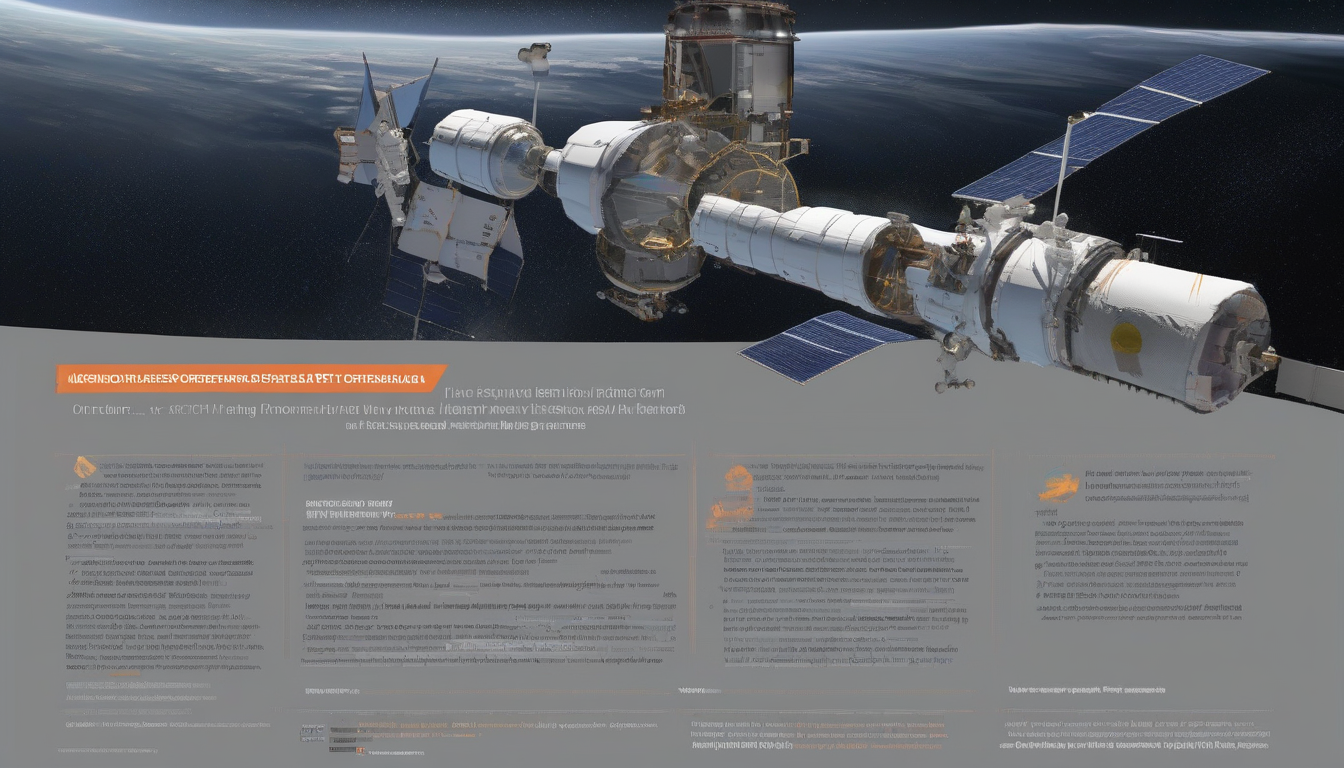
NASA’s Commercial Crew Program Just Got Real
This isn’t another press release. This is the moment NASA stopped asking for wishlists and started handing out a checklist.
For years, the Commercial Crew Program has been the agency’s most expensive gamble — a bet that private companies could do what government contractors couldn’t: build reliable, affordable human spacecraft. SpaceX proved it could. Boeing? Well, we all know how that story went. But now, with the ISS set to retire in 2030, NASA didn’t just need another ride to orbit. They needed a whole new economy up there.
So they wrote a draft RFP. And it’s brutal.
Not because it’s unfair. But because it’s honest. No more vague promises about "sustainability." No more "we’ll figure it out later" when it comes to life support or debris mitigation. This document doesn’t just outline what NASA wants — it demands proof you can deliver it, repeatedly, profitably, and without turning LEO into a graveyard.
Source
What They Actually Want — No Fluff
The draft RFP doesn’t beat around the bush. It lays out three non-negotiable pillars:
-
Technical specs you can’t game — not just "must have life support," but exactly how much redundancy, how many independent systems, what failure modes you must survive. No more "we’ll use off-the-shelf components" as a cover for cutting corners. If your oxygen scrubber fails, you need a backup that doesn’t rely on the same vendor, same circuit, same software stack.
-
Safety isn’t a checkbox — it’s a culture — NASA isn’t just asking for audits. They’re demanding that every company prove their safety culture is baked into daily operations. That means engineers can speak up without fear. That means contractors aren’t pressured to skip tests because of schedule pressure. That means if a bolt’s torque is off by 2%, someone has to answer for it — not just in a report, but in a meeting with NASA.
-
Profitability isn’t optional — it’s the point — This is the real shocker. NASA isn’t subsidizing space stations anymore. They’re not paying for hardware. They’re paying for service. And they want to know, in writing, how you’ll make money after the first contract ends. Will you rent out your station to researchers? Sell orbital advertising? Lease modules to foreign agencies? If your business model can’t survive without NASA’s cash, you’re not ready. And they’ll tell you so — in the RFP’s appendix, no less.
Source
The Companies That Can’t Afford to Say No
This isn’t a free-for-all. Only a handful of firms even have the capital to play.
Axiom Space? They’re already building their own station modules attached to the ISS. They’ve got the experience, the contracts, the team. They’re the favorites.
Blue Origin? They’ve got the cash, the rocket muscle, and Bezos’s patience. But their track record in human spaceflight? Barely a footnote. They’re betting big that their orbital infrastructure will outlast their competition.
Northrop Grumman? They’ve got the engineering pedigree — and the defense budget. But can they pivot from missiles to microgravity hotels? Their proposal will be stiff, bureaucratic, and probably expensive.
And then there’s the wild card: startups with no name, no history, but a killer idea. Maybe it’s a modular station built from repurposed Dragon capsules. Maybe it’s a station that runs on solar sails and AI-driven maintenance. NASA doesn’t care who you are — they care if you can prove you’ll still be up there in 2035.
Source
The Real Deadline Isn’t 2030 — It’s 2027
The final RFP isn’t due until next year. But here’s the catch: NASA expects companies to start building now. Why? Because building a space station takes longer than you think.
The ISS took over a decade. Axiom’s first module? Three years from contract to launch. And that’s with a pre-built design. If you’re starting from scratch — and you have to meet NASA’s new standards — you’re looking at five years minimum just to get your prototype in orbit.
That means the companies who submit proposals in 2027? They’re already two years behind. The real winners? The ones who’ve been quietly designing, prototyping, and testing since 2025. They’re not waiting for the RFP. They’re already building.
Source
The Unspoken Rule: No More Bailouts
Here’s what the draft RFP doesn’t say — but everyone in the room knows: there won’t be a second chance.
Starliner’s delays cost NASA billions. Boeing’s mismanagement made headlines. The public is tired of it. Congress is watching. And NASA? They’re done making excuses.
This RFP is a warning: if you fail, you don’t get a do-over. You don’t get a bailout. You don’t get to refile. You just… disappear.
That’s terrifying. And it’s exactly what the space industry needed.
For too long, the Commercial Crew Program felt like a safety net. Now, it’s a cliff. And the companies that jump? They’re not just building stations. They’re building the future of human spaceflight — on their own terms.
Source
The Bottom Line: This Is the New Normal
The era of NASA as the sole funder, designer, and operator of human spaceflight is over.
This draft RFP isn’t a request. It’s a contract for the future. And the companies that rise to meet it won’t just survive — they’ll define what space looks like for the next 50 years.
The ISS is dying. But something new is being born.
And NASA just handed the keys to the people who can actually build it.