You might think you know how reproductive inequality works: males fight, compete, and some get all the glory while most get nothing. It's the standard story, the Darwin-Bateman paradigm, and it’s been the foundation of mammalian evolutionary biology for decades. But as it turns out, we’ve been looking at the wrong timescale.
Science isn't unlike the exploration conducted by NASA and reported on Space.com—we make assumptions based on the data available to us in our current astronomy news feeds or NPR reports, only to find later that the truth is much bigger, more complex, and hidden just out of initial reach.
Seeing the Full Picture: Generations vs. Annual Counts
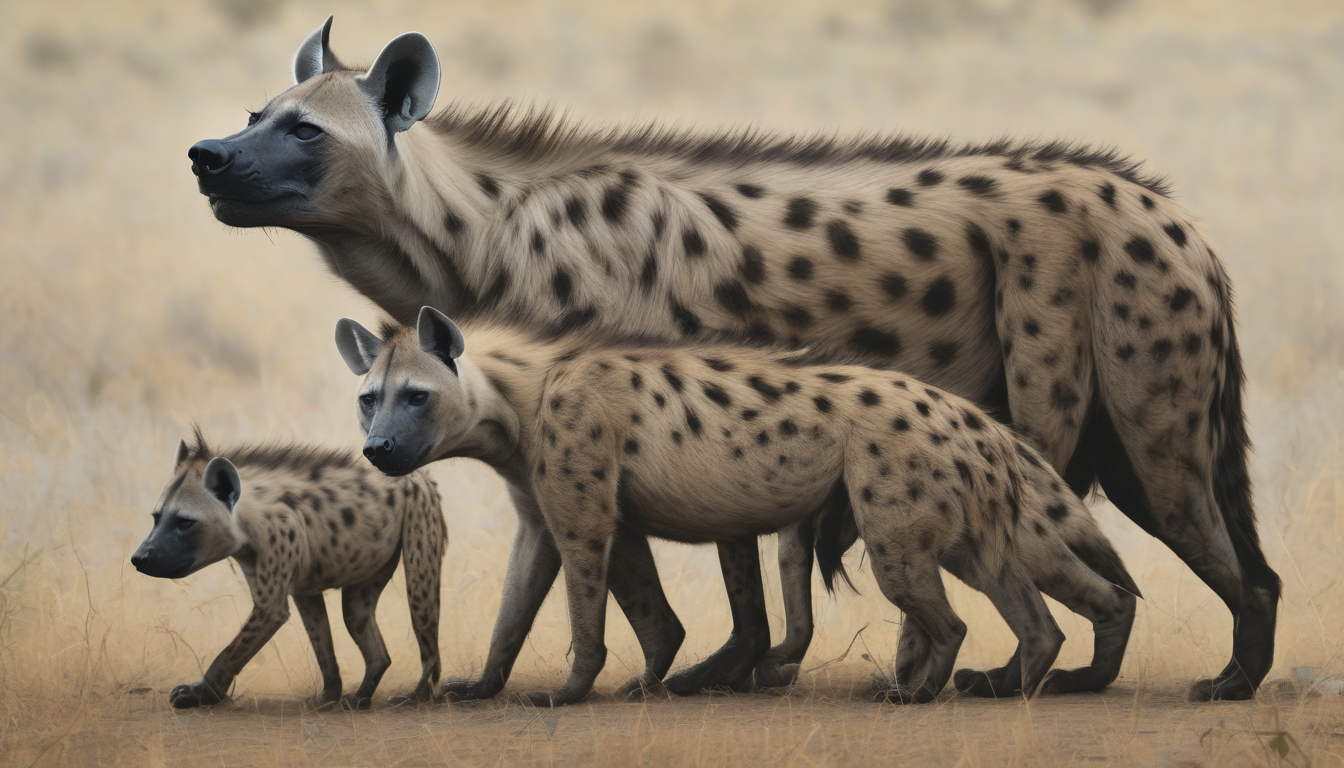
Researchers studying spotted hyenas in the Ngorongoro Crater in Tanzania have fundamentally shifted our understanding of reproductive success. For years, scientists looked at a single generation of offspring to measure inequality. And, just as expected based on traditional theories, they found that males showed higher reproductive variance than females.
But that was only half the story.
Think of it like the way AI in mental health care is changing how we view patient progress. Using algorithmic models to track data over long periods, researchers now notice patterns in behavior that were completely impossible to spot in a single therapy session. In the same way, by mapping eight generations of hyena pedigrees over 29 years, the Ngorongoro Hyena Project brought a new reality into focus. When the team looked beyond immediate offspring—tracing grand- and great-grandoffspring—the inequality gap didn't just persist; it inverted entirely.
High-ranking female lineages quickly began to accumulate an outsized share of descendants. After six generations, virtually an entire clan traced its ancestry back to a single alpha matriarch. The females weren't just competitive; they had built a generational monopoly on reproductive success.
The Power of the Matriarch: Inheritance and Clan Survival
The secret, the researchers found, is how female hyenas inherit social rank, a privilege that remains in the maternal line. In this society, daughters do not disperse. They remain in their natal clans, essentially "inheriting" the authority of their mothers.
This social inheritance grants advantages that compound over a lifetime. Alpha females and their high-ranking daughters have priority access to food, allowing for faster growth, shorter birth intervals, and, ultimately, longer lives.
The reverse is true for males. Once they reach maturity, they disperse, leaving their natal clans behind to find new ones. In the process, they shed their inherited maternal status. They effectively reset. Because they can't bring that family-backed prestige with them, they don't have the same mechanism to compound reproductive advantage across generations that the females do.
Why Long-Term Data Matters for Evolution
The traditional view often relied on snapshot data, missing the slow, grinding machinery of generational inheritance. If you only look at one mating season, you see the flash and the fight. If you look at thirty years, you see the foundation of a dynasty.
By tracking these pedigrees, the study demonstrates that the social structure itself—the ability to pass down rank—is as crucial to reproductive success as any biological trait. This isn't just about who wins a single encounter, but who builds the most stable, resource-rich environment for their offspring.
A New Route for Competition
This study identifies a distinct pathway to reproductive inequality—what the researchers now call a third route, alongside biological phenomena seen in species like seahorses, where males provide care, or meerkats, where reproduction is monopolized by dominant females.
The findings are a reminder that evolutionary theory, like space exploration itself, is constantly evolving. What looks like a settled rule from one vantage point often crumbles when you get a better look.
By focusing on the long-term, the researchers finally explained a puzzle that had bothered scientists for years: why female hyenas are so fiercely competitive. It turns out, that competition isn't just about the here and now—it's about locking in a family legacy that will dominate the clan for generations to come.
Source: https://neurosciencenews.com/social-behavior-evolution-31122/
Rethinking Our Paradigms
It's tempting to want clean, simple answers in science—the "A causes B" model that's easy to explain and easy to teach. But life, particularly in the complex social structures of mamalian clans, doesn't always adhere to our neat categorizations.
The next challenge, then, isn't just to challenge the old paradigms, but to build new frameworks that account for time, inheritance, and social dynamics. Who knows what else we’ll find when we look, as the researchers in Tanzania did, long enough and hard enough at the same group of individuals?
When we apply this lens to other species, it’s not hard to imagine finding similar "hidden" patterns of generational inequality that we hadn't suspected existed. The truth is in the long-term view, even when it’s harder to come by.