
The Master Key That Unlocks Everything
You know that feeling when you hand out the same spare key to every new employee? You tell them, "It’ll be fine—we only use it for the breakroom." Then someone leaves it in their laptop and your entire building gets scraped by a criminal bot.
That’s exactly what happened in enterprise AI deployments last year. Developers, racing to ship autonomous agents across departments, leaned on the same shortcut they’ve used since the early 2000s: one API key to rule them all. A single credential for every agent—web scraper, compliance watcher, invoice processor, you name it.
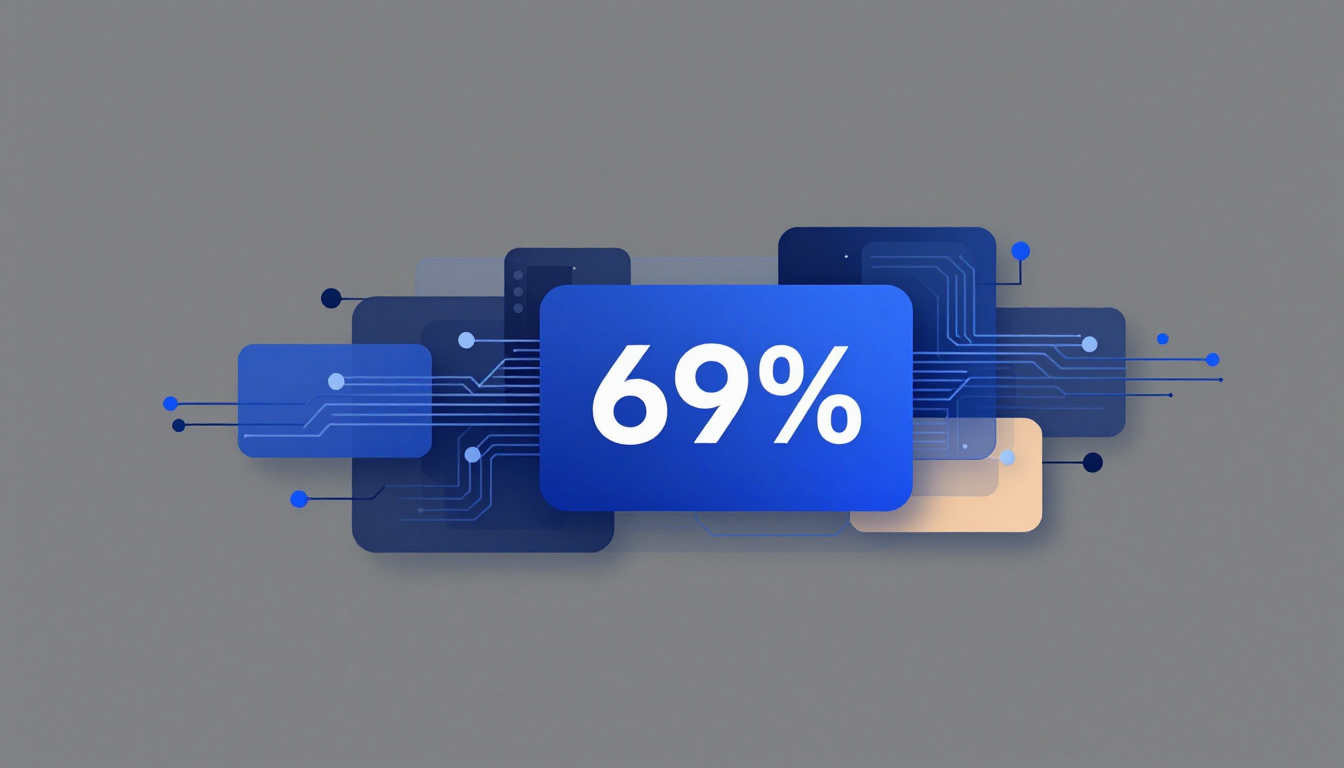
VentureBeat’s fresh security survey found that 69% of enterprises are doing just that. They’ve given every AI agent the same master token, so if one agent gets compromised—say, via a sneaky prompt injection—the attacker inherits all the permissions of the whole fleet.
This isn’t hypothetical. It’s happening right now, in production, as we speak.
How a Single Agent Breach Becomes a Fleet-Wide Emergency
Think of an AI agent as a security guard with a badge. That badge doesn’t just open the breakroom—it’s programmed to unlock vaults, issue system commands, and query customer data. In most organisations today, every guard carries the same master badge.
Here’s how it plays out in practice:
- A junior team deploys an autonomous agent to scan RSS feeds for brand mentions.
- The agent gets triggered by a crafted prompt buried in that feed, hijacking its execution flow.
- Because the agent uses a shared API key tied to administrative privileges, the attacker hijacks every other agent that uses that same key.
The result? A slow-motion ransomware cascade. One low-priority agent becomes the backdoor into everything else.
VentureBeat’s report spells this out clearly: once an attacker controls one agent, the inherited access lets them move laterally across the entire AI infrastructure without another credential prompt.

The OWASP Top 10 for Agentic Applications 2026 Has Already Labeled This
Organisations didn’t wake up one day and decide to bake systemic risk into their agent architecture. But frameworks like the OWASP Top 10 for Agentic Applications, released at Black Hat Europe in December 2025, warned us well in advance.
The most relevant listing is ASI03: Identity & Privilege Abuse—a new category that acknowledges how easily agents inherit, cache, and propagate access rights. It’s not enough to secure the LLM prompt; you must also protect the identity the agent uses to operate.
The OWASP group recommends a clear principle: "least agency." Every agent should get only the minimum permissions it needs to do its job, and nothing more. No shared tokens. No admin privileges lurking in a global service account.
It’s the same philosophy that forced banks to move away from shared vault keys years ago. AI agents shouldn’t get a free pass just because they’re software.
Machine Identities Are Now the Front Line
Identity-based attacks accounted for 30% of all intrusions last year, according to IBM’s 2025 Threat Intelligence Index. That stat alone should send chills down every CISO’s spine.
What changed? Machines started behaving like users—and users started behaving like machines. Autonomous agents no longer just use APIs; they own them, issuing commands and managing subordinate services. In other words, agents are non-human identities with real privilege.
The problem? Most identity management tools still treat agents as后thoughts—"service accounts" that inherit admin privileges by default, or share tokens to keep deployment simple.
A true machine-identity-first posture means:
- Unique credentials for every agent, even if they run the same workflow.
- Short-lived tokens that rotate automatically before expiry.
- Agent-specific audit trails, not just log entries lumped under a generic "service-user" label.
Treating agents like first-class citizens isn’t just security best practice anymore; it’s table stakes.
Your Immediate To-Do List
You don’t need to wait for a breach to act. Here are three concrete steps to tighten the doors before the next wave of opportunistic attacks:
-
Run an audit—Inventory every autonomous agent you’re running and who owns the API key it uses. If multiple agents share a credential, that’s your first vulnerability.
-
Provision unique tokens—Even if you have to write a custom rotation script, give every agent its own API key or OAuth token. Start small: just one high-priority agent, then expand.
-
Log and alert—Set up alerts for when an agent tries to access a resource outside its original mandate. A scraper that suddenly starts querying HR databases is screaming for attention.
This won’t fix everything. But it will stop the most basic cascade. And when the next breach drops, you’ll be the one knocking on the attacker’s door—not waiting for them to knock on yours.
Final Thought: Convenience Is the Enemy of Resilience
We’ve been promised that AI will make security easier. Instead, it’s exposing decades of technical debt we’d papered over with convenience.
One key to rule them all isn’t a shortcut. It’s a trapdoor. And right now, it’s wide open.