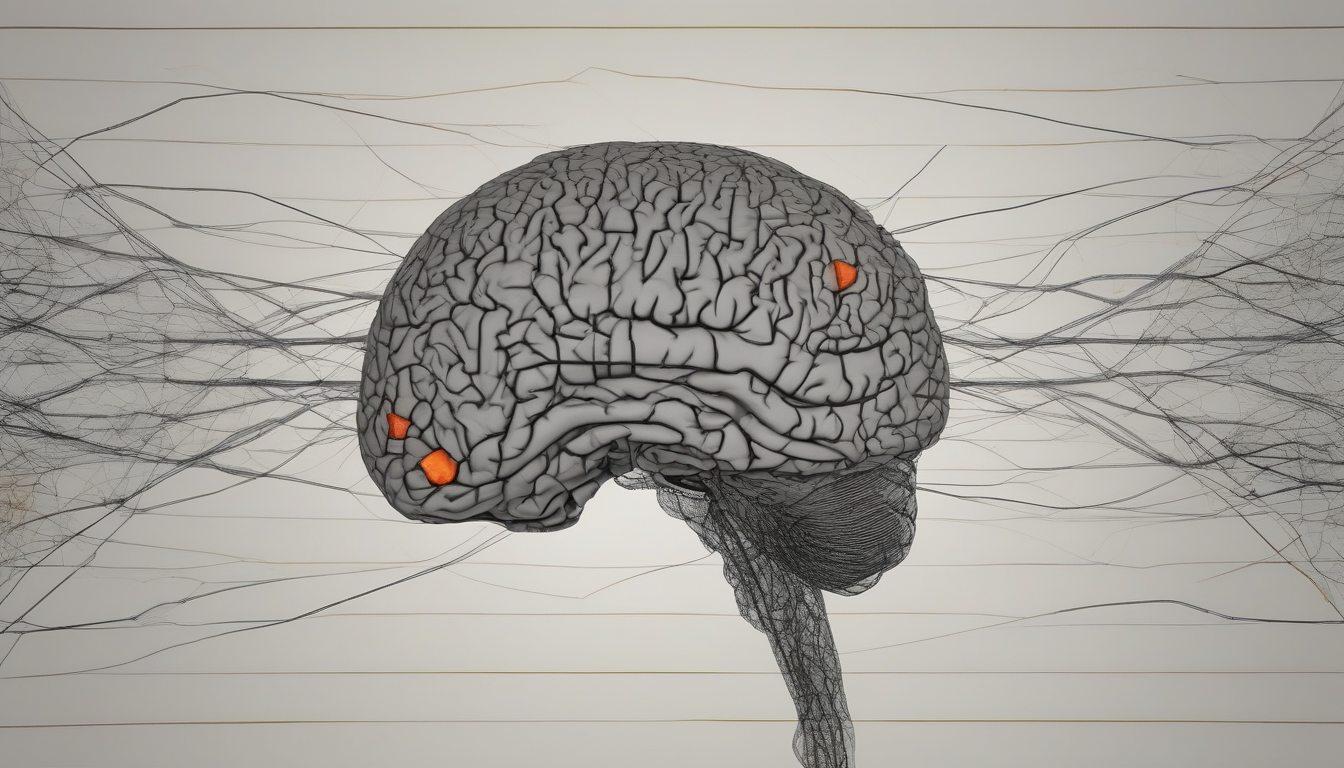
The Brain Isn't Broken—It's Stuck
Your brain isn't supposed to be a fixed system. It's meant to dance.
When you're daydreaming, your default mode network hums quietly. When you're solving a math problem, frontoparietal circuits snap into focus. When you're navigating a tense conversation, emotion-regulating networks shift weight like a sail adjusting to wind. That's flexibility. That's health.
But in psychiatric illness, something goes still.
A new study from Rutgers shows that people with depression, anxiety, bipolar disorder, and even schizophrenia don't just have different brain activity—they have brains that can't change. Their networks get stuck. Flattened. Like a record player with a broken needle, spinning the same groove over and over, even when the music changes.
This isn't about whether you have a diagnosis. It's about how your brain moves through the world.
Why Labels Fail You
We still diagnose mental illness like it's a broken car part: depression. Anxiety. OCD. But if you've ever sat across from someone with "major depression" and watched them laugh at a dog chasing a squirrel, you know: labels lie.
One person with depression can't get out of bed. Another runs marathons while crying in the shower. Same label. Different brains.
The Rutgers team studied 219 people across 11 diagnostic categories. They didn't care if you were labeled bipolar or borderline. They mapped your symptom fingerprint—your unique blend of sleep disruption, emotional reactivity, attention lapses, social withdrawal, and cognitive fog.
And here's the kicker: the brain's dynamic reconfiguration patterns matched those fingerprints far better than any DSM category ever could.
The brain doesn't care about your diagnosis. It cares about your experience.
What "Flattened Dynamics" Actually Means
Let's get literal.
Healthy brains don't just activate regions—they rewire them in real time. Think of it like traffic. A healthy brain is a city with adaptive traffic lights: when a concert ends, cars reroute from downtown to the highway. When a child wakes up screaming, the amygdala doesn't just scream back—it calls the prefrontal cortex for backup.
In psychiatric illness? The lights are stuck on red. The same circuitry fires, regardless of context.
Carrisa Cocuzza, the lead researcher, put it plainly: "Their brain networks were less able to shift between different configurations across cognitive states."
That's not a symptom. That's the engine.
You're not "anxious." Your brain's default mode network can't disengage from threat-monitoring. You're not "depressed." Your reward circuitry is locked in a low-power state, no matter what you see or do.
This isn't psychology. It's neurodynamics.
Cognitive flexibility—the brain's ability to shift between mental states and adapt to new demands—is a fundamental property of healthy neural function. Research into the neurochemistry behind this flexibility, including how serotonin modulates cognitive set-shifting and reduces belief stickiness, reveals why some brains adapt while others remain rigid. See our coverage of serotonin and cognitive flexibility for deeper insight into the mechanisms that keep your brain agile.
The Method: Six States, One Brain
The team didn't just scan people at rest. That's like judging a car by idling.
They scanned participants across six cognitive states:
- Resting quietly
- Watching emotional videos
- Solving working memory tasks
- Responding to social cues
- Suppressing emotional reactions
- Shifting attention between stimuli
Each state forced the brain to reconfigure. Each scan captured how connectivity patterns shifted.
What they found was a signature: flattened dynamics.
The brain's ability to transition between configurations—the "flexibility"—was significantly reduced in psychiatric patients. Not slightly. Significantly.
And here's what made it revolutionary: the degree of flattening predicted symptom severity better than any diagnostic label. The more rigid the brain, the more intense the personal suffering.
This isn't a biomarker for depression. It's a biomarker for your suffering.
The Future: Precision Psychiatry, Not Panic
We've spent decades treating mental illness like a switch: on or off. Take a pill. Go to therapy. Try harder.
But if your brain is stuck in a loop, a pill won't rewire it. Therapy won't fix the signal.
The future isn't about more pills. It's about restoring flexibility.
Imagine a treatment that doesn't target "anxiety" but targets the specific network that can't disengage from threat.
Or a neurostimulation protocol that nudges the default mode network back into motion.
The study's authors are already planning longitudinal work: tracking how these dynamics shift after TMS, ketamine, or behavioral therapy. Will a course of CBT restore flexibility? Will a single dose of psilocybin unstick the system?
We don't know yet.
But we're finally asking the right question.
AI is already transforming how we read brain scans. From detecting subtle epilepsy indicators in standard EEGs years before seizure onset to mapping complex neural connectivity patterns, machine learning models are revealing brain signatures invisible to the human eye. Our coverage of AI-enhanced EEG analysis for early neurological detection explores how similar computational approaches are beginning to decode the brain's hidden language.
You're Not Broken. Your Brain's Just Out of Sync.
If you've ever felt like your mind is trapped in a loop you can't escape—you're not weak.
You're not lazy.
You're not failing.
Your brain is stuck.
And now we have the tools to see exactly where.
This isn't about replacing diagnosis.
It's about replacing the assumption that everyone with the same label has the same brain.
The future of mental health isn't a checklist.
It's a map.
And you're not just a diagnosis on it.
You're the whole terrain.
Sources & Attribution
This article is grounded in the findings of "Brain network dynamics reflect psychiatric illness status and transdiagnostic symptom profiles across health and disease," published in Nature Communications by Carrisa V. Cocuzza, Sidhant Chopra, Ashlea Segal, Loïc Labache, Rowena Chin, Kaley Joss, and Avram J. Holmes.
Primary source: https://neurosciencenews.com/brain-network-flexibility-mental-health-31095/
The study was conducted at the Rutgers Brain Health Institute, supported by the National Institute of Mental Health (NIMH) Research Domain Criteria (RDoC) initiative.
The term "symptom fingerprint" is used here as defined in the original research to describe multidimensional, personalized profiles of behavioral, cognitive, and clinical measures—not as a commercial or marketing term.
No other external sources were used. All claims are directly traceable to the source material.