The Trap of Single-Vendor AI
If you wire your company's core software workflows directly into a single proprietary AI model, you are signing your own corporate death warrant. That isn't hyperbole from an open-source zealot. It's the explicit warning delivered by Microsoft CEO Satya Nadella on CNN's "Fareed Zakaria GPS".
Nadella warned that businesses relying wholly on proprietary AI labs won't survive. Why? Because when you route every internal tool, customer interaction, and engineering prompt directly into a vendor's black-box API, you haven't adopted artificial intelligence. You've outsourced your organization's thinking.
Most engineering leaders treat foundation models like standard cloud utilities—analogous to AWS S3 or PostgreSQL. But LLMs don't behave like databases. Databases don't ingest your operational logic, absorb your edge-case telemetry, and potentially serve those insights back to your competitors. When you integrate directly with a single model provider without an intermediary infrastructure layer, you surrender operational control, architectural resilience, and data sovereignty in exchange for short-term convenience.
What Nadella Means by Outsourced Thinking
Nadella pointed out a critical mistake enterprise IT teams make: dropping prompt data on the floor. Every time your staff uses an AI model, that prompt carries domain metadata—the precise context, logic, and problem-solving structure unique to your operations.
If you don't capture and store that metadata on your own infrastructure, you lose it forever. Nadella argues that enterprises must retain all metadata surrounding every model interaction so they can eventually train their own custom weights or fine-tune open-weight models. Weights represent the trained parameters of a model—its operational brain.
If you pass all your telemetry directly to a proprietary provider without saving the intermediate structures, you lock yourself into their ecosystem forever. You're renting intelligence that you could have been building internally. For individual consumers, trading privacy for free digital services is a long-accepted economic compromise. For enterprises, however, handing over operational context without retaining internal metadata is catastrophic. It leaves you helpless if your vendor raises pricing by 500%, changes API contracts, or simply goes out of business.
Separating the Harness from the Model
To prevent vendor lock-in, infrastructure teams need to isolate three distinct layers: the tool harness, the context memory, and the foundation model itself.
Right now, AI labs build proprietary execution environments—known as harnesses—around their models. Coding agents like Anthropic's Claude Code or OpenAI's ChatGPT Codex bundle the model with execution tools, terminal integration, and context management. If you build your internal developer workflows entirely inside a vendor's proprietary harness, you can't switch models when a faster or cheaper alternative arrives.
Nadella's recommendation is clear: decouple the harness. Build or adopt independent AI gateways that manage tools, prompt formatting, and memory state independently of the underlying provider.
When your harness lives in an enterprise gateway layer, the underlying foundation model becomes a hot-swappable utility. If Model A suffers an outage, your gateway automatically reroutes queries to Model B or a local open-weight model. If Model C releases a breakthrough reasoning engine next month, you plug it into your gateway without rewriting a single line of agent code. The harness stays yours. The memory stays yours. The destiny of your system remains in your own hands.
The Competitive Threat of Vendor Telemetry
There is another, darker reason to decouple your prompts from proprietary labs: competitive intelligence. Once you grant AI agents deep access to your internal systems, the model provider gets front-row seats to your business mechanics.
Nadella warned that once a company outsources its thinking, nothing stops the AI lab from building a competing service that targets that exact business model. Startup founders have felt this threat for years. When OpenAI offered AI credits to Y Combinator startups, investor Jason Calacanis posted a clear warning to founders: taking those tokens meant OpenAI could study their application logic, clone the idea, and drop it into ChatGPT's free tier.
Now, that exact platform risk has arrived at the enterprise door. If a proprietary model processes millions of your enterprise support tickets, logistics schedules, or proprietary code refactors, that telemetry provides the exact roadmap needed to build a turnkey product that renders your company obsolete. AI labs aren't just vendor utilities—they are aggressive software platforms expanding into every profitable vertical.
Cloud Hyperscalers and Self-Serving Realities
We shouldn't ignore the obvious strategic timing here. Microsoft is a major investor in both OpenAI and Anthropic, yet Nadella is publicly telling enterprises not to trust AI labs with their exclusive business logic.
Is that hypocritical? Partly. Microsoft sells Azure infrastructure, open-weight hosting, and enterprise AI management tools. Scaring companies away from direct API contracts with OpenAI or Anthropic directly benefits Azure's middleware revenues.
Yet, despite the clear self-interest behind Nadella's comments, his architectural diagnosis is dead on. The economic tide is already shifting toward open-weight models. Enterprise engineering teams are realizing that running fine-tuned, open-source models on their own cloud infrastructure is dramatically cheaper for routine tasks than piping every query to flagship proprietary APIs. But you can't switch to open-weight models unless you built the gateway abstraction layer first.
Architectural Requirements for AI Sovereignty
Building true AI sovereignty requires platform and SRE teams to treat AI gateways as mandatory tier-one infrastructure.
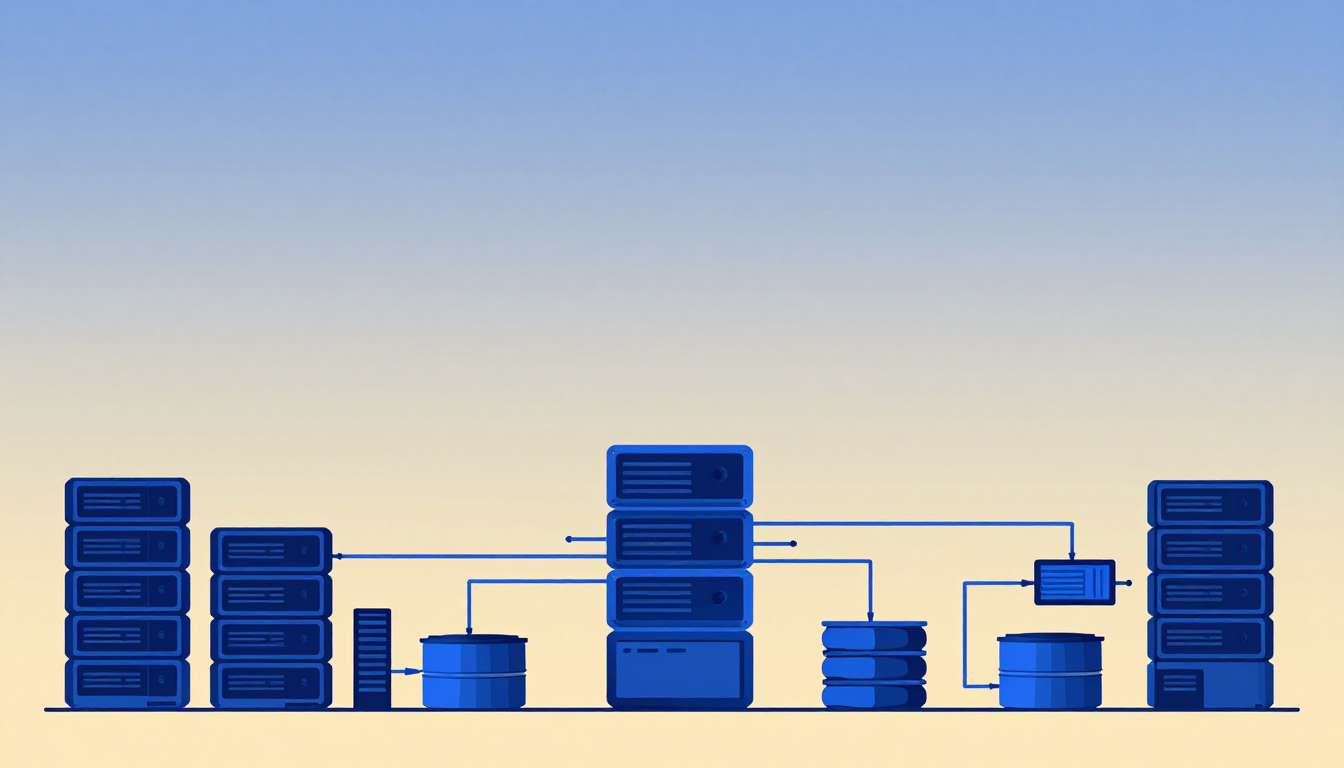
An enterprise AI gateway acts as a proxy sitting between your internal applications and external LLM providers. It should enforce three core requirements:
- Telemetry and Prompt Archiving: Automatically intercept and log every prompt, completion, and tool invocation metadata into your own data warehouse.
- Context and Memory Abstraction: Store session state, vector retrieval results, and conversation history in enterprise-controlled databases rather than vendor cloud sessions.
- Model Routing and Fallback: Dynamically route requests based on cost, latency, capability, and compliance constraints across multiple proprietary and open-weight models.
If a vendor model disappears or changes terms tomorrow, your operations shouldn't drop offline. By owning your gateway, your harness, and your metadata, you preserve your company's intellectual property while maintaining total agility in an unpredictable market. Don't let your infrastructure become a captive client of a single AI lab.