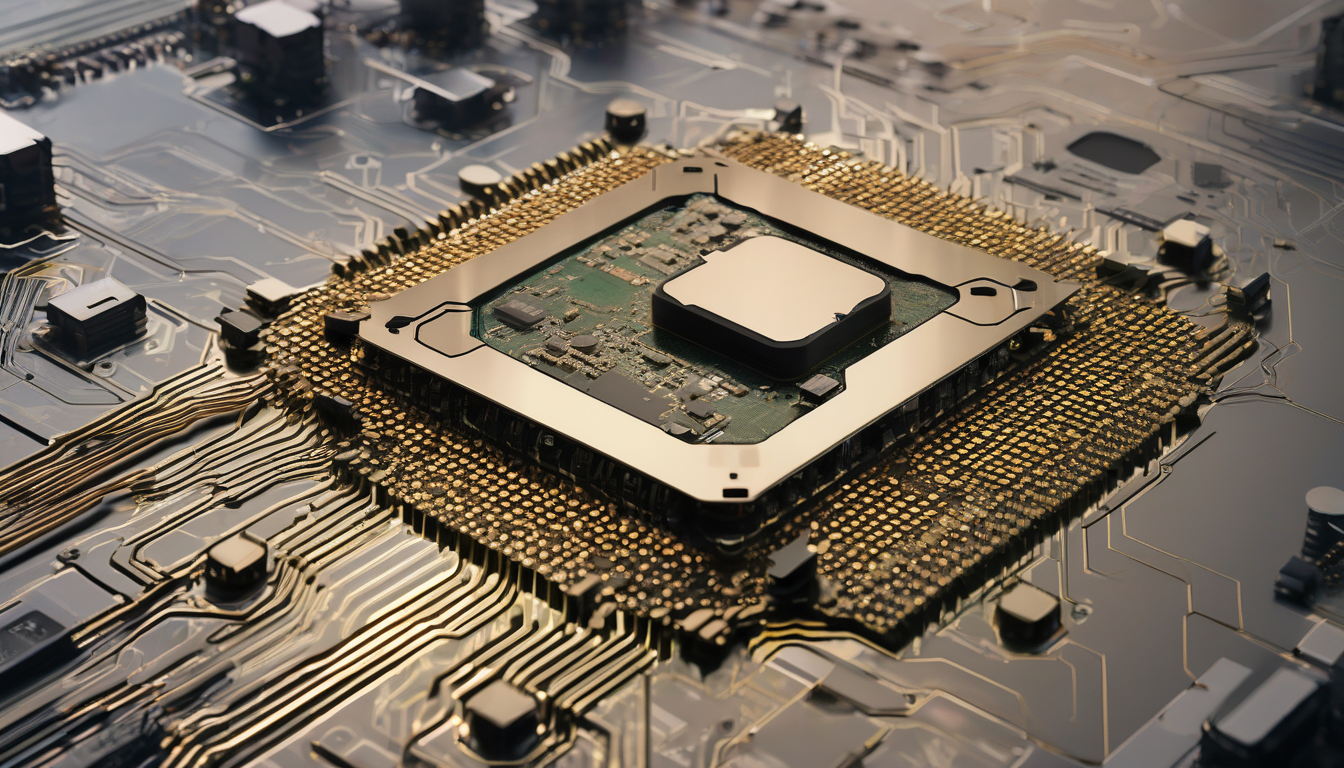
Meta’s Silicon Pivot
Meta is readying to start production on its latest generation of custom AI-specific chips this September, according to internally sourced reports. It’s a classic move: facing skyrocketing expenditures to power its recommendation engines and generative models, the social giant is leaning further into self-reliance to bypass some of the bottlenecks inherent in relying solely on commercial off-the-shelf GPU providers like Nvidia and AMD.
This isn’t Meta’s first foray into custom silicon, but by ramping up production of its Meta Training and Inference Accelerator (MTIA) program chips, it’s signaling that the scale of its compute demands has reached a point where custom hardware isn’t just a nice-to-have—it’s an operational imperative.
The Modular Strategy Behind MTIA
Meta’s approach to chip design is notably modular. They’ve recognized that the landscape of AI evolves far faster than the typical multi-year chip design cycle. By utilizing modular chiplets, engineering teams can incorporate the latest workload insights and hardware technologies, iterating on a much shorter cadence than they could with monolithic, standardized hardware.
According to reports, Meta is working with Broadcom on the design, while contracting with TSMC for the actual manufacturing—a sophisticated dance to keep costs down while leveraging top-tier fabrication capabilities. They’ve also secured a tight supply chain for supporting components: Samsung for high-bandwidth RAM, Sandisk for critical storage, and Sumitomo Electric for the fiber-optic infrastructure that ties it all back together.
For companies operating or designing specialized hardware, this level of supply chain depth is becoming the benchmark. Interestingly, as the race for efficient compute intensifies globally, many organizations are looking toward diverse geographic hubs—and AI cloud infrastructure companies in India are increasingly attracting attention for their potential to support distributed training workloads, a trend accelerated by this exact kind of silicon diversification.
Defining the Future: From Agentic AI to Embodied Agents
The push for custom compute isn’t just to make existing models faster; it’s to support the next wave of AI architecture. We’re moving rapidly past simple interaction models toward systems that require significant compute throughput for reasoning, planning, and task execution.
What is Agentic AI?
At its core, Agentic AI, as highlighted by IBM, refers to artificial intelligence that has been designed to operate autonomously. These systems don’t just process inputs to generate static outputs; they plan complex workflows, make independent decisions across multiple platforms, and adapt to changing environments to achieve a specific goal. As noted in guidance from Google Cloud, the key differentiator is the transition from passive automation—doing exactly what it’s told—to active agency, where the AI manages the steps, adapts to unexpected errors, and essentially acts as a collaborative worker rather than an isolated tool.
What is an Embodied Agent?
Then you have the concept of the embodied agent. This brings intelligence into the physical or highly realistic simulated world. An embodied agent doesn't just process data streams; it has an "embodiment"—whether that’s a robotic arm, a drone, or an autonomous vehicle—that allows it to perceive the environment through sensors, move through physical space, and interact with objects. These agents rely heavily on sensory processing paired with real-time reasoning, demanding compute infrastructure that minimizes latency far beyond what standard cloud inference networks typically offer.
The Global Landscape for AI Cloud Infrastructure Companies in India
Meta plans to deploy 7 gigawatts of compute this year, with a proposal to double that capacity in the next period. This is an incredible amount of power, and it mirrors the race in the industry to build out the backend needed to support these autonomous agentic workloads.
When you look at the broader competitive landscape, it’s clear why Meta is pushing hard. It’s competing not just on features, but on the ability to actually train and run these agents efficiently. For global players, local investments matter—as seen with Amazon’s major investment in the region. Furthermore, firms are increasingly focusing on the full stack; for example, HCL’s building of AI datacenters underscores how vital controlling the physical infrastructure is for enterprise demand.
For those watching the infrastructure space, the takeaway is clear: the advantage isn't just in the model weights. The true advantage belongs to those who control the compute, from the chip design down to the power data center deals. Whether you’re an enterprise looking to deploy your own custom agents or part of a startup in the evolving AI cloud infrastructure space, the hardware story is now fundamentally inseparable from the model story.
Final Thoughts: The Cost of Autonomy
Meta’s massive capital expenditure, ranging between $125 billion and $145 billion, underscores how much capital is required to build this future. It’s hard to imagine, but this level of spend is becoming the new baseline for tech giants trying to maintain a lead in AI capabilities. By investing heavily in its own MTIA chips, Meta is playing the long game—hoping that in a few years, they won’t be quite so beholden to the soaring prices of commercial GPUs.
Whether this strategy delivers the efficiency gains they’re banking on remains to be seen. But in a world where computing power dictates the limits of what a model can do—and how well an agent can reason—putting chips under your own roof is one of the few ways to truly control your own destiny.