The Word That Wasn’t
A therapist once looked at my daughter, Joy, and labeled her cerebral palsy diagnosis “tragic.” I sat in that quiet, beige office feeling as if someone had just dropped an anchor into my stomach. It wasn’t a compassionate observation; it was a verdict. It suggested that a fundamental piece of my daughter—the very way she experienced the world—was inherently something to be mourned rather than celebrated, understood, or simply accommodated.
I’m here to tell you that it wasn’t tragic. It was, and is, complicated. It has been a life of steep learning curves, fears that keep a parent up at night, and logistical nightmares involving equipment that never seems to work quite right. But it has also been a life brimming with intense affection, profound realizations, and a grit that I suspect Joy might have learned in the crib. Labeling a human existence as inherently “tragic” because it departs from a statistical average is not only reductive; it’s a failure of our collective imagination. When we frame disability as a tragedy, we aren’t describing the person. We are describing our own inability to see beyond a narrow, rigid definition of functional perfection.
Disability Pride and the ADA Legacy
This month, as we recognize Disability Pride Month, we have a unique opportunity to peel back those labels. We’re also reflecting on the 36th anniversary of the Americans with Disabilities Act (ADA), signed into law on July 26, 1990. This landmark legislation was meant to do more than just mandate wheelchair ramps and curb cuts—though heaven knows we still lack those in far too many places—it was meant to prohibit discrimination and guarantee that every individual, regardless of their physical or cognitive differences, has the opportunity to fully participate in society.
But laws, as essential as they are, haven’t quite caught up to the reality of the 1.3 billion people, or about 16% of the global population, who live with some form of significant disability. Disability pride isn’t just about feeling good about oneself; it’s a necessary act of resistance. It’s an assertion that our value is not contingent upon our ability to navigate a world engineered for individuals without disabilities.
When We Miss the Point
The medical model of disability, which focuses entirely on fixing or curing the individual, often misses the point. My daughter didn’t grow up trying to "fix" her hemiparesis; she learned to define herself by her curiosity, her intellect, and her capacity for kindness—not by her limitations.
When we focus solely on a diagnosis, we overlook the person standing right in front of us. This is where the conversation about her childhood journey remains so pivotal. It challenges us to stop viewing disability as a broken thing that needs mechanical intervention and to start seeing it as a facet of human diversity. When a therapist or a doctor uses words like “tragic,” they are signaling that they aren’t interested in the human—they’re only interested in the impairment. That, in itself, is a barrier to genuine therapeutic care.
Barriers: The True Metric of Inequality
If disability isn’t the tragedy, what is? The barrier is. We frequently mistake the impairment—like Joy’s hemiparesis—for the impediment. The true impediment is almost always environmental or societal.
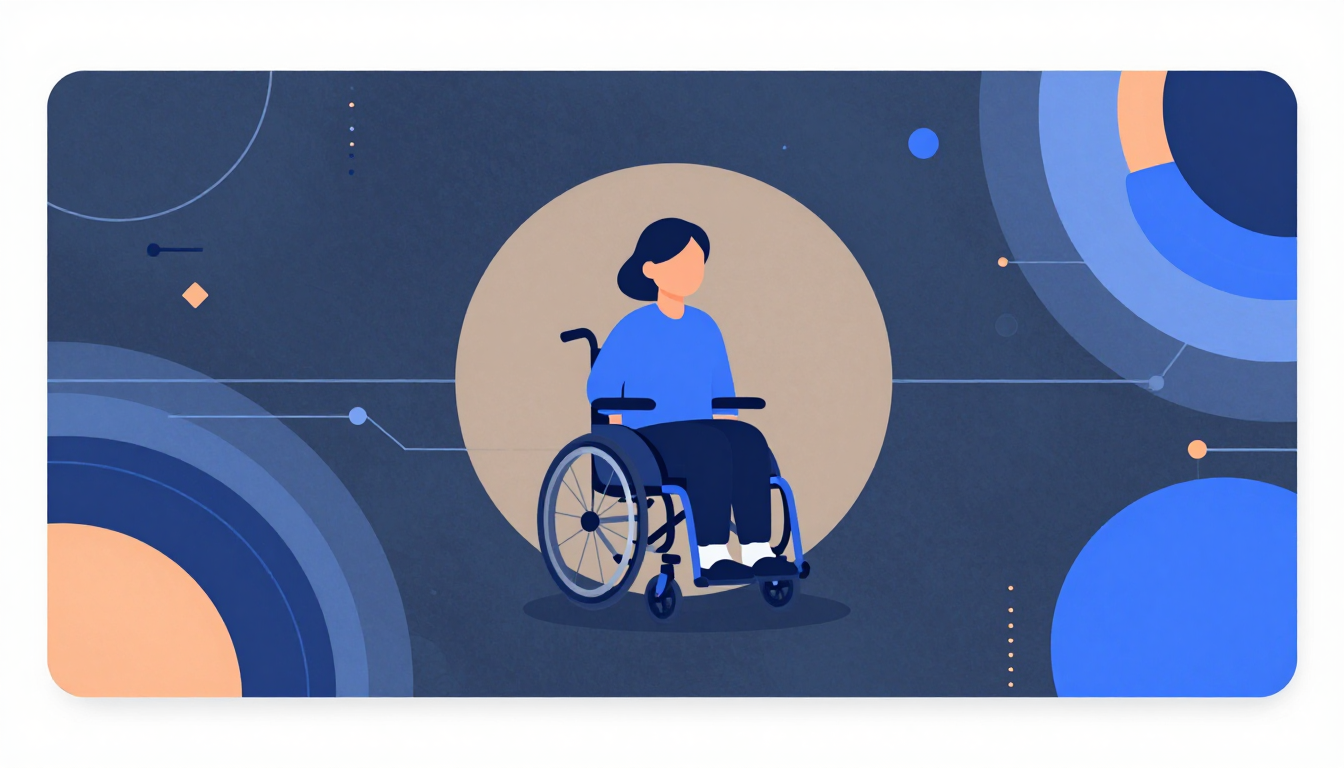
Consider the classic example of travel. I’ve seen people struggle to navigate uneven bridges and a total lack of accessible water taxis in cities like Venice. If you are a wheelchair user, you rarely experience the city; you experience a series of roadblocks. Erin Brown, a dedicated activist, has spoken openly about missing countless opportunities because the venues weren’t truly accessible. It isn’t her inability to traverse the stairs that limits her; it is the building’s construction that enforces her exclusion.
Eileen Grubba, whose work as an activist and actress I deeply admire, has often described the struggle to rewrite the illusion of perfection in Hollywood. She learned that every experience, including her battle with physical setbacks, meant she had more to offer, not less. The illusion of a “perfect” body or mind is the barrier we must overcome. As long as our world is designed for a single, mythical type of citizen, the rest of us will always be fighting for basic access.
Widening the Circle of Compassion
This brings us to one of the most critical psychological principles of our time: human functioning always emerges from the interaction between the individual and their environment. When we consciously or unconsciously exclude people, we aren’t just creating logistical issues; we are producing anxiety, isolation, and diminished self-esteem.
Psychological research—including work by Bogart et al. in 2018—consistently shows that disability pride is a powerful prophylactic against the sting of societal stigma. It builds a sense of belonging that is crucial for robust mental health.
As the late Senator Paul Wellstone famously said, “We all do better when we all do better.” This is the bedrock of true independence. It isn’t about navigating the world in complete isolation without help; it is about having the resources and the societal support to live with dignity and autonomy. Albert Einstein once urged that “our task is to widen our circle of compassion.” I firmly believe that this widening doesn’t start with pity, and it certainly doesn’t start with labeling a life as “tragic.” It starts with the honest work of removing the barriers that keep us apart. We don’t need more pity; we need more access, more understanding, and a much larger seat at the table.