Beyond Copper: Why Nvidia is Betting Billions on a Photonic Future
Nvidia isn't just selling GPUs anymore; they are buying the infrastructure needed to keep their GPUs talking to each other. When Nvidia CEO Jensen Huang takes the stage at Computex and declares that Marvell—a company built on chip architecture and networking—now has its future tied to the optics industry, you sit up and pay attention.
The truth is, the AI hype train is hitting a very real, very physical wall: the speed of light, or rather, our ability to control it within a server rack. For years, we have squeezed more performance out of copper-based networking. But as AI clusters balloon from a few dozen accelerators to thousands, copper is no longer just a connectivity solution; it is a liability.
Resistance, heat, and signal integrity issues are the silent killers of throughput. We are reaching a point of diminishing returns where cramming more chips into a rack only results in a thermal nightmare, turning these expensive accelerators into idle processors waiting for data. Nvidia, ever the pragmatist, knows that their empire is only as strong as the interconnects that bind their chips.
The Physics of the AI Slowdown
To understand the desperate shift toward optics, you have to look at the power math. Modern datacenter rack networking demands massive bandwidth. As we approach the era of 800G and 1.6T modules, the power required to move data over copper becomes economically and thermodynamically prohibitive.
Copper interconnects lose signal integrity much faster than optical fiber as, ironically, the speed and distance increase. You can mitigate this with expensive re-timers and specialized shielding, but it drives up the cost, complexity, and power draw of the entire rack. Data centers are already straining local power grids; burning an increasing percentage of that power budget just to move bits between chips is a losing strategy.
Optics—using laser light instead of electricity—solves the distance and throughput limitations of copper. It moves data faster, with less power, and generates significantly less heat. It is not just an upgrade; it is a fundamental shift in how we build computing systems at scale.
Coherent’s Big Texas Bet
Nvidia isn't merely watching these trends from the sidelines; they are actively shaping the supply chain to match their own roadmap. Their recent $2 billion investment into Coherent, a leading photonics vendor, is a strategic move of the highest order.
Coherent is the company responsible for critical laser light sources, photodetectors, and modulators that make modern high-speed optical interconnects possible. They aren't just sitting on this cash, either. Coherent is taking $650 million of that investment, supplemented by government backing—including funding from the Texas Semiconductor Innovation Fund and the federal CHIPS and Science Act—to quadruple the output of indium phosphide (InP) wafers at its Sherman, Texas facility.
This is industrial-scale infrastructure. It is the boring, essential side of the AI explosion that rarely trends on social media but forms the bedrock of our digital future. Doubling the footprint of a legacy wafer fab is a massive, multi-year, and incredibly risky endeavor. It shows just how serious Nvidia is about solving the supply chain bottleneck before it cripples their expansion plans. The expansion is expected to create 1,000 new jobs in the region, focusing on highly skilled advanced manufacturing and engineering roles, further cementing Texas as a hub for next-generation photonics.
The Billion-Dollar Photonics Roadmap
If you think Coherent is a one-off move, you aren't paying attention to the broader strategy. Nvidia has also plowed another $2 billion into Lumentum, a leader in pluggable transceivers and optical circuit switches, and a further $2 billion into Marvell to accelerate their silicon photonics roadmap, which complements Marvell’s massive investments in 102.4 Tbps switch silicon.
Nvidia is effectively orchestrating a supply chain revolution. They are ensuring that their primary compute engines—the GPUs—always have a high-speed, reliable path to communicate. This is a vertical integration play that stretches from the GPU all the way to the light pulse traveling through a fiber optic cable. They are guaranteeing that whenever AI demand hits a new zenith, the semiconductor shortage will be someone else’s problem.
Co-Packaged Optics: The Next Frontier
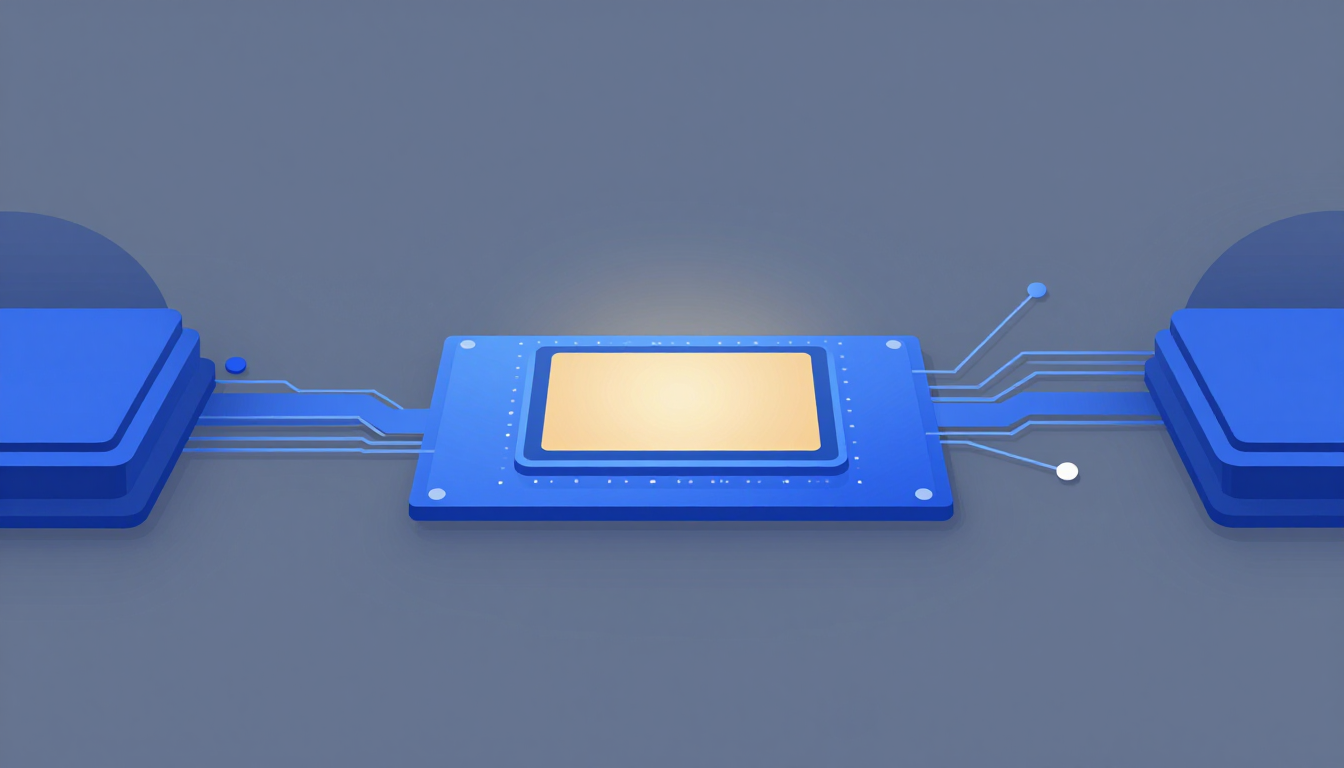
The industry is slowly tiring of traditional pluggable modules. They are bulky, power-hungry, and barely efficient enough for the next generation of workloads. The industry’s collective gaze is turning toward Co-Packaged Optics (CPO), which brings the optical engine right onto the substrate next to the processor.
CPO significantly reduces latency and power consumption. It is, however, incredibly difficult to manufacture at scale. It requires a level of precision that we have never before demanded from high-volume semiconductor assembly. By pushing hard on CPO, Nvidia and its partners are betting that the traditional way of building datacenters is nearing its limits. If you are building a massive AI cluster in 2027 and not planning to integrate optics into the chip package itself, you are likely building a legacy system that will be outdated before the first training run is even finished.
The Geopolitics of Interconnects
We have spent years debating where our CPUs and GPUs are manufactured, but the strategic debate is rapidly shifting to the components that glue those chips together. Photonics isn't just high tech; it is national security.
The push for domestic InP wafer production by Coherent is a direct response to a fractured global supply chain that cannot afford another disruption. The fact that the US government is throwing its support—via the CHIPS act—behind these Sherman-based factories confirms that optics are as critical to the modern economy as oil or electricity. When infrastructure breaks down, the entire AI-driven economy grinds to a halt. We are effectively witness to a slow-motion re-arming of the technology sector, where the critical weaponry isn't missiles, but light-based connectivity components.
Conclusion: A Laser-Powered Future
Nvidia is playing a long, dangerous, and utterly necessary game. They know that AI is not solely limited by how well their GPUs compute; it is limited by how fast those GPUs can gossip.
By pouring $6 billion into the companies building the future of photonics, they are aggressively guaranteeing their dominance. They are turning the supply chain into a competitive moat. For everyone else in the datacenter business, this serves as a warning: the AI future is coming, and it is going to be lit by lasers, not copper. We have been warned, and we should be paying attention to the light. The era of the copper interconnect is ending, and the era of the photonic revolution is just beginning.