DeductiveAI: AI Debugging Startup Agreed to Be Sold to Enterprise Software for Up to $85M

DeductiveAI, a startup that uses AI to catch and resolve bugs in software, has agreed to be sold to enterprise software company Elastic for up to $85 million.

Percy Token
Share
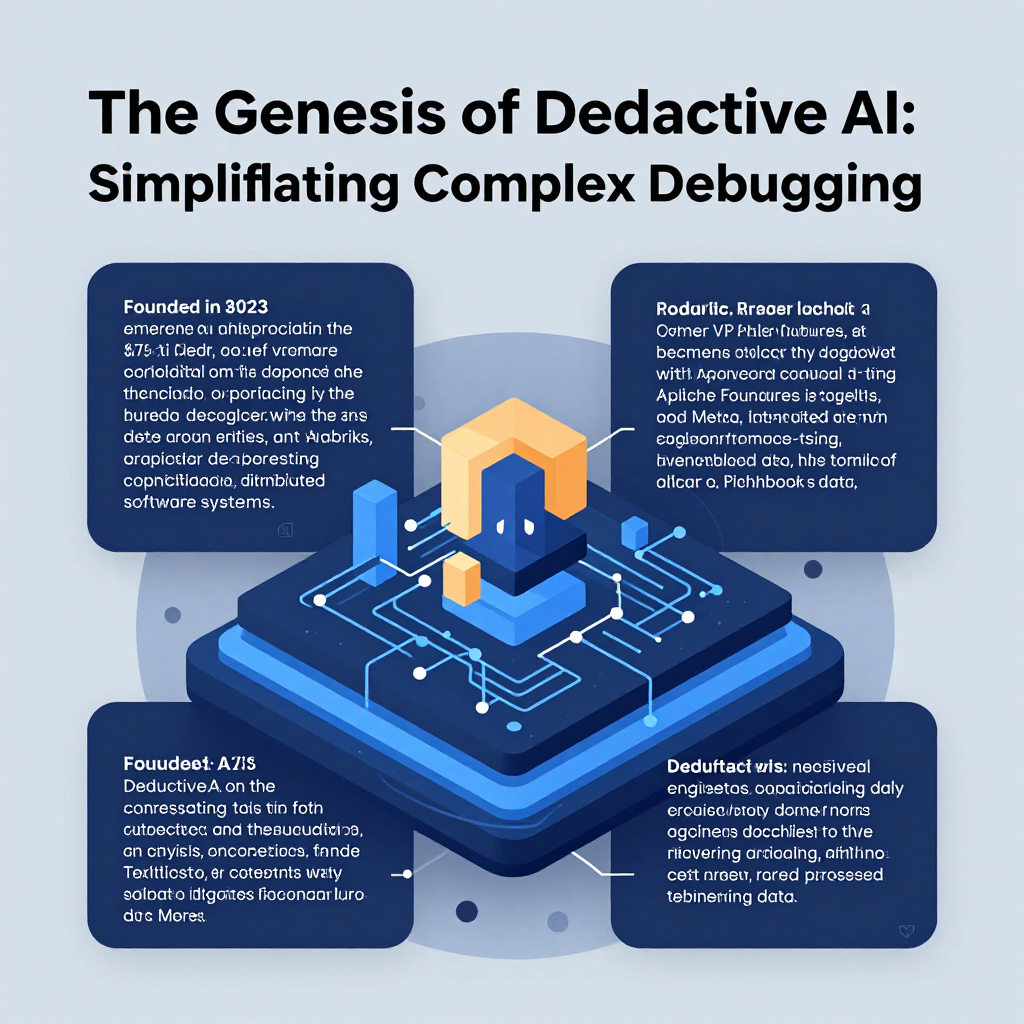
The Genesis of DeductiveAI: Simplifying Complex Debugging\n\nFounded in 2023, DeductiveAI arrived on the market to fill a critical gap: the burgeoning difficulty of debugging sophisticated, distributed software systems. The founders, Rakesh Kothari—a former VP of engineering at the business analytics firm ThoughtSpot—and Sameer Agarwal, an engineer with a robust background in the Apache Software Foundation and Meta, identified that human engineers were being overwhelmed by the deluge of alerts and troubleshooting tasks. \n\nNotably, Sameer Agarwal brought significant credibility from his time as one of the founding engineers at Databricks, providing the startup with strong technical foundations. When DeductiveAI emerged from stealth mode in November of the previous year, it made waves in the venture community by securing a $7.5 million seed round. This initial funding, led by CRV, also saw participation from notable entities such as Databricks Ventures, Thomvest Ventures, and PrimeSet, resulting in a valuation of approximately $33 million, according to PitchBook data. The rapid progression from seed financing to an acquisition of up to $85 million in less than two years is a testament to both the urgency of the problem they aimed to solve and the perceived scalability of their AI-based debugging approach. Despite being in an early stage of growth and reaching roughly $1 million in annual recurring revenue (ARR), DeductiveAI’s technological promise was enough to command significant market attention.\n\nTheir approach was predicated on the understanding that as systems become more distributed, the "context" required to debug them becomes distributed as well, often across disconnected logs, traces, and metrics. Deductive's AI was engineered to contextualize this data automatically, presenting engineers with root-cause insights rather than merely raw, unprocessed telemetry data.
The Emergence of AI SRE as an Industry Imperative\n\nThe acquisition occurs within the context of a fast-growing, critical sector known as AI site reliability engineering (AI SRE). As software development cycles accelerate and AI-assisted coding tools lead to unprecedented volumes of new code—frequently introduced and managed by smaller, less specialized teams—the burden on existing SRE teams to maintain reliability is increasing exponentially.\n\nIn this new paradigm, debugging manual processes cannot keep pace with the operational complexity of cloud-native environments. AI-powered SRE tools are becoming a necessity, rather than a luxury, to bridge this growing capability gap. The promise of these technologies is not merely to speed up the identification of outages, but fundamentally to shift the SRE paradigm. By delegating the repetitive, time-consuming tasks of identifying and troubleshooting outages to intelligent agents, human reliability engineers can pivot away from being chronic 'firefighters'—fixated on reactionary system maintenance—toward more productive efforts, such as product development and strategic architectural enhancements.\n\nThis reorientation of human capital—from reactive monitoring to proactive architecture engineering—is perhaps the most profound impact that AI SRE promises to deliver to the enterprise. It effectively introduces an "AI agent" as a tier-0 responder, capable of handling routine issues, leaving human engineers to manage complex, non-routine system challenges. This shift is not just a productivity gain; it's a fundamental requirement for operating at the scale of modern, microservices-driven architectures.
Enhancing the Elastic Observability Ecosystem\n\nElastic, which has been public since 2018, is widely recognized for its robust search and analytics engine, Elasticsearch. As the company has matured, its focus has increasingly centered on observability—the practice of gaining comprehensive insights into system performance based on telemetry data (logs, metrics, and traces).\n\nThe observability market is fiercely competitive, and the integration of DeductiveAI is poised to strengthen Elastic’s position considerably. The strategic intent behind the merger is to weave DeductiveAI’s technology directly into Elastic’s platform. This integration would provide Elastic’s customers with the ability to leverage intelligent agents to automatically monitor performance, predict potential failure points, and—critically—auto-resolve system failures in real time.\n\nFor many enterprises, the ability to close the 'mean time to resolution' (MTTR) gap by automating the remediation of common infrastructure issues could be a defining factor in selecting an observability vendor. Instead of requiring engineers to manually interpret data from myriad sources, an AI-augmented platform could potentially identify, root-cause, and suggest (or enact) a remediating action in seconds. This acquisition suggests that Elastic sees agentic automation as the next frontier in observability maturity, transforming it from a diagnostic tool into a proactive, self-healing system capable of complex decision-making in the face of outage conditions. This fits squarely with Elastic’s long-standing strategy of maximizing real-time data utility across the enterprise stack.
Broader Market Trends: The Incumbent-Driven AI Consolidation\n\nThe purchase of DeductiveAI serves as a powerful signal of a broader trend: established tech incumbents are increasingly bypassing the difficulty of building agentic AI tools internally by simply acquiring the startups that have already pioneered them. This strategy accelerates product development timelines and imports established, highly specialized AI technical skills into the parent organization’s culture.\n\nThis environment is particularly challenging for smaller startups, as evidenced by the competitive dynamic surrounding DeductiveAI itself. Despite its impressive start, DeductiveAI reportedly faced intense competition from other players in the space, most notably Resolve AI, which is viewed by many as one of the sector’s early market leaders. Resolve AI, backed by major venture firms like Greylock and Lightspeed, has demonstrated rapid, large-scale growth, reaching a valuation of $1.5 billion during a $40 million Series A extension in April. \n\nFor DeductiveAI, the acquisition by a player as established as Elastic represents a successful exit in a landscape where scaling to compete directly with category leaders can be prohibitively expensive and technically daunting. This move underscores a new maturity in the AI venture market: smaller, focused startups are finding that the most viable path to widespread impact is often as a core component of an incumbent enterprise platform, rather than as standalone entities. Elastic's purchase of DeductiveAI is likely just one of many such acquisitions we will see in the coming quarters as the AI SRE sector continues to mature and market winners clarify. The acquisition reflects a wider movement where observability—and specifically the automation of reliability—is shifting from a standalone market segment into a core infrastructure feature, increasingly integrated into the very platforms that host the code they monitor. This shift marks the end-game for initial standalone AI SRE startups, as they become the critical intelligence layer in the next generation of cloud observability.