
AI Business
AI startups, funding, market shifts, and global outsourcing impacts.

Beyond the Headlines: The Editorial Leadership of Kimberly S. Johnson
A comprehensive overview of Kimberly S. Johnson's professional contributions to The Wall Street Journal's Speed & Trending and professional coverage teams.

How Tatyana Shumsky Transitioned from WSJ's CFO Editorial Desk to Corporate Affairs at CBA
A detailed analysis of Tatyana Shumsky's career transition from deputy editor of WSJ's CFO Journal to corporate affairs at CBA, written from an enterprise communications workflow perspective.

The Placebo Button: Why YouTube's Feed Settings Can't Stop the Short-Form Scroll
An in-depth look at YouTube's native 'See Fewer Shorts' option, exploring why user-preference controls fail to permanently block vertical feeds and how third-party tools are filling the gap. Expanded with technical and economic analysis.

Dissecting the AI Revolution: Inside Bradley Olson’s Coverage
Explore how The Wall Street Journal editor Bradley Olson tracks corporate strategies, infrastructure, and the human drama behind the AI industrial boom.
Only 16 Percent of Americans Think AI Will Have a Positive Impact on Society, New Study Shows
Despite Wall Street's enthusiasm for AI investments, a new Pew Research Center study reveals that only 16 percent of Americans believe artificial intelligence will have a positive impact on society. The findings highlight a growing divide between financial markets and public sentiment as AI adoption accelerates across industries.

Sarvam Secures $234 Million at $1.5 Billion Valuation in HCLTech-Led Financing
Bengaluru-based AI startup Sarvam has closed $234 million in its latest funding round at a $1.5 billion valuation, with HCLTech leading the investment. This comprehensive expansion details Sarvam's journey to unicorn status, technological architecture, localization strategy for Indian languages and sectors, and the broader implications for India's AI ecosystem.

Jedify raises $24M to help companies arm AI agents with context on their business
Jedify secures $24M Series A to build 'context graphs' for AI agents, solving the 'context loading' hurdle in enterprise AI adoption

Malaysian AI Startup Respond.io Raises $62.5M to Expand Across North America and Europe
Respond.io, one of Malaysia's most prominent tech startups, has raised $62.5 million in Series B funding to expand its AI-powered customer conversation platform across North America and Europe. The company processes 2 billion messages per quarter using AI agents to handle high volumes of customer inquiries.

Anthropic Confidentially Submits Draft S-1 to the SEC, Signaling IPO Plans on $1 Trillion Valuation
Anthropic confidentially submitted a draft S-1 to the SEC, signaling IPO plans following a $1 trillion Series H valuation. The filing reveals financials of a pure-play foundation model company, including Claude revenue and development costs for Fable/Mythos models.
Warner Music Group's Acquisition of Sureel AI Signals Music Industry's Pivot Toward AI Content Rights Management
Warner Music Group has acquired Sureel AI, an AI attribution startup focused on tracking how music works are used in AI-generated content and training. The deal marks a significant shift in the music industry's approach to AI, moving from litigation to collaboration.
FablePool: How Strangers Are Funding Ambitious AI Agent Projects on a Public Ledger
FablePool enables decentralized, crowd-funded AI development where strangers pool money behind ambitious prompts and agents execute milestones transparently on a public ledger.
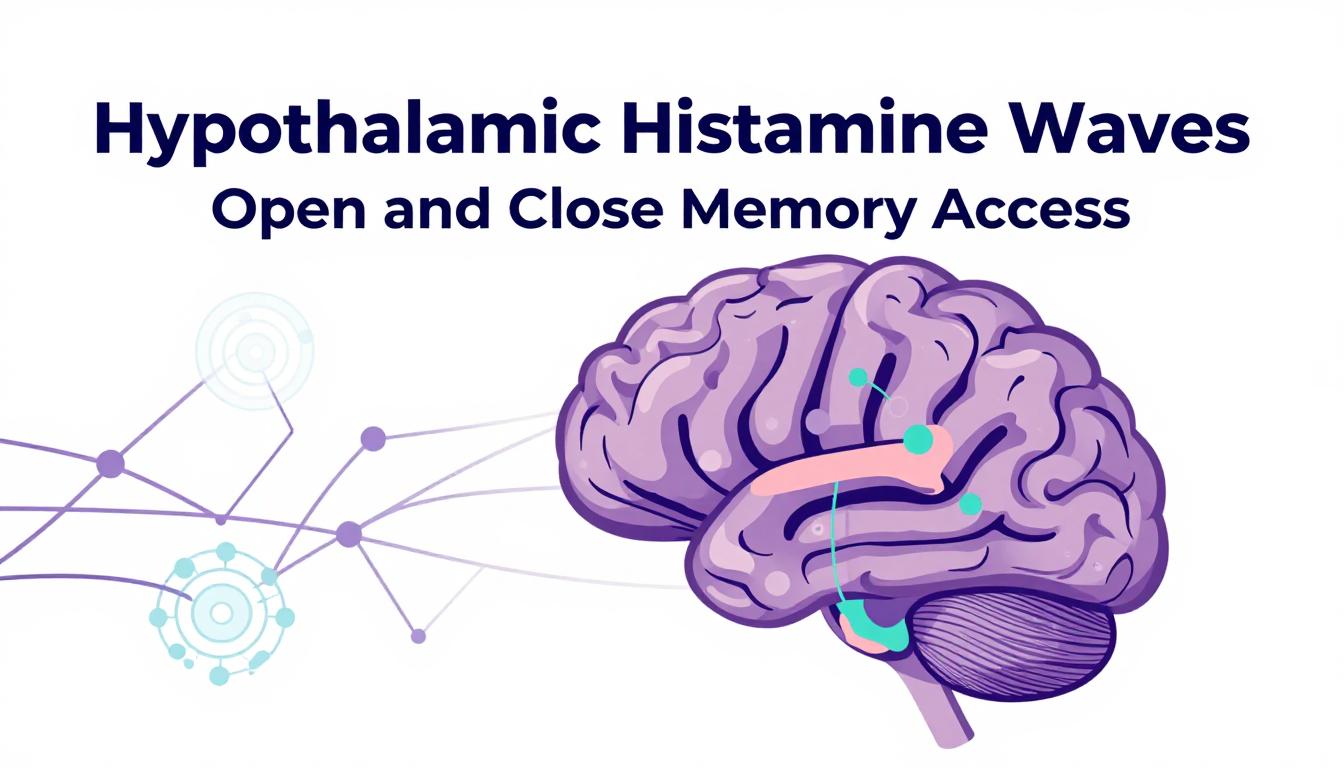
Hypothalamic Histamine Waves Open and Close Memory Access | Cognitive Tech Research
New research from Nagoya City University reveals that slow, spontaneous fluctuations in hypothalamic histamine neurons act as a precision gate for memory retrieval. High histaminergic activity primes downstream circuits in the amygdala, while low activity blocks access even to intact memory traces. This finding offers a new framework for understanding memory variability in neurodegenerative diseases like Alzheimer's.