The Room Went Quiet
I was in a meeting when someone looked up from their phone and said Dolly Parton had died. Nobody had to explain why the conversation stalled. We all just felt the floor tilt a few inches.
Millions of people heard the same news that day and experienced the same jolt. We never met her. She never said our names. And the grief was real anyway.
That contradiction bothers people more than it should. "Why am I crying over a stranger?" shows up in forums, in comment sections, in therapy offices. The answer lives at the intersection of neuroscience, media psychology, and — increasingly — artificial intelligence. Understanding it doesn't cheapen the experience. It reframes what it means to be a social animal in a mediated world.
Parasocial Bonds Are Not a Quirk
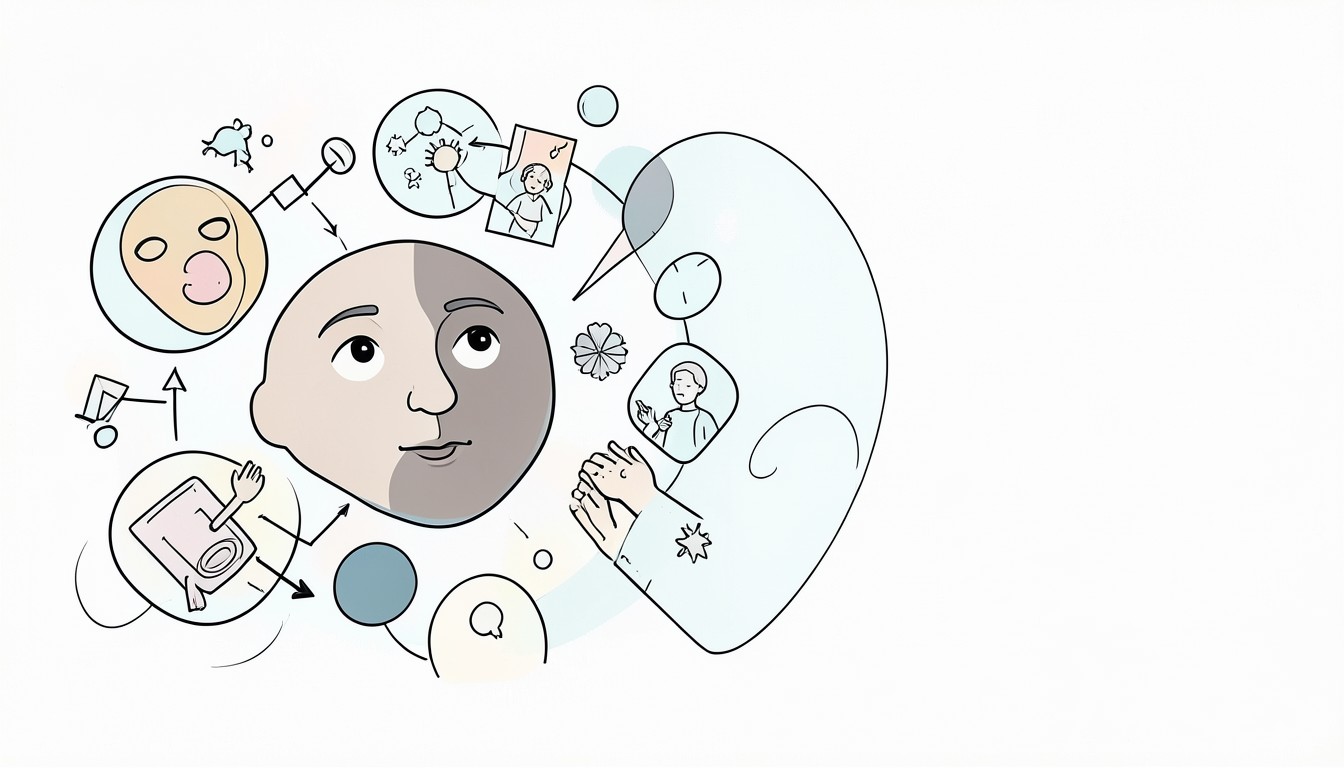
The term "parasocial relationship" dates to 1956, when psychologists Donald Horton and R. Richard Wohl watched television spread into living rooms across America and noticed viewers developing what they called an "illusion of intimacy" with on-screen figures. The word stuck because it described something universal: a bond that exists entirely in one mind, built on repeated exposure and the brain's relentless social pattern-matching.
Here's what makes the concept so durable across decades of media technology. Humans are innately social creatures. Spend enough time with a face — whether that face arrives through a cathode-ray tube, a phone screen, or an AI-generated feed — and your brain files it under "friend." It doesn't ask permission from the other party. It just does it.
Research on the emotional mechanics behind this has matured considerably. A 2022 review by Cynthia Hoffner and Brianna Bond in Current Opinion in Psychology examined how parasocial relationships interact with social media and well-being, finding that these bonds are overwhelmingly common and typically harmless. Contemporary scholarship has largely discarded the old assumption that one-sided attachment signals dysfunction.
What's the catch? A parasocial relationship becomes problematic only when it crowds out reciprocal human connection or impairs daily functioning. The bar is high. Most of us sail well below it.
Grief That Anchors a Life Chapter
A 2024 study by Anna Baker and Erica Cohen in Death Studies landed on a finding that reframed how I think about celebrity death. They found that relational closeness, not parasociality itself, determines the intensity of grief responses. In plain English: it's not that parasocial bonds are inherently shallow. The people who feel the most are the ones who genuinely integrated that figure into their identity narrative.
That integration happens through music, through movies, through cultural moments that happen to arrive during your own pivotal chapters. The song that soundtracked your first drive alone after a breakup. The character who made you feel visible in a world that made you invisible. The activist whose public courage mirrored a private fear you were working through.
When the person behind those artifacts dies, you lose more than a performer or a voice. You lose a touchstone that your memory system uses to navigate your own biography. The grief is proportional to the role they played in your story.
AI's Impact on Human Psychology: Reshaping the Loop
Now let's talk about what's changed. The parasocial environment of 2026 looks structurally different from the one Horton and Wohl described, and AI sits at the center of that shift.
Recommendation algorithms already curated a sense of proximity that didn't exist when fans saw their heroes once a week on a broadcast schedule. Generative AI accelerates the effect. Personalized content, AI-curated highlight reels, and chatbot companions create feedback loops that thicken the illusion of reciprocity without adding a single real interaction. The bond intensifies while the actual relationship, which remains one-sided, stays exactly as thin as it always was.
What is AI in psychology? At its simplest, it's the domain where artificial intelligence tools meet the study of human cognition and emotion. Researchers examine how language models shape attachment patterns, how algorithmic feeds influence loneliness, and how synthetic companions mimic the social cues our brains evolved to trust. The question "can AI understand human psychology?" deserves a direct answer: no. AI recognizes statistical patterns in human communication with eerie precision. It does not experience a felt understanding. What it does, with increasing sophistication, is exploit the same pattern-matching systems that make parasocial bonds feel real in the first place.
That distinction matters for how we relate to celebrities and to AI chatbots alike. Both create the subjective texture of closeness. Neither sends anything back that was generated by genuine knowledge of who you are. The brain, however, often cannot tell the difference, and that's the core of why our grief responses don't calibrate to the actual reciprocity level.
When the Algorithm Grieves With You
Social media has always amplified collective mourning. The shared hashtag, the viral tribute video, the algorithm that floods your feed with memorial content because engagement spikes. AI has turned that amplification into something more pervasive. Memorial posts are now written in AI-assisted language. Fan-edit videos use generative tools. The mourning environment is synthetic at the texture level, even if the feelings underneath it are completely organic.
This doesn't invalidate anyone's grief. It just means the container has changed. Researchers Rachel Forster and others have noted that parasocial bonds offer particular value to people in marginalized or isolated social contexts, LGBTQ youth, people in rural areas, anyone whose immediate environment doesn't reflect who they are. When the mediated space around those bonds becomes more saturated with synthetic content, the sense of shared community can feel both stronger and more fragile simultaneously.
If you've ever wondered whether your human connections are being displaced by AI-mediated social experiences, the research picture is reassuring for most people. Parasocial bonds typically supplement rather than replace — the same distinction researchers draw when they ask whether AI companions could ease rising loneliness. The concern case, where AI companions or parasocial fixations fully substitute for reciprocal relationships, remains the outlier, not the norm.
The same caution applies to AI systems designed to validate without accountability. These tools can mimic the companionship function of a parasocial bond while eroding the friction that builds empathy in real relationships — a tension documented most starkly where teen AI companions pull against real-world connection. A celebrity never texted back; that limitation was part of the contract. A chatbot texts back immediately; that changes the neurochemistry of the interaction in ways we're still mapping.
Carrying the Legacy Forward
So what do you do when the grief lands?
Name it without shame. You formed a bond. Your brain registered a real attachment. The loss is real at the level your nervous system operates on.
Reach toward community. One of the most powerful features of collective celebrity mourning is the way it surfaces strangers who share your reference points. That impulse to find other fans online isn't weakness, it's social repair in action — the same social hunger that drives us to examine how AI understands human psychology when it comes to loneliness.
Practice what they modeled. If a performer taught you generosity, radical authenticity, or stubborn joy, carry that forward in your own life. That's the one direction parasocial energy can flow that benefits people who knew the actual human being, not just the icon.
The capacity to grieve someone you never met isn't evidence of delusion or parasocial pathology. It's evidence that your empathy machinery works. AI can model language about grief convincingly now. It cannot grieve. You can. That asymmetry tells you something important about where the line sits between a system that processes patterns and a person who carries echoes.