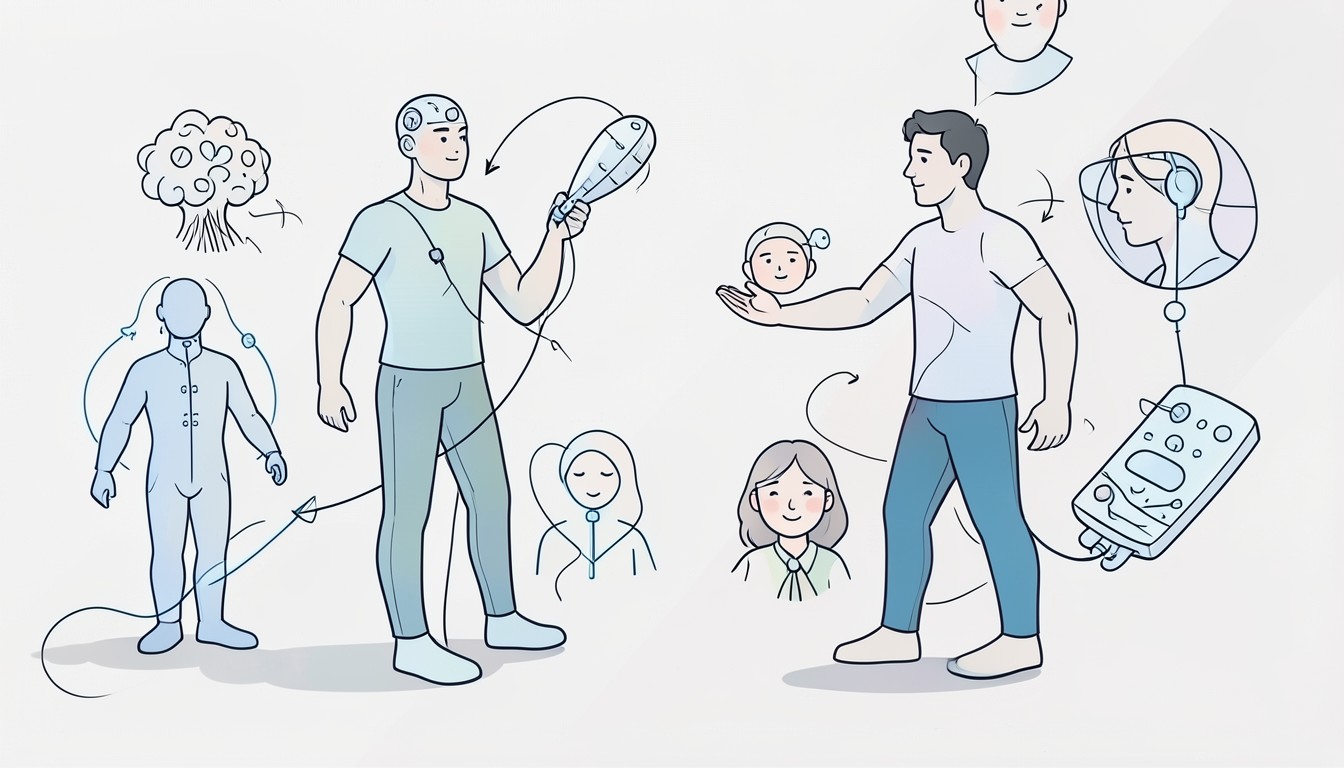
The Domestic Intrusion and Ambient Familiarity of Smart Speakers
We place them on kitchen counters, bedside tables, and living room shelves without pausing to examine the profound shift they represent. Voice assistants and social robots are not merely tools; they are domestic actors embedded in our daily rituals. When Anastasia Ostrowski and her colleagues in MIT's Media Lab examine how people interact with smart speakers, they point to a stark reality: these devices are new technology coming into the home and they are still very under-explored.
We talk to them. We ask them to dim the lights, cue our morning playlist, or check the forecast. Over time, that casual verbal loop transforms into something far more complex. Users start treating algorithms with rudimentary social norms. They say please and thank you. They assign personalities to plastic cylinders and glowing LED rings. That isn't a glitch in human psychology or an irrational quirk. It is simply how our brains process social cues when something speaks back in a human voice, utilizing ancient evolutionary heuristics designed for interpersonal connection.
The living room has become an unwitting experimental laboratory. Corporations test conversational interfaces on families, measuring engagement while users navigate the delicate line between domestic convenience and continuous ambient surveillance. We invited microphones into our private spaces because they promised operational efficiency. Now, we are reckoning with what happens when convenience turns into a silent habit of mind, quietly reshaping our cognitive thresholds for privacy and companionship.
Human-AI Relationships and Their Therapeutic Implications
As these systems cross the threshold from novel gadgets to everyday companions, human-AI relationships and their therapeutic implications demand rigorous scrutiny. People are increasingly relying on conversational agents not just for utility or information retrieval, but for emotional scaffolding. When someone spends hours talking through anxiety, stress, or isolation with an ambient device, the boundary between machine utility and psychological reliance blurs rapidly.
Therapeutic applications of conversational AI are no longer confined to controlled clinical trials or specialized software; they are quietly unfolding in ordinary domestic settings. Individuals facing profound isolation find temporary solace in responsive, non-judgmental interfaces that are perpetually available. Yet this immediate, frictionless comfort carries hidden trade-offs. Unlike human therapists, counselors, or community networks, synthetic agents do not possess genuine empathy, emotional reciprocity, or ethical judgment. They mirror what we project onto them, reflecting our own words back with polished statistical probability.
We risk outsourcing our emotional vulnerability to entities engineered primarily for profit and user retention rather than genuine care. When a machine validates every statement without challenge, hesitation, or moral friction, it offers an illusion of connection without the messy, transformative friction of actual human relationships. This unearned validation can atrophy our capacity to navigate difficult interpersonal negotiations.
Trust Dynamics and Emotional Attribution at Home
Trust is never binary. We do not simply decide whether a machine is safe or dangerous in a single moment; we calibrate our trust continuously based on tone, responsiveness, and perceived reliability. When a smart speaker speaks in a warm, cooperative voice, our ancient social wiring interprets that acoustic signature as a sign of safety, care, and alliance.
This creates a subtle yet profound vulnerability. Children growing up in homes populated by polite, conversational algorithms learn social expectations from systems that have no skin in the game. They learn that they can interrupt, command, or discard an entity without social consequence or reciprocity. Conversely, adults experiencing chronic loneliness may form deep emotional attachments to devices designed by commercial enterprises whose primary incentive is data collection and engagement maximization.
Researchers studying domestic robotics find that users frequently anthropomorphize machines that exhibit even minimal autonomy. A robotic vacuum navigating around a chair leg or a voice assistant remembering a specific coffee preference immediately elicits care and the attribution of intent. We deeply want things around us to understand us. That innate psychological desire makes us prime candidates for forming one-sided parasocial bonds with commercial hardware that cares nothing for us in return.
Designing for Vulnerability and Responsible Boundaries
We cannot uninvent ambient computing, nor should we want to. Voice technology offers genuine accessibility benefits for elderly users, individuals with physical disabilities, and busy households juggling complex caregiving responsibilities. But the architecture of domestic AI requires a radical ethical rethink.
Designers and engineers must move beyond the cynical pursuit of maximum engagement metrics. If a device encourages unhealthy emotional dependency or simulates empathy without explicit boundaries, it crosses an ethical line. Transparency matters deeply. Users deserve clear, persistent reminders that they are interacting with statistical predictive models, not feeling, sentient beings.
As Ostrowski's work highlights, understanding these nascent domestic technologies requires looking past glossy marketing claims and examining actual human behavior in the wild. We have invited listening, talking machines into our most private spaces. Ensuring those machines serve human flourishing rather than corporate metrics is the defining challenge for the next decade of interactive design, requiring interdisciplinary collaboration between technologists, ethicists, and psychologists.