
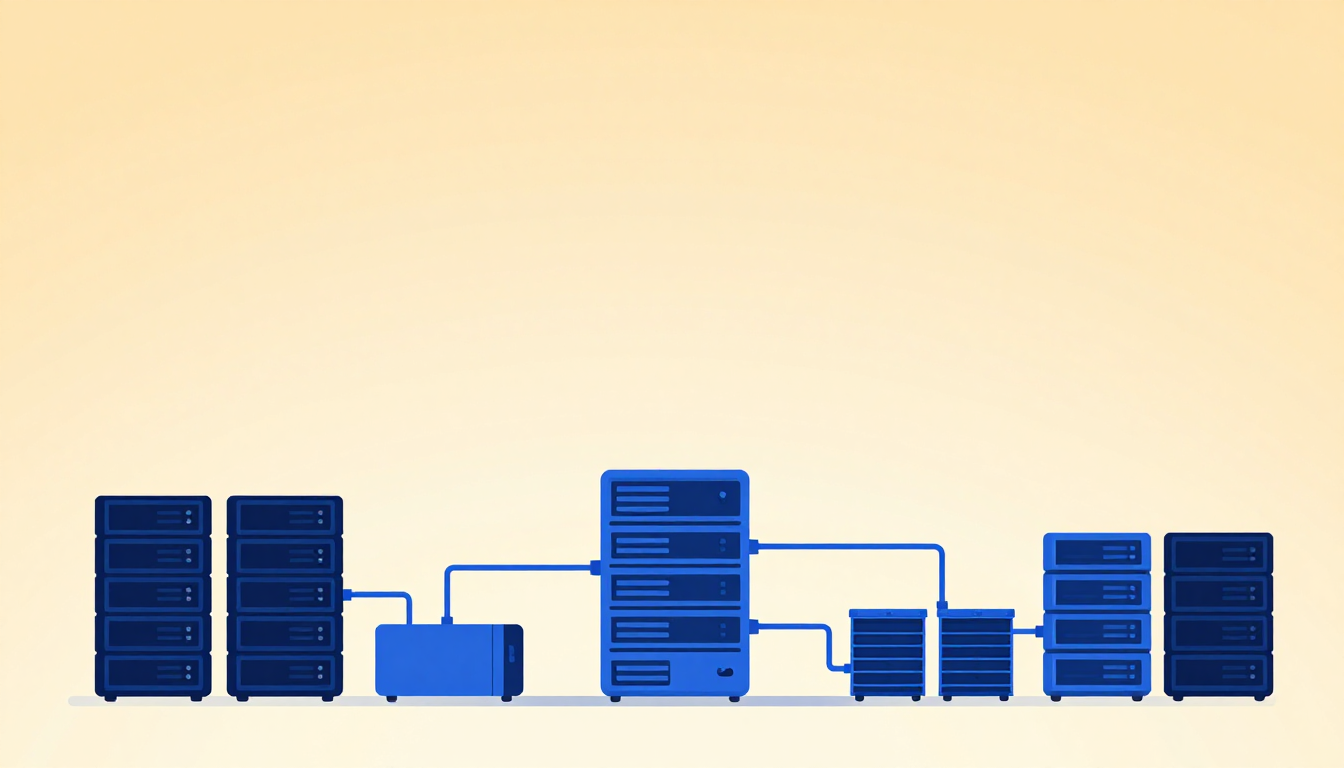
The AI Infrastructure Iceberg
Enterprise AI has entered a new phase. For the past 18 months, organizations have spent aggressively on GPUs, large language models (LLMs), and AI tooling. Now, however, the focus is shifting from experimentation to operationalization, and with that comes a sharper emphasis on ROI. As enterprises scale their AI, the biggest obstacle to performance and ROI may not be the hardware processing it, but the infrastructure moving the data itself.
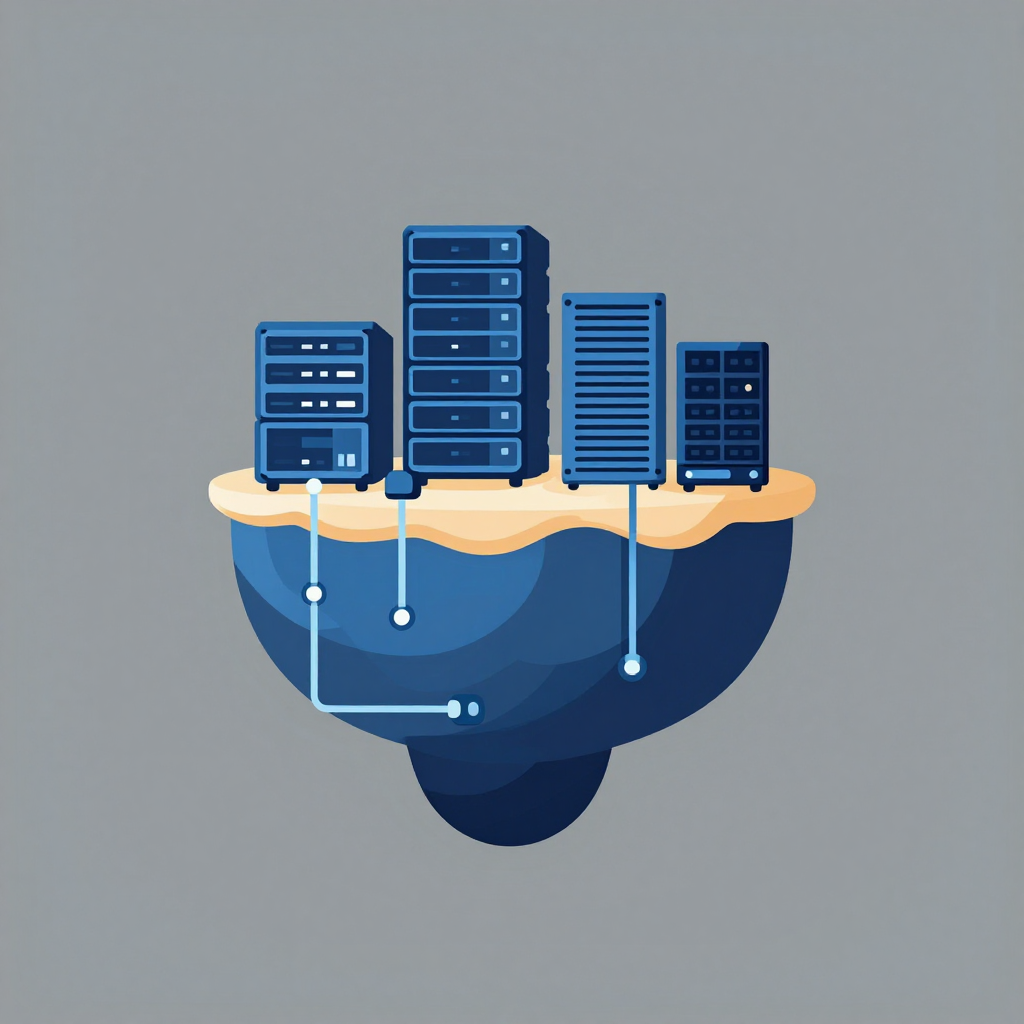
To understand why AI initiatives stall, it helps to rethink the traditional infrastructure model. Think of modern AI infrastructure like an iceberg: 10% is visible—the LLMs, AI applications, and orchestration frameworks. The other 90% below the waterline sits the infrastructure that dictates whether those investments actually deliver value in production: storage, networking, traffic management, and the systems responsible for moving data between storage and compute.
That’s where many organizations discover their real bottleneck. Expensive GPU resources are only as effective as the systems feeding them. If data can’t move efficiently, securely, and consistently, even the most powerful GPU clusters end up waiting, and idle GPUs are among the most expensive assets in the data center. As AI workloads become more complex and distributed, managing this boundary is critical. It is a challenge facing companies worldwide, including rapidly growing ai cloud infrastructure companies in India that are building out the capacity to handle both domestic and international enterprise demand.
What is Agentic AI?
As organizations refine their AI infrastructure, a new focus is emerging: agentic AI. But what does this term actually mean? In its simplest form, Agentic AI describes artificial intelligence systems that can move beyond passive output, actively pursuing goals through their own decisions and actions.
According to definitions shared by industry leaders like IBM, agentic AI systems consist of artificial intelligence agents—machine learning models that can mimic human decision-making—designed to accomplish specific goals with limited supervision. Rather than just responding to prompts, these systems perceive, reason, and take actions to interact with other agents or tools to complete complex, multi-step tasks.
Shifting toward agentic AI frameworks represents a significant jump in mission-critical applications. As enterprises integrate these agents, the need for robust, data-delivery-focused AI cloud infrastructure becomes even more acute. If an agentic AI system is tasked with a complex business goal, its infrastructure must be able to sustain the constant, data-intensive traffic required to make autonomous decisions in real-time. Without reliable data delivery, agentic agents are essentially paralyzed.
The Architecture of Data Flow
The shift toward agentic and inference-intensive AI is pushing traditional, file-based architectures past their limits. Many legacy infrastructure bottlenecks can be traced back to architectural decisions that made sense before AI: the tight coupling of compute and storage.
Historically, enterprises connected applications directly to storage environments. The approach was simple, efficient, and easy to manage. At the scale required by modern AI, however, that simplicity becomes a liability. Storage systems suddenly find themselves handling far more than storage—terminating encrypted connections, managing network traffic, enforcing security policies, and processing enormous volumes of requests from distributed AI workloads. Every encrypted transaction consumes CPU resources, and every connection adds latency.
To address this, organizations are adopting a loosely coupled architecture. Instead of connecting compute directly to storage, the modern solution is to insert an application delivery controller (ADC) or similar intelligent control plane between the two. Acting as the storage front door, this layer can handle TLS termination, traffic optimization, and protocol-aware S3 processing. By moving networking and cryptographic functions into infrastructure specifically designed for those tasks, storage systems can focus on serving data. This creates operational flexibility, allowing storage environments to be upgraded or expanded without forcing catastrophic application changes.
Resilience in the Modern Data Center
Performance is only a piece of the AI ROI puzzle; resilience is the other. Organizations must evaluate their AI data delivery architecture through three critical dimensions: reachability, policy, and delivery.
Reachability ensures that AI workloads can always access healthy storage resources. If a storage cluster degrades, traffic must be redirected automatically to keep GPU clusters active. Policy protects organizations from self-inflicted disruptions—like the "retry storms" or traffic spikes common in AI environments. Finally, delivery focuses on continuity. As storage nodes are upgraded or patched, the AI workloads must remain insulated from that churn.
Implementing these resilient architectures brings tangible business value. A global financial services organization, for instance, managed to achieve a fivefold improvement in object operation throughput simply by focusing on optimizing the storage-to-compute boundary. For CIOs under pressure to showcase AI ROI, the breakthrough may not come from buying more GPUs but from keeping the ones they already own actually fed. The infrastructure mandate is clear: build for continuous data delivery, or expect your AI investment to hit a wall.