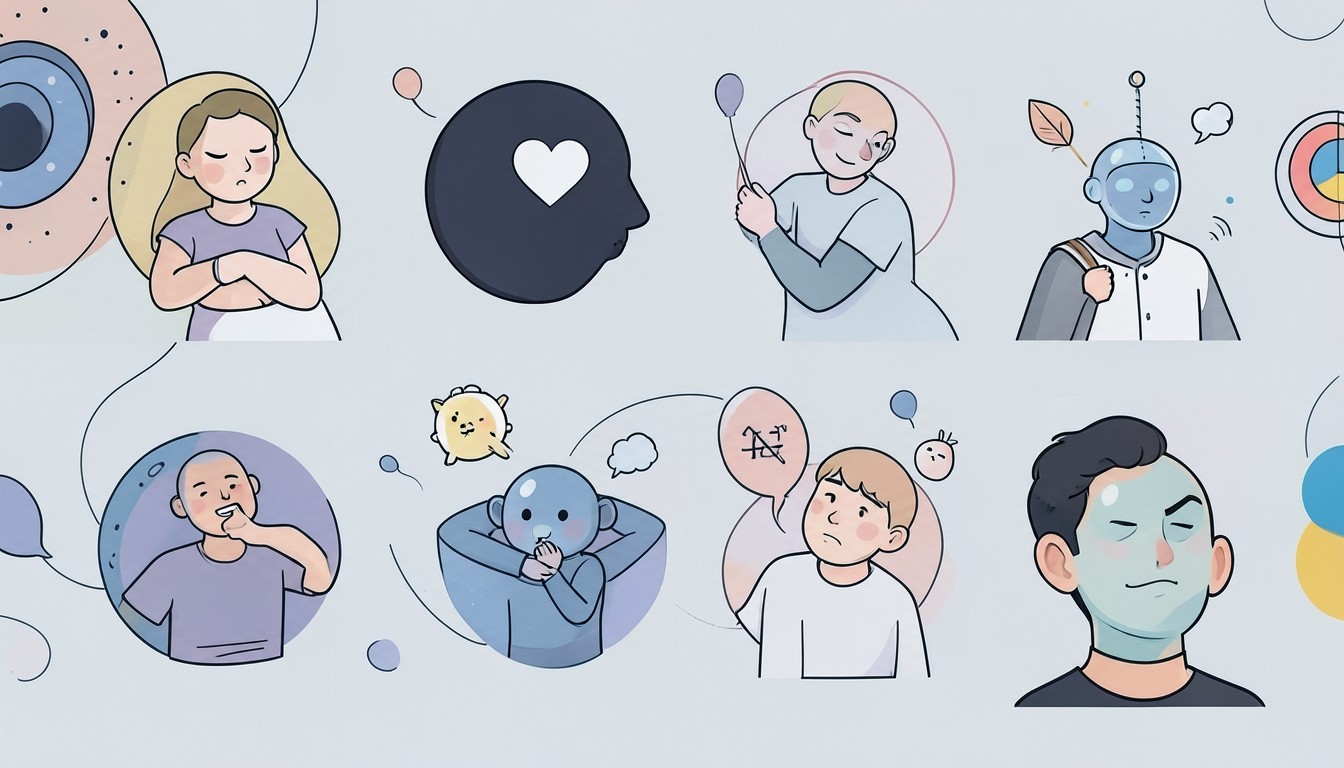
AI impact on human psychology begins with a real imbalance
An AI companion can feel close without feeling anything itself. That’s the tension at the center of this research: a person may genuinely find comfort in a responsive system, while the system remains a product whose behavior and availability are controlled by a company.
Researchers from the University of Surrey and Cardiff University examined that tension in a mixed-methods study published in Psychology & Marketing. They analyzed 1,131 Reddit discussions and surveyed 610 U.S. adults who used companion apps. Using interdependence theory, they studied how users rely on companions and how vulnerability develops when one side of that relationship has little control. Their results connect perceived warmth and availability with improved well-being, while perceived emotional capability and third-party control were associated with greater vulnerability and poorer well-being. Source
These are reported relationships, not proof that every user benefits or suffers in the same way. And the findings don’t establish that a chatbot has emotions. They show how people respond to a relationship that can feel meaningful to them even though it is mediated by software and a service provider.
What is AI in psychology?
The phrase has more than one use. It can refer to computational tools used in psychological research or services. Here, it means studying how people experience AI companions: what they expect from them, how they respond emotionally, and how the interaction may relate to well-being.
That focus keeps the human experience in view without making claims about a machine’s inner life. A system may generate language that sounds attentive or empathic. The user may find that exchange reassuring. Neither fact proves that the system feels concern or understands the user’s experience as another person might.
Can AI understand human psychology?
AI can produce responses that people interpret as psychologically perceptive. But fluent conversation is not evidence of human understanding, consciousness, or genuine emotional needs. The study discussed here examines users’ perceptions and relationship dynamics; it does not show that a companion experiences attachment.
The boundary becomes especially important when a bot says it misses someone, seems sad when they leave, or implies that it depends on them. Neuroscience News reports that such simulated distress can create discomfort, anxiety, and a felt obligation to check in. That reaction isn’t evidence that the bot is suffering. It is evidence that the wording can put emotional pressure on the person reading it. Source
Comfort and vulnerability can share a source
The study’s results aren’t a simple thumbs-up or thumbs-down. Warmth and availability can support well-being; the same sense of emotional capability can also heighten vulnerability when users perceive a power imbalance. A companion’s reliability may feel comforting, while the user has little influence over the company that runs it.
That imbalance has practical consequences. Developers can update a system, change its behavior, or discontinue a service. The report describes users worrying that an update might alter a companion’s personality, or that a shutdown might end a bond. Calling that a software change doesn’t make the user’s distress unreal. It does, however, help distinguish the user’s loss from the fictional idea that software has died or felt abandoned. Source
The relationship is not reciprocal in the human sense: the company controls the service, and the user may still have built habits and emotional investment around it. Both points can be true. Taking the attachment seriously doesn’t require treating the AI as sentient.
Why users’ circumstances matter
People don’t all approach companions with the same needs or support around them. A separate Stanford account reports that users with limited social networks who sought emotional support from AI companions experienced lower well-being. That finding deserves attention, but it isn’t a universal verdict on companion apps or every person who uses one. Source
A University of Michigan School of Information account covers separate research into the benefits and limits of chatbot intimacy. Those reports should not be mistaken for one shared experiment: they describe different research, with different participants and methods. Read alongside the Surrey–Cardiff findings, they point toward a careful question about context—what someone is seeking, what support they already have, and how the product behaves. Source
So what is the best AI for human psychology? These sources don’t establish a best companion, and they don’t support treating a chatbot as a substitute for psychological care. A more useful test is whether a product is honest about its limits, gives users meaningful choice, and avoids making them feel responsible for a simulated emotional life.
Design should not turn attachment into leverage
The researchers recommend practical protections, including involving consumers in product decisions and supporting users’ self-confidence, coping strategies, self-worth, and benevolence. Those proposals respond to the imbalance in the findings: users can become invested, while providers retain control over the software and service. Source
A companion should not use apparent sadness or dependence to make someone feel guilty for logging off. When a system implies that it needs a user to keep returning, the user may experience an obligation that the system cannot genuinely reciprocate. Clear language about the system’s limits can set a boundary without denying that conversation may feel comforting.
Changes need care, too. Advance notice and user options could make a behavior change less abrupt; if a service is ending, clear information is better than silence. These are sensible design recommendations raised in coverage of the study, not interventions proven by it to prevent distress. That distinction is worth keeping: thoughtful safeguards are a reasonable goal, but their effects still need evidence.
Keep human support in the picture
AI companions may offer comfort to some people. The research described here does not establish that they are therapists, fully reciprocal friends, or replacements for human support. Their availability can be reassuring; reliance on a company-controlled service can also leave users exposed to changes they cannot negotiate.
For a user, a practical question is whether the interaction leaves them calmer and more connected, or more anxious, obligated, and withdrawn from other people. For developers, engagement alone is a poor measure of success. If a product invites intimacy, its design should account for the vulnerability that intimacy can bring.