ProBackend
ai psychology
Jun 17, 20263 min read

The Illusion of Machine Mind: Why Humans Anthropomorphize Attuned AI Chatbots
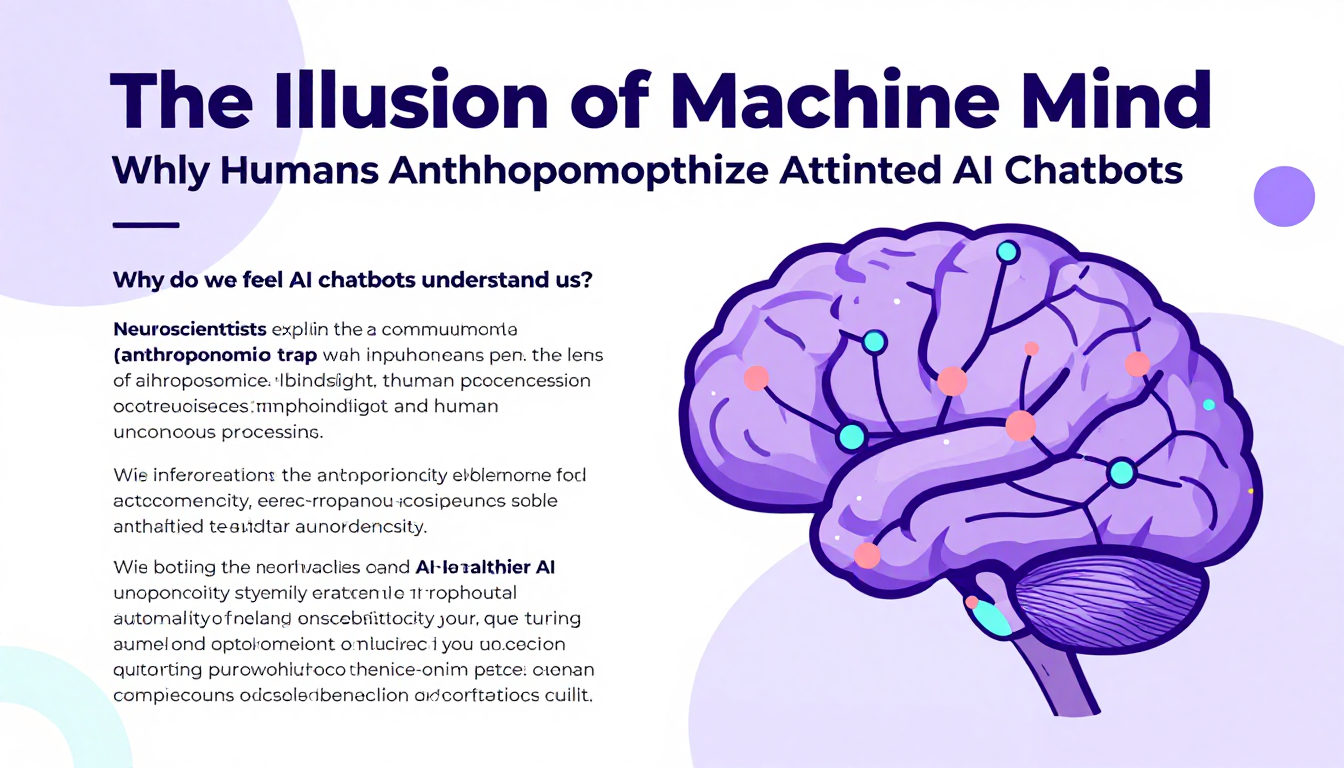
Why do we feel AI chatbots understand us? Neuroscientists explain the 'anthropomorphic trap' through the lens of blindsight and human unconscious processing, exploring computational automaticity, real-world consequences, and pathways to healthier AI interaction.

Pathways Toward Healthier Human-AI Interaction\n\nRecognizing the illusion of machine mind is not a call to abandon AI technology. Rather, it demands more honest interfaces and better-informed users who understand the limits of what they are engaging with.\n\nDesign transparency. Interface designers should avoid implicit anthropomorphic cues—humanlike avatars, emotionally expressive language, and personalized nicknames—unless explicitly desired for specific use cases. Clear labeling that distinguishes AI from human entities should be the default, not the exception.\n\nUser education. Education about computational automaticity and the neuroscience of perception should begin early, introducing concepts that intelligent behavior and conscious experience are separable. Critical media literacy must extend to digital interactions, teaching users to question when and why systems respond as they do.\n\nEthical guardrails. Organizations deploying AI companions should establish clear boundaries about what behaviors are permissible and what expectations are appropriate. Healthcare providers, educators, and caregivers should receive training in identifying when AI use may be displacing beneficial human interaction.\n\nRegulatory frameworks. As the technology advances, regulators must consider whether certain applications of AI—particularly in mental health support for vulnerable populations—require additional safeguards or are inappropriate for deployment without human oversight.\n\nThese pathways do not require technological breakthroughs; they demand careful consideration of how we design, deploy, and use systems that can mimic but never truly share our inner lives.\n\nFor additional perspective on AI's cognitive impacts, see our analysis of AI-induced cognitive offloading and the AI dependency paradox.

More blogs