
The Red Sea Just Got a Lot More Dangerous
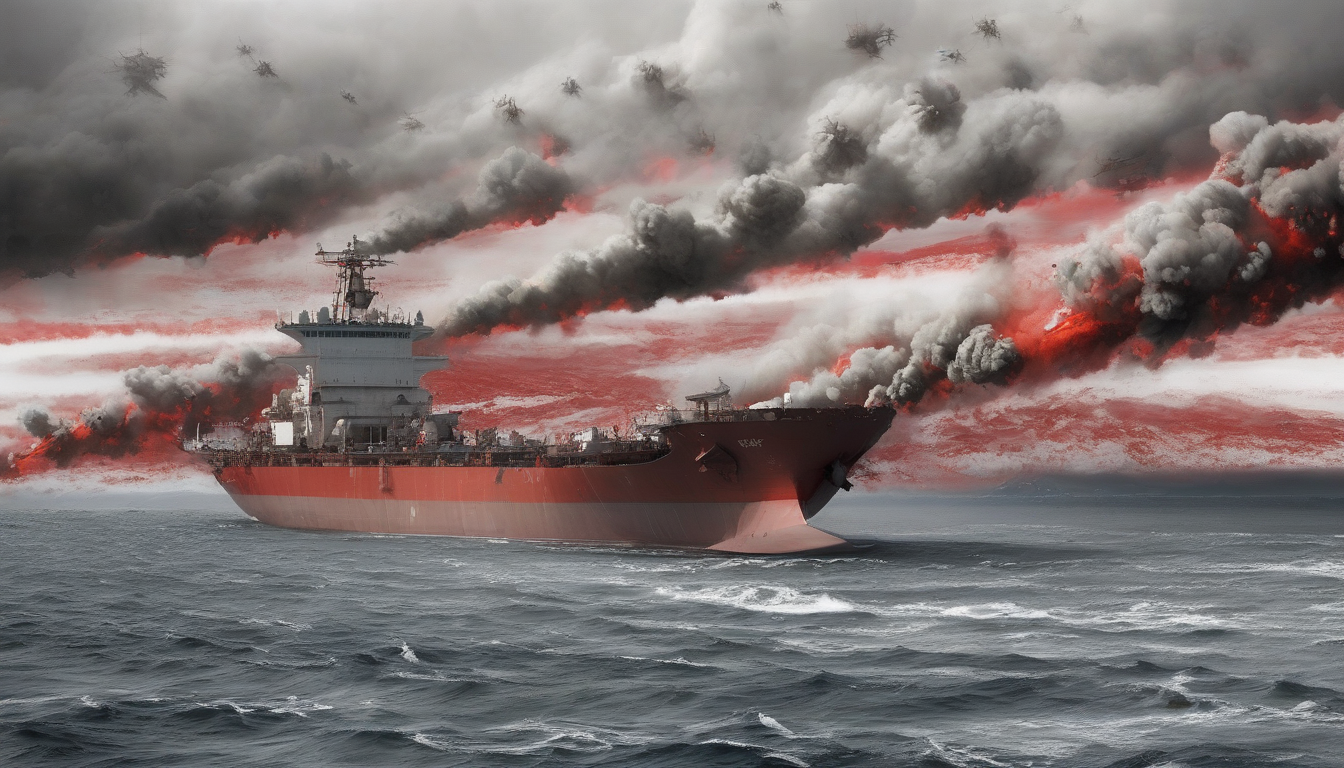
The Houthis hit two Saudi Arabian tankers in the Red Sea this week. That's not a drill, and it's not isolated. It's the latest escalation in a conflict that's been quietly building for months — and it lands squarely on President Trump's desk at the worst possible moment.
Here's why this matters: Saudi Arabia is America's biggest arms customer and a key oil partner. When you attack their tankers, you're not just threatening shipping lanes — you're testing whether Washington will actually follow through on its threats to Iran. And right now, the answer looks like yes.
The timing is brutal. Trump has spent the last few weeks surging military forces to the Middle East, conducting nightly bombing runs that have rattled everyone from Tehran to Riyadh. The Houthis, sensing weakness or provocation, decided to strike. What happens next will define whether this stays a proxy war or becomes something much worse.

Who Are the Houthis, Really?
Let's get the basics straight. The Houthis are an armed political and religious group that champions Yemen's Shia Muslim minority — the Zaidis. They declare themselves part of Iran's so-called "axis of resistance" against Israel, the US, and the wider West. Formally known as Ansar Allah (Partisans of God), they emerged in the 1990s and take their name from founder Hussein al-Houthi. His brother, Abdul Malik al-Houthi, runs things now.
They captured Sanaa in 2014 and overthrew the western-backed president, Abd-Rabbu Mansour Hadi, a year later. That triggered a civil war that's killed more than 160,000 people and displaced four million. Saudi Arabia formed a coalition to fight them, but years of airstrikes and ground fighting never dislodged the Houthis from the territory they seized.
The group controls Sanaa and northwestern Yemen, including the Red Sea coastline. Most of Yemen's population lives in these areas, and the Houthis run a de facto government — they collect taxes, print money, and maintain a fighting force estimated at 20,000 fighters. They're not some ragtag militia. They're a state-within-a-state with serious military capability.

The Red Sea Campaign: How Shipping Got Held Hostage
Everything changed on November 19, 2023. That's when the Houthis hijacked a commercial ship in the Red Sea. Since then, they've launched dozens of missile and drone attacks on commercial vessels. They've sunk two ships, seized a third, and killed four crew members.
Initially, the Houthis said they were targeting ships connected to Israel — in response to Hamas's October 7 attack and the subsequent Israeli military campaign in Gaza. But that excuse quickly became a cover. Many of the vessels attacked had nothing to do with Israel. After the US and UK started striking Houthi positions in Yemen, the group began targeting ships tied to British or American owners and operators.
The economic impact has been staggering. The Red Sea carries almost 15% of global seaborne trade. Major shipping companies stopped using it entirely, forcing vessels to take the much longer route around southern Africa. That adds roughly 15% to journey times and sends costs through the roof.
The Houthis actually ceased their attacks after a US-brokered ceasefire between Israel and Hamas in October 2025. For about five months, the Red Sea was relatively quiet. Then they resumed — and this time, Saudi tankers were on the menu.
Saudi Arabia Enters the Crosshairs
The attack on Saudi tankers is a massive escalation. The Houthis had previously struck Saudi oil facilities back in April 2024, but targeting commercial tankers in the Red Sea proper is different. It's a direct challenge to Saudi economic sovereignty and a clear signal that the group can project power far beyond Yemen's borders.
Saudi Arabia is a key US ally in the Middle East and one of the world's largest oil producers. An attack on their tankers isn't just a regional issue — it's a threat to global energy security. The Suez Canal, which the Red Sea leads to, is the quickest sea route between Asia and Europe and particularly critical for oil and liquefied natural gas transport.
Trump himself noted that it had been more than a year since a US-flagged ship sailed safely through the Suez Canal, and four months since a US warship transited the body of water between East Africa and the Arabian Peninsula. That's not hyperbole — it's a description of how completely the Houthis have disrupted one of the world's most important maritime chokepoints.
Trump vs. Biden: Two Approaches to the Same Problem
The US and UK started air strikes on Houthi targets in Yemen back in January 2024, under President Biden. He said they were in "direct response" to attacks on Red Sea ships that "jeopardised trade, and threatened freedom of navigation." The strikes continued through his administration but never fully broke the Houthi capability.
Trump's approach is different in tone if not always in substance. In March 2025, he authorized a fresh wave of air strikes and made his position crystal clear: "Funded by Iran, the Houthi thugs have fired missiles at US aircraft, and targeted our troops and allies," he said. "Their piracy, violence, and terrorism had cost billions and put lives at risk." He urged Iran to cease support for the Houthis, warning Washington would hold Tehran "fully accountable and, we won't be nice about it."
Sean Parnell, the Pentagon's spokesman, explicitly linked the strikes to Iran and framed them as a departure from Biden's policies: "Under the previous administration, America's enemies were emboldened and billions in frozen funds were unlocked for Iran. With President Trump, an era of peace through strength is back."
The difference isn't just rhetoric. Trump has surged more forces, authorized more aggressive strikes, and made the Iran connection central to his messaging. Whether this actually achieves more than Biden's approach remains an open question — but the escalation is real.
Related: See our analysis of Trump's Iran deal promotions and shifting focus to Ukraine at the G7 summit.
Iran's Role: Arms, Training, and Plausible Deniability
Here's where things get complicated. The US says Iran has armed, funded, and trained the Houthis. Saudi Arabia and the US claim Iran smuggled weapons — including drones, cruise missiles, and ballistic missiles — to the Houthis during Yemen's civil war, in violation of a UN arms embargo.
Iran denies supplying weapons and says it only supports the Houthis politically. But experts are skeptical. Dr. Elisabeth Kendall, a Middle East specialist at Cambridge University, told the BBC: "The Houthis could not operate at this level without Iranian arms, training and intelligence." She added the important caveat: "It is unclear that Iran has direct command and control over the Houthis."
According to the Italian Institute of International Political Studies, Iran has helped the Houthis build factories to make drones in Yemen. The Houthis have also received military advice and support from Hezbollah, according to the US-based Combating Terrorism Center at West Point Military Academy.
So Iran provides the weapons, the training, and the intelligence. But whether Tehran gives direct orders remains murky. The Houthis deny being Iranian proxies, saying they share a political affinity rather than taking commands from Tehran. That distinction matters — it gives Iran plausible deniability while still enabling the Houthi military machine.
What Happens Next: Escalation or De-escalation?
The Houthis fired missiles at Israel on March 28, vowing to continue military operations until Israel "ceases its attacks and aggression." That came during the broader US-Israel war on Iran, and it shows the conflict is expanding in multiple directions simultaneously.
The risk is that this becomes a multi-front war drawing in major powers. The US is already conducting nightly bombing runs. Iran is supplying weapons and intelligence. Saudi Arabia is under direct attack. Israel is in the crosshairs. Hezbollah is providing advice and support.
The economic consequences are already severe. Global shipping has been disrupted, oil prices are volatile, and the Suez Canal — which handles a significant portion of world trade — remains effectively closed to commercial traffic. If the conflict expands further, the economic fallout could be catastrophic.
The UN-brokered truce in Yemen that largely held since 2022 is now under severe strain. If the Houthis continue striking Saudi tankers and the US continues escalating strikes, that truce could collapse entirely — reopening the humanitarian disaster that had begun to stabilize.
The question isn't whether this conflict will escalate further. It's how far the escalation goes before someone blinks.