The Struggle of Scaling AI Infrastructure: Why Ireland’s Grid Remains Strained
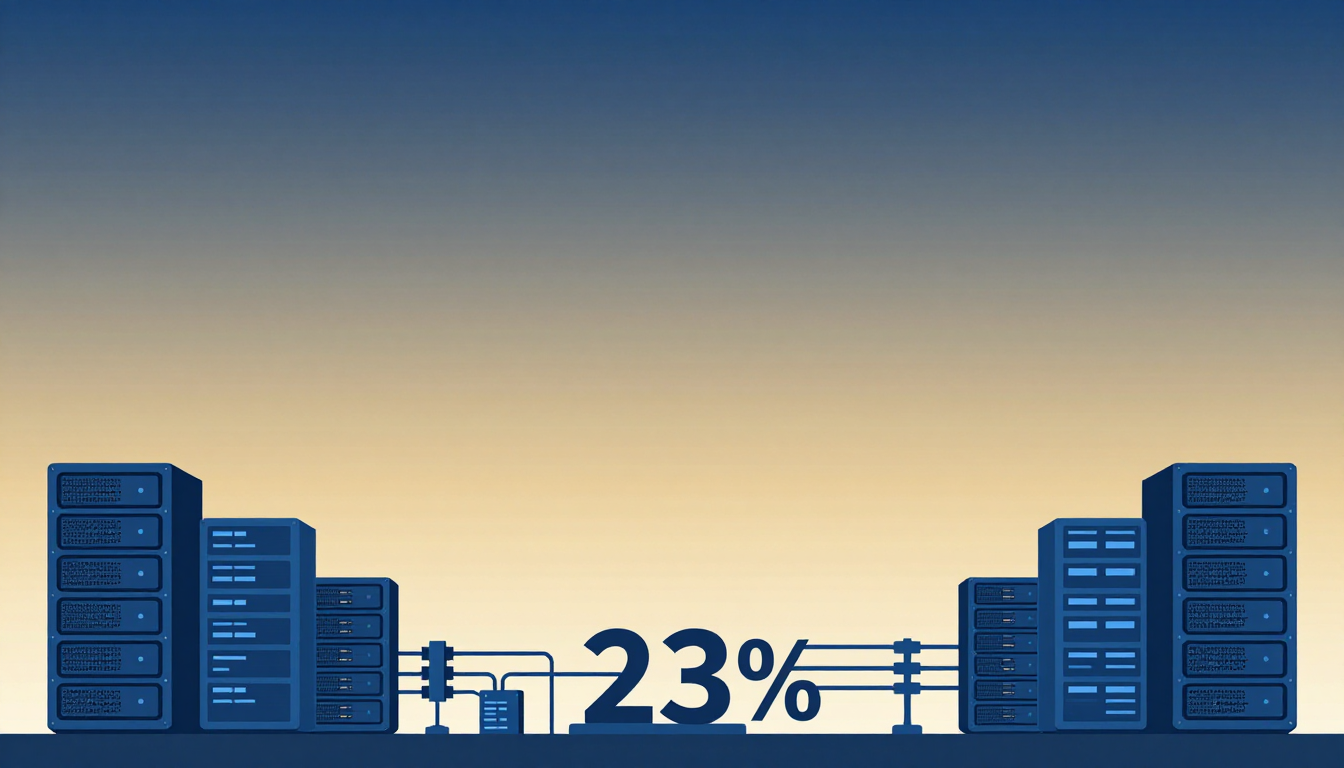
It’s often said that data is the new oil. If that’s true, then Ireland has become a massive, energy-hungry refinery at the edge of Europe. Even with regulatory efforts designed to curb runaway demand, the latest figures show that datacenter energy consumption in Ireland jumped 10 percent in 2025, reaching a staggering 7,663 gigawatt-hours (GWh). This now accounts for 23 percent of the country’s total metered electricity usage.
The implications are clear: scaling AI infrastructure is hitting hard walls, even in tech-friendly, well-connected nations. The reality of power consumption simply isn’t tracking with the ambitious promises of green, high-density AI buildouts.
The Regulatory Mirage: A Moratorium in Name Only?
For a significant period, Ireland held an effective moratorium on new datacenter grid connections in the Dublin area. The intention was to prevent the grid from collapsing under the weight of these massive, 24/7 power-hogs. On paper, it sounded like a sensible, protective measure. But looking back at the 2025 data, the effectiveness of this policy is highly debatable.
Despite the restrictions, power consumption still grew by roughly 10 percent, while energy demand from every other sector—residential, commercial, industrial—grew by a measly 2 percent.
The conclusion is hard to avoid: the moratorium may have slowed new projects, but it couldn't stop the exponential rise in electricity demand from existing, fully-powered, and scaling workloads. When an industry demands this much energy, it’s not just tweaking capacity; it's fundamentally reshaping the national energy landscape.
Why Scaling AI Infrastructure Outpaces Regulation
Why is this happening? It really comes down to the nature of modern, high-performance computing. Scaling AI workloads doesn’t just mean adding more servers. It implies deploying densely packed, high-TDP (thermal design power) hardware that requires constant, uninterruptible power for cooling and compute.
Unlike traditional office spaces or light industrial users, datacenters function like an energy baseload that never sleeps. When a company is in the process of scaling AI infrastructure, they are setting a new floor for energy demand that’s remarkably difficult to lower.
The regulations—such as requiring back-up power or mandating smaller grid impact—are, arguably, fighting an uphill battle against the sheer volume of compute demand required to power the latest generative models. The pressure to innovate seems to consistently outweigh the regulatory burden, particularly when large-scale cloud providers enter the equation.
The Global Context: Lessons from the Irish Experience
Ireland is hardly alone in this struggle. The issues they’re facing are a preview of what every grid with a high density of AI-focused datacenters will deal with. From Northern Virginia in the US to new hyperscale clusters in Sweden and Singapore, the narrative is the same. The velocity at which companies want to deploy infrastructure is simply outpacing the speed at which utilities can upgrade transmission and generation.
The Irish government's attempt to regulate through a moratorium offers a critical, albeit uncomfortable, lesson: regulation can’t just be a stop-gap or a "pause button." It has to be coupled with a long-term, proactive investment in grid flexibility. If we treat infrastructure growth purely as a real estate or zoning issue, we’re missing the bigger picture. It’s an energy issue.
The Road Ahead: Beyond Simple Moratoriums
The Irish experience is a microcosm of a global challenge: how do you balance the drive for AI dominance with the physical limits of a nation’s energy grid?
The 2025 data shows that simply limiting new connections doesn’t solve the problem, especially when existing infrastructure is still consuming vast amounts of power. Future policies need to be far more nuanced. We need a combination of:
- Enhanced Aggregation & Efficiency: Moving beyond simple capacity limits to incentivize real-time, demand-side management.
- Microgrid Solutions: Exploring whether datacenters can realistically become producers or at least more independent of the national grid.
- Transparency in Energy Impacts: Creating stricter frameworks that measure not just grid impact, but the long-term sustainability of the compute being powered.
The goal shouldn't just be to stop new datacenters; it should be to redefine what sustainable computing looks like in an AI-driven era. Without a more coherent approach, Ireland’s 23 percent share could easily climb even higher, placing critical infrastructure for hospitals, homes, and schools at risk.
It’s time to be honest: if the power isn't there, the innovation can't happen—no matter how much compute speed you’re planning to pack into a rack. Finding that inflection point between progress and sustainability remains the biggest challenge of our time. It’s a delicate, high-stakes balance, and the Irish case shows just how much is on the line when that balance teeters. The future of AI doesn’t just rely on faster GPUs; it relies on a grid that can actually support them.