The Two-Brain Secret Behind Why You Can't Break Bad Habits
We've all been there. You tell yourself you'll stop scrolling at midnight. You don't. You swear you'll take the stairs. You take the elevator. Habits are annoying like that—stubborn, automatic, and seemingly beyond our conscious control.
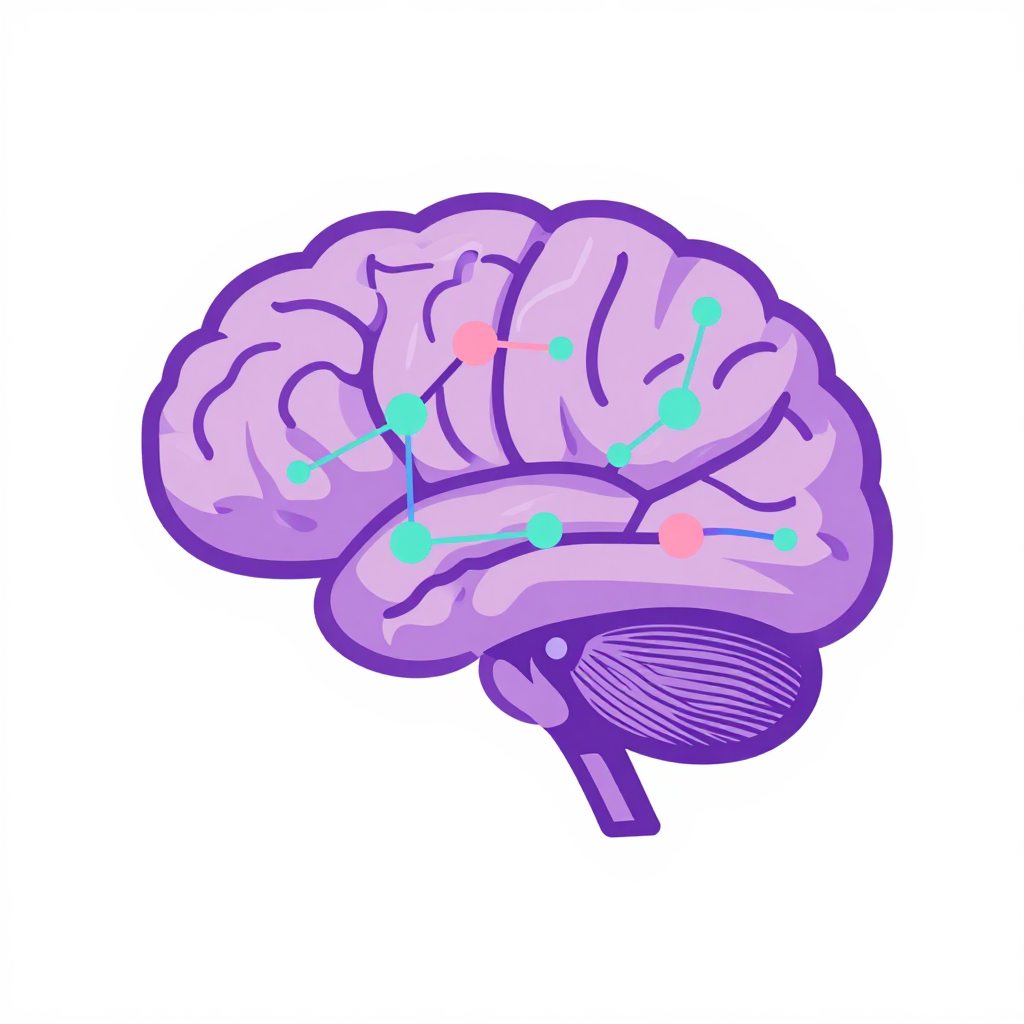
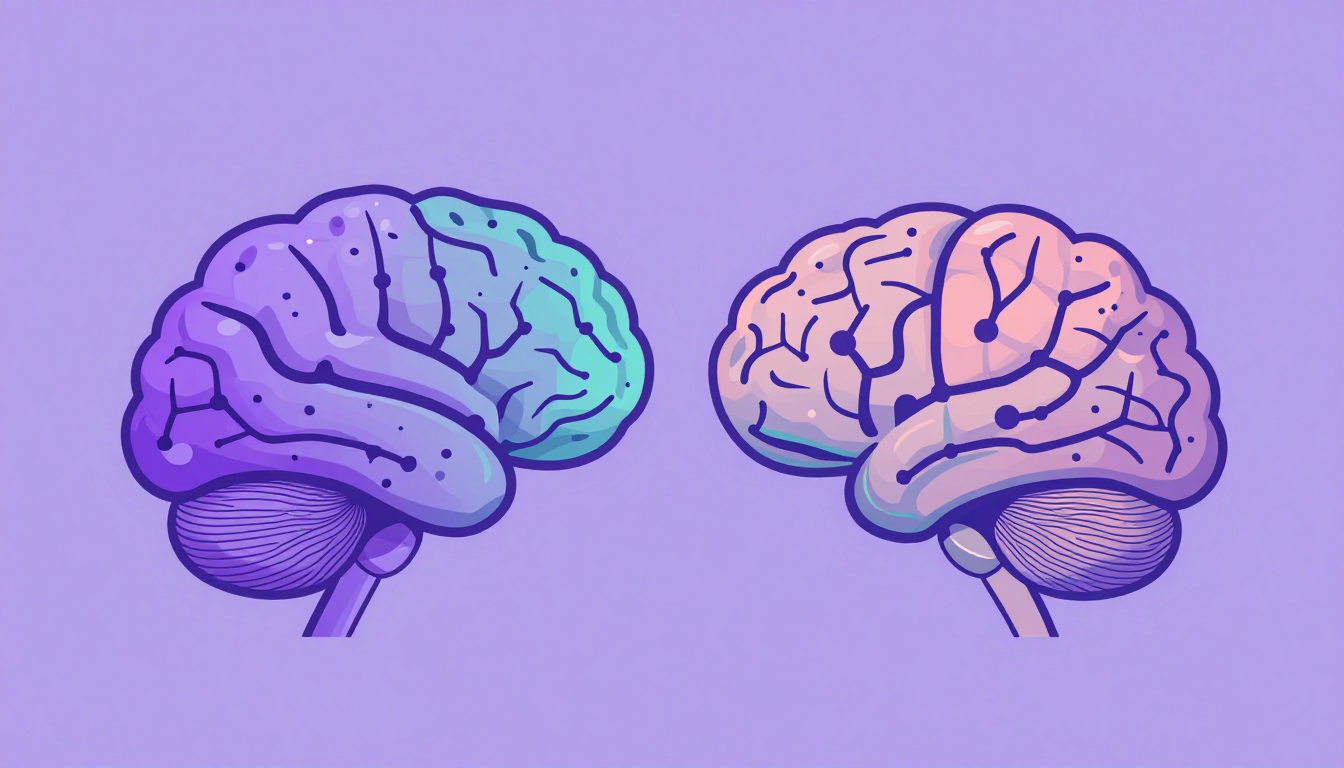
But here's what Kyoto University researchers just uncovered: your brain isn't running habits on a single loop. It's using two completely separate neural circuits, each handling a different job. One decides whether a behavior becomes habitual at all. The other controls how intensely that habit plays out.
The findings, published in Nature Communications this July, completely upend the old assumption that habits are just mindless copies of repeated actions. They aren't. They're complex, individually variable, and—critically—controllable at the circuit level.
The Gatekeeper Circuit: When Deliberation Becomes Automatic
The first circuit connects the anterior cingulate cortex (ACC) to the retrosplenial cortex (RSC). Think of it as a gatekeeper. Its job is to decide whether a goal-directed behavior should transition into a habit.
Here's the twist: this circuit doesn't strengthen as habits form. It weakens.
Lead researcher Yasunori Hayashi and his team, including co-corresponding author Nozomi Asaoka, developed a clever two-stage behavioral training protocol for mice. Stage one trained animals to use goal-directed strategies. Stage two—just four days—facilitated the shift toward habitual behavior. This accelerated paradigm let the team map neural changes within individual subjects before and after habit formation, something previously impossible.
What they found was counterintuitive. As the mice's behaviors shifted from deliberate to automatic, functional connectivity between the ACC and RSC systematically declined. The gate wasn't locking shut. It was opening wider.
"We often struggle to control [habits] even though they are our own actions," Asaoka noted. "By uncovering how habits work, we may eventually find ways to take control of them rather than letting them control us."
The gatekeeper circuit determines if a behavior becomes a habit. But it doesn't dictate how strongly that habit shows up. For that, you need the second circuit.
The Volume Knob: What Drives Habit Intensity
If the ACC-RSC pathway is the gate, the lateral orbitofrontal cortex (lOFC) to central striatum (CS) pathway is the volume knob.
This second circuit controls the frequency and intensity of habit execution. Mice with strong neural responses in this pathway maintained high behavioral execution levels. Those with weaker responses showed reduced execution. The lOFC-CS circuit explains why two people can form the exact same habit yet express it with wildly different intensity.
The team proved this by artificially manipulating the pathway. They could selectively promote habit formation or alter execution levels without disrupting the other circuit. The gate and the volume knob operate independently.
This matters because it shatters the traditional view that habit formation is simply replication. The process is far more nuanced. Even after a habit successfully forms, significant individual differences persist in how frequently and intensely that behavior is performed.
"Our study has uncovered previously overlooked control mechanisms involved in habit formation, showing what determines how strongly a habit is carried out and helping explain why habits differ from person to person," Hayashi said.
Rewiring on Demand: Artificial Stimulation and Suppression
The most striking aspect of this research is bidirectional control. By artificially stimulating or suppressing these pathways, the researchers could induce habit formation or alter execution levels on demand.
This isn't theoretical. It's empirical proof that habit circuits are malleable and targetable.
For the gatekeeper circuit, manipulating ACC-RSC connections could determine whether a behavior crosses the threshold into habitual territory. For the volume knob, manipulating lOFC-CS projections could dial habit intensity up or down, regardless of whether the habit was already formed.
The implications for behavioral psychology and therapeutic intervention are staggering. If we can isolate the circuit responsible for habit execution intensity, we can theoretically treat maladaptive habits without disrupting basic goal-directed learning.
Clinical Implications: Toward Targeted Treatments for Compulsive Disorders
The clinical relevance of this dual-circuit model is immediate. Maladaptive habits—compulsive behaviors, addiction, obsessive-compulsive disorder (OCD)—involve overactive or misfiring habit circuits.
Current treatments often struggle with collateral damage. You suppress the bad habit, but you might also blunt goal-directed decision-making. That's inefficient. That's blunt.
The Kyoto University findings offer a precision tool. By targeting the lOFC-central striatum pathway specifically, clinicians could theoretically down-regulate hyperactive habit execution while leaving the gatekeeper circuit intact. The patient retains the ability to learn new, beneficial habits. They just lose the compulsive intensity of the old ones.
Hayashi's team has already flagged this direction. "Better understanding may help us acquire more beneficial habits and improve treatment for problematic habits linked to conditions such as obsessive-compulsive disorder," Hayashi explained.
Why This Changes How We Think About Behavior
The old model of habit formation was simple: repeat a behavior enough times, and it becomes automatic. That's useful advice, but it's incomplete. It assumes habits are static copies of deliberate actions.
This research shows they're not. They're dynamically regulated by two independent circuits. One decides whether a behavior becomes habitual. The other controls how strongly that behavior plays out.
The gatekeeper and the volume knob. Both are necessary. Neither is sufficient alone.
For anyone interested in behavioural psychology, habit formation, or the biology of the mind, this is a landmark finding. It reframes habits not as singular phenomena but as dual-process systems. And if we can map the circuits, we can eventually learn to control them.
That's not just neuroscience. That's hope.
This article is based on research by Nozomi Asaoka, Diane Pagano, and Yasunori Hayashi at Kyoto University, published in Nature Communications (DOI: 10.1038/s41467-026-75706-1). The full study details the accelerated training protocol and neural mapping techniques used to identify the distinct roles of the ACC-RSC and lOFC-CS pathways in habit formation.
Related Reading:
- Designing Reentry Paths: Why Resilient Habits Prioritize Enjoyment Over Rigid Discipline
- Serotonin Is a Key Driver of Cognitive Flexibility by Actively Reducing Belief Stickiness