
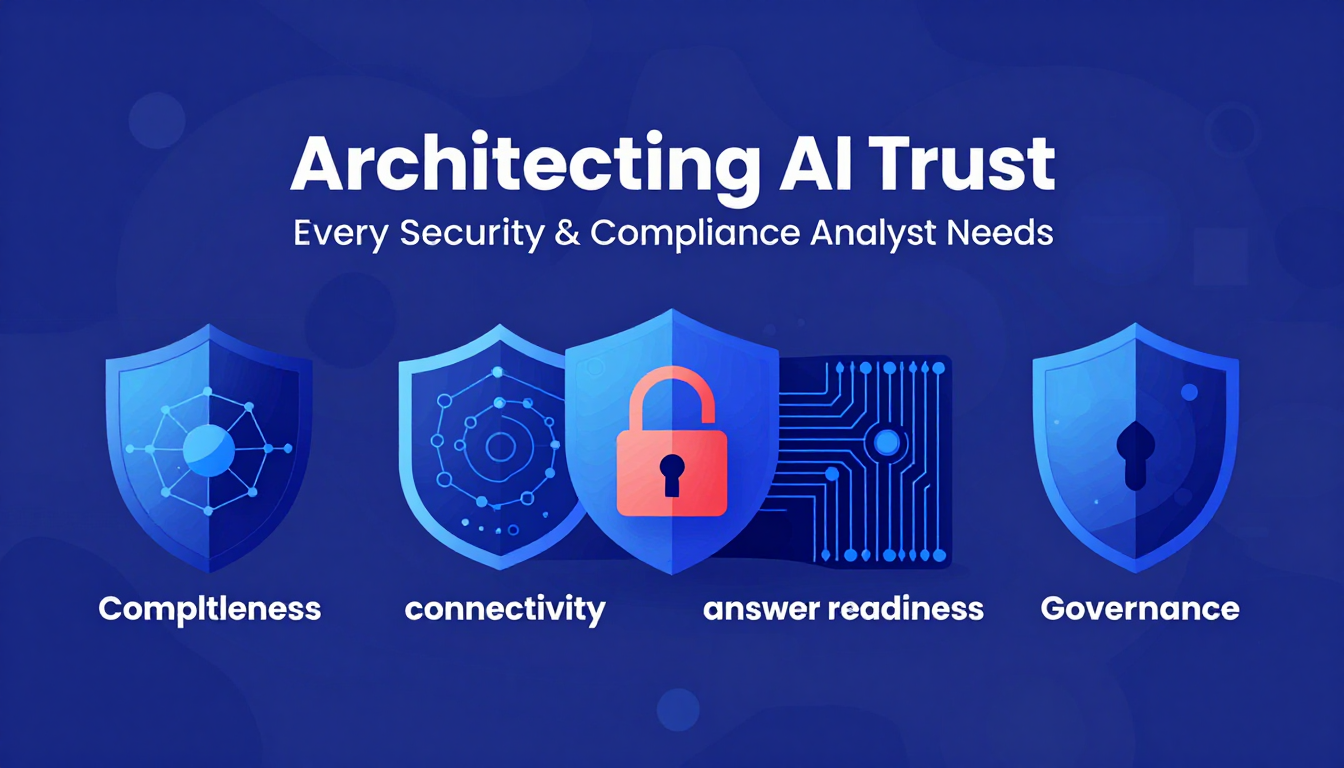
Brand Sovereignty isn't a marketing gimmick. It's an infrastructure discipline. When AI models crawl the web looking for authoritative answers about your software, your compliance status, or your security posture, they aren't scanning for clever metaphors. They're weighing confidence scores. If your enterprise data is fragmented across orphaned PDFs and legacy support forums, the AI won't guess. It will quote a third-party aggregator or a competitor who spent the time structuring their facts.
As a security & compliance analyst, I spend my days auditing control frameworks and reviewing our cloud security incident response playbook. When an incident hits, ambiguity kills. The exact same principle applies to public knowledge governance. If you don't control the primary source of truth about your systems, an LLM will invent one for you.
The Paradigm Shift: Governing Machine Answers Over Optimizing Pages
For twenty years, digital teams optimized pages for keyword rankings. We targeted search terms, built backlinks, and hoped human users would click blue links. AI search fundamentally breaks that model. Platforms like Perplexity, ChatGPT, and Google AI Overviews don't return a list of links; they synthesize answers.
Every AI recommendation is a confidence calculation. The model evaluates structured attributes, technical documentation, regulatory filings, and entity relationships across the web. If your public data lacks structure or consistency, the AI lowers its confidence score and excludes your brand.
We learned in threat modeling that complexity breeds vulnerability. The same law applies to enterprise knowledge. To survive in AI-driven search, organizations must move away from page-level SEO and start governing enterprise answers as structured assets.
Why Every Security & Compliance Analyst Must Demand Decision Data
Most engineering teams maintain standard product specifications—pricing tiers, RAM limits, storage caps, and standard API endpoints. But specifications only explain what a product is. They don't explain why a buyer or auditor should trust it. That requires decision data.
When an enterprise customer queries an AI assistant, they don't ask for generic spec sheets. They ask complex, high-intent questions: "Does this configuration meet NIST 800-53 controls?" or "How does this tooling interface with our security & compliance analyzer veeam setup?"
If your knowledge graph lacks decision data, the AI fills the gap using third-party forums, competitor blog posts, or outdated reviews. As a security & compliance analyst, I see this as a critical data integrity risk. If an AI tells a potential client that your service lacks SOC 2 Type II attestation simply because your public documentation hid the report behind a gated web form, you lose the deal before sales even sees the lead. Mining internal search logs and support tickets reveals these decision gaps before they turn into lost revenue, a pattern documented in Search Engine Journal source analysis.
Pillar 2: Building Enterprise Knowledge Graphs for Connectivity
Isolated facts don't build confidence. Relationships do. An AI model doesn't just evaluate a standalone claim; it traverses connected entities to verify authenticity.
If your core platform page doesn't explicitly link to its underlying threat models, API references, and compliance certifications, you force the AI parser to make unverified assumptions. You must organize information as an enterprise knowledge graph where products link to policies, policies link to controls, and controls link to real-time status pages. Teams looking to eliminate structural entity gaps can review our analysis on building enterprise knowledge graphs with schema.
When you structure enterprise facts into explicit, machine-readable relationships, you make it trivial for LLM crawlers to verify your claims. This structural discipline is how you protect your organization against AI hallucinations and competitor hijacking.
Pillar 3: Query Readiness Across Your Security & Compliance Center
Content must reflect how technical buyers actually query, not how marketing departments organize internal portals.
In the security & compliance domain, user queries are specific and technical. When an admin troubleshoots a tenant policy in the security & compliance center office 365 environment, they search for precise PowerShell cmdlets or audit log event IDs. If your documentation forces users—or AI agents—to scroll through generic landing pages, query resolution fails.
Query readiness means packaging technical details into concise, single-purpose answer blocks. Packaging technical specifications alongside clear operational guidance helps AI systems summarize accurate resolution paths rather than guessing. Structuring documentation around real-world diagnostic workflows ensures that automated crawlers index your exact remediation steps as the definitive answer.
Pillar 4: Knowledge Governance and Organizational Stewardship
If no single team owns answer integrity, your public knowledge degrades. Marketing updates product naming, engineering changes API endpoints, legal updates terms of service, and nobody updates the machine-readable schema.
This breakdown requires a dedicated stewardship model. Whether you establish a VP of Answers or assign governance to a principal data steward, someone must audit the accuracy and consistency of public-facing enterprise claims. If your public data violates indexing standards or feeds scrapers with low-quality content, search engines punish your domain authority under Google Search spam policies.
Stewardship is continuous maintenance. As regulatory environments shift—such as updated EU tech sovereignty regulations—your public documentation and knowledge graphs must update simultaneously.
Executing Your Cloud Security Incident Response Playbook for AI Risk
You cannot measure Brand Sovereignty by tracking keyword rank alone. Rankings are fleeting; machine confidence is persistent.
When evaluating your organization's AI readiness, ask these five audit questions:
- Do our public assets provide explicit decision data, or just basic product specs?
- Are enterprise facts consistent across our website, documentation, and external APIs?
- Can an AI crawler traverse clear relationships between our products, security controls, and compliance attestations?
- Have we structured our technical guides to answer exact operational queries?
- Does our team maintain a cloud security incident response playbook for correcting AI hallucinations about our brand?
If you can't answer yes to all five, your brand sovereignty has holes. Protecting enterprise truth isn't a one-time SEO sprint. It's a permanent security and compliance operational standard.