
The Security & Compliance Analyst’s Hidden Enemy
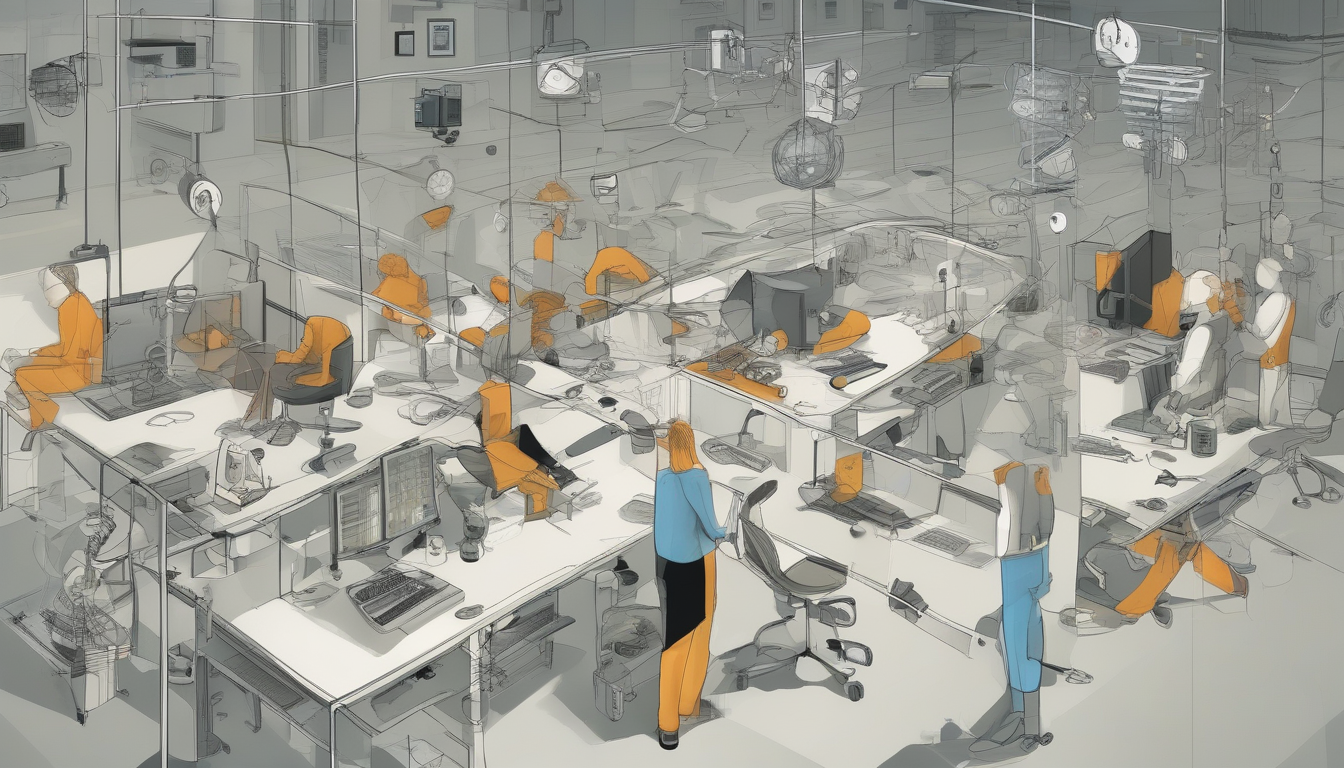
You’re staring at your screen. The audit log is open. The compliance checklist is half-done. The 365 migration deadline is in 72 hours.
You open a new tab.
Then another.
You check Slack.
You reorganize your desktop.
You scroll.
You’re not lazy.
You’re not broken.
You’re not even unmotivated.
You’re being hijacked.
By your own brain.
This isn’t about willpower. It’s not about time management apps or Pomodoro timers. It’s not about "just getting started."
The real enemy is an ancient, hardwired conflict inside your skull — a war between the part of you that wants to survive right now, and the part that knows you need to plan for tomorrow. And right now, your brain is winning. Every time.
We’ve been sold a lie: that procrastination is a moral failing. That if you just tried harder, you’d be productive. But what if the problem isn’t you? What if it’s the world you’re living in — a world that demands abstract, delayed rewards from a brain built to hunt mammoths and avoid predators?
That’s the real story. And it’s the only one that gives you a real chance to win.


The Two Rules That Rule You
Your brain doesn’t have a "procrastination module." It has two ancient, non-negotiable rules — and they’re both working overtime against you.
The first is the Hedonic Principle: your brain is wired to maximize pleasure and minimize pain. Right now. Not tomorrow. Right now. When you’re facing a compliance report, a patch deployment checklist, or a 365 migration audit, your brain doesn’t see "future security" — it sees "immediate discomfort." So it nudges you toward the thing that feels good: the meme, the snack, the YouTube rabbit hole. It’s not weakness. It’s biology.
The second is the Immediacy Principle: your brain prioritizes what’s right in front of you. Not what’s important. Not what’s urgent in the long term. What’s here. A notification. A sound. A flicker on the screen. Your ancient ancestors didn’t need to plan for retirement — they needed to spot the lion before it pounced. So your brain is literally trained to ignore abstract futures and fixate on immediate stimuli.
Put them together? You’ve got a perfect storm. The task feels unpleasant (hedonic), and it’s invisible in time (immediacy). So your brain doesn’t say "I’ll do it later." It says, "I’ll do it never — because ‘later’ doesn’t exist in this moment."
This isn’t a flaw. It’s a feature. A feature designed for a world that no longer exists.


The Nine Archetypes — And Why They’re All in Your Security Team
A 2026 Cambridge study, synthesized from hundreds of papers across neuroscience and behavioral economics, identified nine distinct cognitive archetypes of procrastinators. You’re not one type. You’re probably three.
And your team? They’re all of them.
The Perfectionist
"I need the perfect template before I start the audit."
You delay because the standard isn’t flawless. You wait for a better tool, a cleaner script, a more elegant framework. But perfection is a trap. It’s not about quality — it’s about fear. Fear that if you ship something imperfect, someone will see you’re not an expert.
Fix: Set a "good enough" threshold. The 365 compliance checklist doesn’t need to be art. It needs to be auditable. Ship it. Then iterate.
The Worrier
"What if I miss something? What if this triggers a breach?"
You’re paralyzed by consequence. Every checkbox feels like a landmine. You don’t procrastinate to avoid work — you procrastinate because the weight of failure feels unbearable.
Fix: Write down the worst-case scenario. Then write down how you’d survive it. Then write down how you’d fix it. Now go do the task. The fear shrinks when you give it structure.
The Dreamer
"I’ll just think about it for a bit longer."
You’re lost in the ideal. You imagine the perfect migration, the flawless policy, the zero-breach quarter. But you never start. Because the real work is messy. And the dream is clean.
Fix: Turn the dream into a single, tiny action. "Open the 365 admin portal." That’s it. Don’t think. Just click.
The Rebel
"I’m not doing this because they told me to."
You resent the process. You hate the compliance theater. You feel controlled by policies written by people who’ve never touched a firewall.
Fix: Reclaim agency. Ask: "What’s the real risk here?" Not "Why does this exist?" But "What happens if I don’t do it?" Own the outcome, not the order.
The Zigzagger
"I started the report. Then I checked the incident log. Then I reorganized my bookmarks. Then I replied to an email. Then I looked up the latest CVE."
Your attention is a pinball. You jump between tasks because each one gives you a quick dopamine hit. But you finish nothing.
Fix: Lock your browser. Use a distraction blocker. Set a 25-minute timer. One task. No switches. You’re not multitasking — you’re fragmenting your focus.
The Thrill-Seeker
"I work better under pressure."
You delay on purpose. You need the adrenaline rush of the deadline. You’ve convinced yourself that the chaos is your fuel.
Fix: You’re lying to yourself. The rush isn’t productivity — it’s trauma. Every time you do this, you’re training your nervous system to associate work with panic. That’s not sustainable. That’s not security.
The Hedonist
"I’ll just watch one video."
You’re not avoiding the task — you’re chasing the distraction. It’s not about fear or control. It’s about pleasure. And the internet is designed to give you more.
Fix: Add friction. Move the browser to a different desktop. Log out of YouTube. Make the distraction harder than the work.
The Burnout
"I just… can’t."
You’re not lazy. You’re empty. Your battery is drained. You’re not avoiding the checklist — you’re avoiding everything. This isn’t procrastination. It’s exhaustion.
Fix: Stop. Rest. Don’t "power through." You’re not a machine. You’re a human with a nervous system. Sleep. Walk. Breathe. Come back when your brain isn’t running on fumes.
The Pessimist
"It won’t matter anyway."
You’ve seen too many audits fail. Too many policies ignored. Too many breaches happen despite the "best practices."
Fix: You’re right — it doesn’t always matter. But it matters this time. Focus on the one thing you can control. The one thing you can fix. The one audit you can complete. Don’t fight the system. Fight for the next one.
Why This Matters More Than Your SIEM
Procrastination isn’t just about missed deadlines.
It’s about risk.
A 2026 Cambridge study found that chronic procrastinators in IT roles are 3x more likely to miss critical patch windows. They delay compliance reviews. They postpone access reviews. They ignore configuration drift.
And when they finally act — under pressure — they make mistakes.
The AI shift makes this worse.
As AI automates routine tasks, the real differentiator isn’t technical skill anymore. It’s self-regulation. The ability to start the hard thing. To sit with discomfort. To choose long-term security over short-term relief.
If you can’t manage your own attention, you can’t manage AI.
Your 365 environment won’t audit itself.
Your incident response playbook won’t execute itself.
Your compliance posture won’t improve itself.
You have to.
And you can.
Because this isn’t about discipline.
It’s about design.
Your brain isn’t broken.
It’s just outdated.
You don’t need to be better.
You just need to be smarter.
And that starts with knowing which archetype you are — and which one your team is hiding behind.
The Toolkit — Not for You. For Your Team.
This isn’t a personal fix.
It’s a team strategy.
For the Perfectionist
- Replace "perfect" with "auditable."
- Use templates. Share them. Don’t build them from scratch.
- Set a 30-minute limit on prep. Then start.
For the Worrier
- Write down the risk. Then write down the mitigation.
- Share the risk matrix with your manager. Get buy-in.
- If you’re still scared — ask for a peer review before you start.
For the Dreamer
- Start with one command. One line of code. One checkbox.
- Use the 2-minute rule: if it takes less than two minutes, do it now.
- Track progress visually. A simple checklist is more motivating than a vision.
For the Rebel
- Ask: "What’s the actual business risk?"
- Don’t ask why the policy exists — ask what happens if it’s ignored.
- Own the outcome. You’re not following orders. You’re preventing a breach.
For the Zigzagger
- Use a timer. 25 minutes. One task. No distractions.
- Block social media during audit windows.
- Turn off notifications on your work device.
For the Thrill-Seeker
- Schedule your "crunch time" in advance.
- Don’t wait for a deadline. Create a self-imposed one.
- Reward yourself for finishing early — not for surviving last-minute chaos.
For the Hedonist
- Make distractions harder than work.
- Use a separate device for personal use.
- Log out of everything. Every time.
For the Burnout
- Take a day off. No work. No emails.
- Talk to your manager. Say: "I need to reset."
- You’re not weak. You’re human.
For the Pessimist
- Focus on one win.
- Don’t fix the whole system. Fix the one thing you can.
- Celebrate it. Write it down. Show it to someone.
You’re Not Alone
You’re not the only one staring at a half-filled compliance form.
Your colleague who missed the 365 migration deadline? They’re a Zigzagger.
The analyst who refuses to use the new tool? They’re a Rebel.
The team lead who works until 2 a.m. every Friday? They’re a Thrill-Seeker.
And you? You’re probably all of them — on different days.
The goal isn’t to be perfect.
It’s to be aware.
To recognize the pattern.
To name the archetype.
And then — to choose differently.
Because in security, the biggest threat isn’t the attacker.
It’s the delay.
And you? You’re the only one who can stop it.