

The Assembly Line of Modern Cybercrime
In the world of high-stakes digital theft, the most effective criminal operations have stopped trying to reinvent the wheel. Today, if you're a mid-level crook looking to scrape a few million corporate credentials or drain some crypto wallets, you don't build a malware kit from scratch. You rent one. Worse, you rent two.
Consider the recent, highly orchestrated takedown of the cybercrime "assembly line" run by the Amadey and Stealc malware operations. This wasn't just a raid on a single malicious actor; it was a calibrated legal and technical assault on a business model that, until recently, had proven frustratingly resilient. Private tech companies and global law enforcement authorities finally treated it like what it is: a coordinated enterprise.
For a long time, security researchers have recognized the modularity inherent in these attacks. The goal is simple: divide and conquer. One set of bad actors focuses on infrastructure and initial access—the "loader"—while another focuses specifically on the "stealer," the tool that actually claws the data out of the system. Amadey and Stealc are the modern poster children for this divorce of utility.
Amadey is a loader, the point of entry. It hits an endpoint, breaks through the door, and sets up shop. Once Amadey has established a foothold, it doesn't need to do the heavy lifting of data exfiltration itself. That's for infostealers like Stealc. These kinds of modular payloads are frequently delivered via innovative social engineering methods, such as when fake security verification frameworks abuse native macOS utilities to execute hidden infostealers on target systems. Stealc, as the name hints, is a vacuum for data—it sweeps up browser cookies, session tokens, cryptocurrency wallets, document templates, and anything else the customer (the "crook") has flagged as high-value. This modular sequence turns what was once a complex, labor-intensive exploit into a predictable, industrialized process. When you can decouple access from theft, you can automate everything in between.
Stealc has also been widely used in a variety of ClickFix attacks, such as fake instructional videos on TikTok and FileFix attacks, demonstrating how these tools adapt to new social engineering vectors. Amadey serves as a malware botnet used by both ransomware gangs and state-sponsored hacking groups to breach networks, making it a critical infrastructure target for international law enforcement.
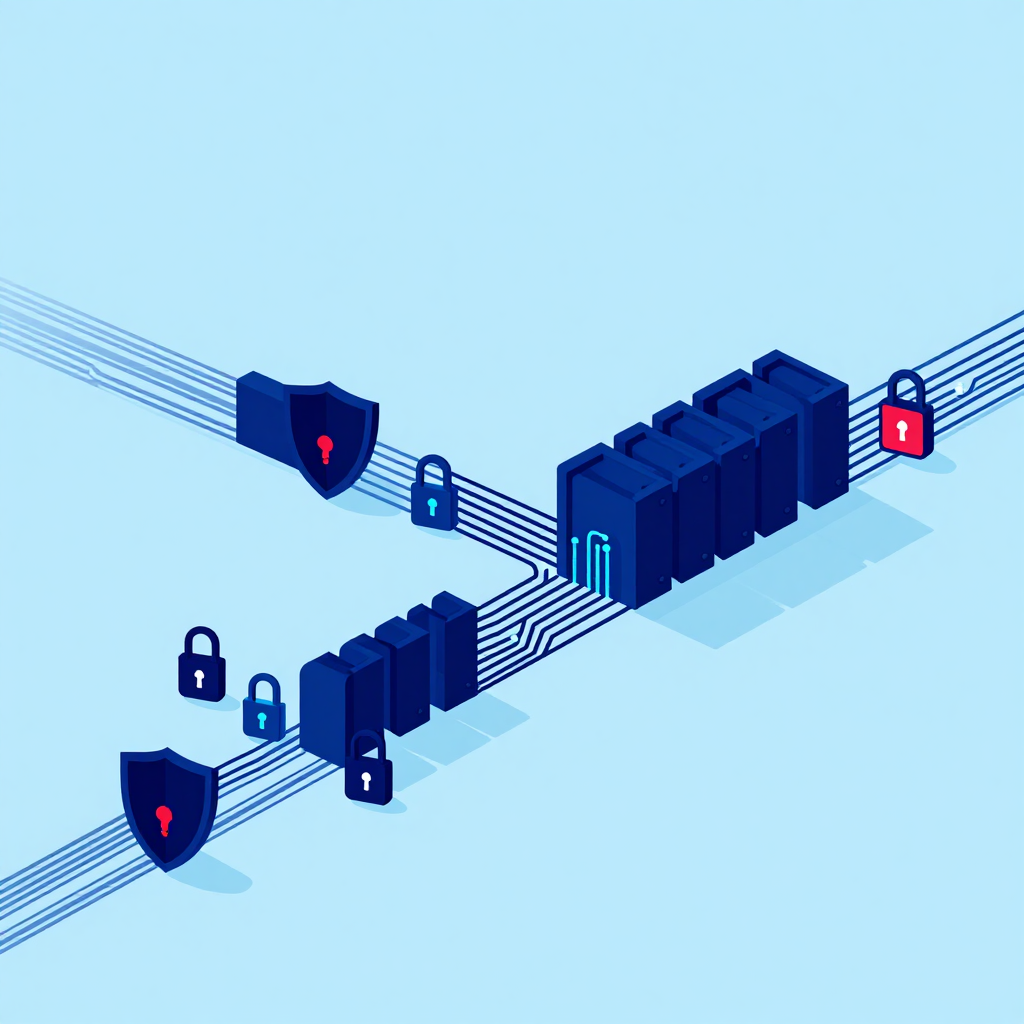
The AI Breakthrough: Mapping the Invisible Overlap
The real ingenuity in the crackdown wasn't just the final raid; it was the prep work. Identifying the intersection of these two different malware operations was no small feat. Amadey and Stealc are technically independent. They are run by different groups, sold in different forums, and often deployed by different sub-affiliates.
How do you find the common thread in a haystack of malicious web traffic? You use the one tool that's better at spotting anomalies in massive, sprawling datasets than any human researcher: AI.
Microsoft's Digital Crimes Unit leveraged AI to crawl through the murky infrastructure of the dark web. They weren't just looking for signatures; they were looking for patterns in the underlying network communication infrastructure itself. By applying large-scale pattern matching to the command-and-control (C&C) servers for both Amadey and Stealc, they identified that despite the surface-level independence, the thieves were leaning on the same underlying digital scaffolding.
This was the "Aha!" moment. By proving to a high degree of certainty that both infostealers relied on overlapping C&C servers and hosting provider networks, Microsoft lawyers could craft a far more persuasive case. Instead of targeting one criminal group after another—a tedious, inefficient loop that often lets the operators move their servers before the raid starts—the goal shifted to a simultaneous "one-two punch." The AI insight provided the necessary legal leverage to treat these two separate programs as components of a single, unified criminal conspiracy under RICO (Racketeer Influenced and Corrupt Organizations) legislation.
This is the shift that matters. Without that insight, it's just two separate, slightly less significant takedowns. With the insight, it's a systemic disruption. It turns out, even criminal organizations have technical debt and supply chain dependencies. And if you're using AI to map those dependencies, you're no longer playing whack-mole—you're pulling the rug out from under them.

RICO and the Power of Creative Legal Strategy
RICO is generally known for helping take down organized crime syndicates, not web hosting providers for malware-as-a-service. But looking at the modern cyber threat, that distinction is becoming increasingly irrelevant.
When the legal team realized they had the infrastructure overlap, they pivoted. The legal order sought didn't just target the operators of Amadey; it targeted the entire chain of criminal influence, including the hosting providers complicit in maintaining that infrastructure. By framing the operations as a RICO conspiracy, it allowed for the rapid, simultaneous seizure of over 200 C&C servers.
Think about the logistical nightmare this creates for a criminal actor. If you are a person who pays a monthly subscription fee for Stealc, and suddenly your C&C panel goes dark, you think maybe your specific server had a glitch. Then you discover the entire network is down, the hosting provider has complied with a seizure order, and your credentials are being processed by a joint inter-agency task force. The barrier for success has just exploded.
This approach acknowledges a truth developers and security professionals have known for years but have struggled to implement: the security of the internet depends not just on patching software, but on making the cost of being a criminal prohibitively high. This operation added enormous friction to the entire ecosystem, making it significantly more difficult for any individual attacker to monetize their stolen data.
For another look at how targeted legal intervention can dismantle malware infrastructure, it's worth reviewing the recent efforts against the SocGholish network, detailed here. Similar to this operation, that project showed that when the private sector and law enforcement align on the legal framework, you don't just capture one server—you break the tool itself.
The Quantifiable Cost of Doing Business
So, what does this massive, multi-national, AI-enhanced takedown actually yield? The numbers are not just symbolic.
Europol reported that the operation successfully recovered 27 million stolen login credentials from over 385,000 compromised systems. Think about the scale of that. Twenty-seven million individual access points—bank accounts, corporate email, government portals—all essentially returned to a state of being "secured," even if it's only temporary until the victims patch their security standing. They also intercepted €41 million ($47 million) worth of cryptocurrency that was in the process of being siphoned off by these criminal groups.
Law enforcement and private partners, including ESET, Proofpoint, IBM X-Force, Bitsight, Infoblox, Orange Cyberdefense, Shadowserver, Have I Been Pwned, Spamhaus, and Mitsui Bussan Secure Directions, actioned 326 servers and 142 domains. In two weeks, they effectively cut the legs out from under one of the world's most profitable, least efficient cybercrime assembly lines.
The operation also exposed that Secret Blizzard—a known Russian-state threat actor—had been leveraging the Amadey loader to launch customized malware attacks specifically in Ukraine. This transforms a "cybercrime" story into a much broader geopolitical reality. This isn't just about stealing cookie data; it's about providing the primary entry point for sophisticated state actors to maintain persistent access into hostile environments.
The success here lies in the coordination. The fact that countries as disparate as Canada, Denmark, Germany, the Netherlands, the UK, and the US could move in lockstep for an action this complex is a win in itself. Europol and Eurojust coordinated the effort, with Microsoft leading the civil action in US courts where they identified more than 200 malicious command-and-control domains and IP addresses associated with Amadey and Stealc.
This operation is part of the broader Operation Endgame, which has previously disrupted other malware families including DanaBot, Bumblebee, Rhadamanthys, VenomRAT, Elysium, and SmokeLoader. The coordinated action also targeted SocGholish (FakeUpdates), a malware loader that infects visitors via compromised websites serving fake browser update prompts.
Increasing the Friction: Where We Go From Here
The fundamental challenge with cybercrime today is the low cost of retry. If an attacker fails, they just buy or spin up a new server and try again. The goal of "Operation Endgame"—and this specific operation targeting Amadey and Stealc—is to break that model.
By increasing the friction, you make the criminal spend more time on disaster recovery and infrastructure reimplementation, and less time on actually stealing data. When criminal actors have to constantly troubleshoot their own supply chains because their infrastructure is being seized by an international coalition, they lose their competitive advantage.
The shift toward AI-native analysis of infrastructure is the next logical step, mirroring a broader paradigm shift from perimeter defense to AI-native security. Because the amount of data in these systems is too large for humans to manually map, it represents a perfect use case for unsupervised learning. We are looking at a future where automated analysis identifies criminal clusters as quickly as they are spun up, allowing for pre-emptive legal and defensive measures.
This is not a victory that marks the end of cybercrime. The actors aren't vanishing. They are already busy rebadging, buying new infrastructure, and adapting their code to be harder to cluster in the future. But the tide has turned. The days when a criminal could operate with total impunity, treating the internet as a private, unpoliced, and infinite assembly line, are ending. We are finally starting to fight back, and the results are not just measurable—they are disruptive in the best possible way.