The App Era Is Over. Microsoft Just Killed It.
I’ve spent the last decade watching Microsoft stumble through mobile. Windows Phone. Lumia. The Surface Duo. Each time, the same story: great hardware, terrible apps, and a user base that just… moved on.
So when they announced Project Solara at Build 2026, I didn’t roll my eyes. I leaned in.
Because this isn’t another phone. It’s not even a new OS.
It’s the end of the app.
Not in the way you think.
Solara doesn’t ban apps. It makes them irrelevant.
Imagine waking up. Your smart display—no, not a tablet, not a monitor, but something that just… exists on your desk—glows softly. It doesn’t show your calendar. It doesn’t show your emails. It shows the outcome of your calendar and emails.
Your agent did that while you slept.
It flagged the urgent meeting, rescheduled the one that’s been dragging, pulled the budget numbers from finance, and even sent a heads-up to your team that you’ll be late because of the rain. All of it. No app opened. No notification tapped. Just… context.
That’s the just-in-time UI. Not a screen full of icons. Not a menu of choices. A single, perfect interface, generated on the fly, for the exact moment you need it.
And it’s not just the desk.
You walk out, your badge glows. Tap it. A tiny, clean interface appears—just your next meeting, the weather, and a button to summarize yesterday’s call. No menus. No settings. Just what you need, when you need it.
This isn’t science fiction.
It’s the only way forward.
Because the app model is broken.
We’re drowning in them. 100 on our phones. 300 on our work laptops. Each one a silo. Each one demanding attention. Each one requiring us to learn a new language.
Solara doesn’t ask you to learn a new language.
It speaks yours.
And it’s not just Microsoft.
Google’s agent-first search? Same idea. But Google’s trying to make search smarter.
Microsoft’s trying to make everything smarter.
They’re betting that the future isn’t in better apps.
It’s in better agents.
And if they’re right?
We’ll never open another app again.
Not because we can’t.
Because we won’t need to.
What Exactly Is Project Solara? (And Why It’s Not Android)
Let’s get this out of the way: Project Solara isn’t Android.
Microsoft won’t call it that. Not officially.
It’s built on AOSP—the Android Open Source Project. Same codebase. Same foundations. But Microsoft stripped out the Google layers, the Play Store, the notifications, the entire app-centric worldview.
What’s left? A clean slate.
They call it the Microsoft Device Ecosystem Platform. Fancy name. Simple idea: an OS designed to run agents, not apps.
Think of it like this: Android was built for a world where you chose what to do. You opened Maps. You opened Gmail. You opened Spotify.
Solara is built for a world where your agent knows what you need.
The difference isn’t just technical.
It’s philosophical.
Android asks: What do you want to do?
Solara asks: What do you need done?
And that changes everything.
The hardware? That’s where things get weird.
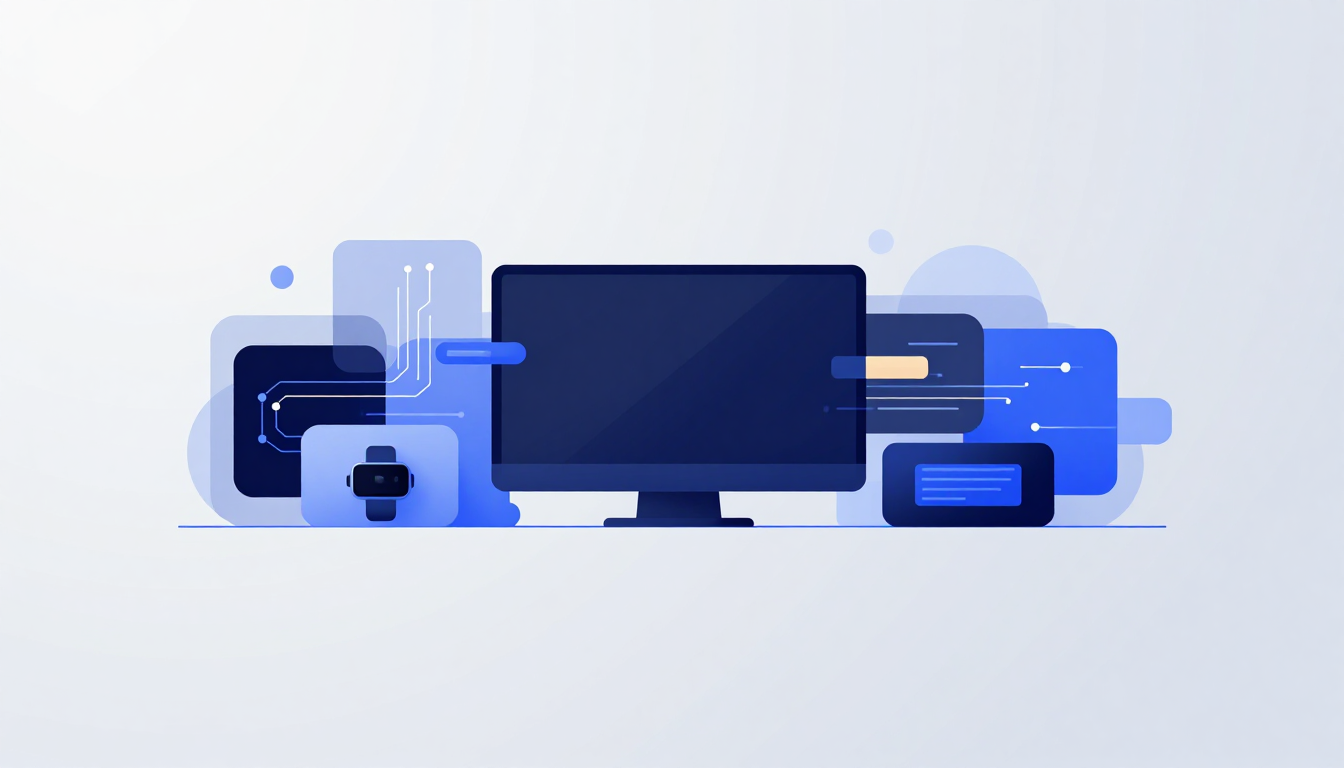
There’s the Desk Concept. Looks like a smart display. Touchscreen. Mic. Camera. But instead of being a glorified Echo Show, it’s your agent’s home base. It doesn’t play music. It doesn’t show the weather. It shows you the results of your agent’s work.
Your agent is already in the cloud, running on Windows 365. The Desk is just its face.
Then there’s the Badge.
Yes. A badge. Like the ones they give you at conferences.
But this one has a touchscreen, 5G, a fingerprint scanner, and a camera. It runs Solara. Full Android stack. Qualcomm chip. It’s your biometric key to your agent.
Tap it. Your agent wakes up. It knows it’s you. It knows where you are. It knows what you’re doing.
You’re in a meeting? It starts recording. It listens. It summarizes. It flags action items. It sends them to your inbox before the meeting ends.
You’re walking to your car? It checks the weather, your calendar, and your traffic app. It says, “Leave now. Rain starts in 12 minutes.”
No app opened.
No notification.
Just… intelligence.
And here’s the kicker: it’s not magic.
It’s OpenClaw.
Microsoft’s open-source agent framework. Think of it as the foundation for every agent you’ll ever interact with. It’s not proprietary. It’s not locked down.
It’s designed to be shared.
That’s the real shift.
Not just from apps to agents.
But from siloed AI to open, interoperable agents.
You’re not just using Microsoft’s agent.
You’re using your agent. Built on OpenClaw. Running on Solara.
And it can talk to your partner’s agent. Your doctor’s agent. Your bank’s agent.
That’s the future.
Not a better phone.
A better you.
The Two Devices That Will Change Everything (If They Ever Ship)
Let’s talk about the hardware.
Because if Solara dies here, it dies fast.
Microsoft showed two concepts. Neither is real. Neither is shipping. But both are terrifyingly compelling.
First: the Desk Concept.
It’s a 24-inch display. Looks like a fancy monitor. But it’s not a monitor.
It’s a window.
A window into your agent’s world.
It doesn’t show you your calendar.
It shows you your day.
You walk in. The screen dims slightly. A soft blue glow appears. Three lines of text:
- Meeting with Sarah: 10:00. Agenda updated.
- Budget draft: Final review in 2 hours.
- Flight: 12:15. Gate changed to B17.
That’s it.
No icons.
No apps.
No scrolling.
No notifications.
Just the facts.
And if you tap the flight line? It doesn’t open the airline app.
It opens a contextual UI.
A tiny panel appears. Shows your boarding pass. Your seat. The gate map. The weather at your destination.
You tap “Change seat.” It pulls up your preferences. Suggests three options. You pick one. Done.
No app. No login. No waiting.
It’s all just… there.
The Desk runs on MediaTek IoT chips. Low power. Always on. Always listening. Always learning.
It’s not a computer.
It’s an ambient assistant.
And then there’s the Badge.
This is the one that gives me chills.
It’s a small rectangle. Fits on your lanyard. Has a tiny screen. A fingerprint sensor. A mic. A camera. 5G.
It’s not a watch. It’s not a phone.
It’s your identity.
You tap it. It unlocks your agent.
Not your phone.
Not your laptop.
Your agent.
It knows you’re you.
It knows you’re in the office.
It knows you’re in a meeting.
It knows you’re tired.
And it acts.
It records the meeting. It listens for keywords. It identifies who said what. It flags decisions. It summarizes.
You leave the room. Your badge vibrates once.
A summary appears on your desk display.
Action items: 5
Owner: Sarah
Deadline: Friday
Next steps: Review budget
You don’t need to open anything.
You don’t need to ask.
It just… knows.
And here’s the scary part: it’s biometrically authenticated.
Your fingerprint. Your voiceprint. Your gait.
It’s not just logging you in.
It’s verifying you.
That’s the security model.
Not passwords.
Not 2FA.
Not tokens.
Your body.
And it’s not just Microsoft.
They’re working with Best Buy. CVS. Levi’s. Target.
Imagine walking into CVS. You tap your badge.
Your agent knows you’re here.
It knows you’re out of insulin.
It knows your insurance covers it.
It knows your doctor just prescribed a new dosage.
It pulls up the correct prescription. Shows you the price. Offers to order it for pickup.
You nod.
It’s done.
No app. No login. No search.
Just… service.
This isn’t the future.
This is the only way we’re going to survive the next decade.
Why Microsoft Finally Got Mobile Right (And Why You Should Be Skeptical)
Let’s be honest.
Microsoft has a history of failing at mobile.
Windows Phone was a noble failure. Lumia? A beautiful corpse.
They had the hardware. The brand. The enterprise muscle.
But they didn’t have the apps.
And no one cared.
So when they announced Solara, I thought: here we go again.
Another moonshot.
Another bet on a future that doesn’t exist.
But this time… it’s different.
Because they’re not trying to win the app store.
They’re trying to erase the app store.
That’s the genius.
They didn’t try to beat Apple or Google at their own game.
They changed the game.
And they did it with OpenClaw.
OpenClaw isn’t just a framework.
It’s a manifesto.
It says: agents should be open.
Agents should be interoperable.
Agents should be owned by the user.
Not the platform.
Not the cloud.
You.
That’s the real power move.
Google’s agents are locked into Search. Apple’s are locked into Siri.
Microsoft’s? They’re yours.
Built on OpenClaw. Running on Solara. Connected to your identity.
You can move them. You can back them up. You can delete them.
They’re not tied to a device.
They’re tied to you.
And that’s why this could work.
Because for the first time, Microsoft isn’t trying to lock you in.
They’re trying to set you free.
But.
Let’s not pretend this is easy.
The agents don’t exist yet.
We don’t have the models that can do this.
We don’t have the privacy controls.
We don’t have the trust.
And Microsoft? They’re still the company that built Windows 10 with telemetry turned on by default.
So yeah.
I’m skeptical.
I’m skeptical of the tech.
I’m skeptical of the timing.
I’m skeptical of the privacy.
But I’m not skeptical of the vision.
Because the app model is dying.
We’re tired of swiping.
We’re tired of tapping.
We’re tired of learning new interfaces.
We want our devices to understand us.
And if Microsoft can make that real?
They won’t just win mobile.
They’ll redefine computing.
And if they fail?
At least they tried something bold.
That’s more than I can say for most tech giants.
What This Means for You (And Why You Should Care)
Let’s cut through the hype.
What does Project Solara mean for you?
Not for developers.
Not for investors.
For you.
Right now.
Today.
You’re drowning in notifications.
You’ve got 17 apps open on your phone.
You’ve got 47 tabs on your laptop.
You’re constantly switching.
You’re constantly interrupted.
You’re constantly… tired.
Solara doesn’t give you more apps.
It gives you fewer distractions.
It gives you more time.
It gives you back your attention.
Imagine this:
You’re working on a report.
Your agent notices you’ve been stuck on the same paragraph for 20 minutes.
It pulls up your past reports on similar topics.
It finds the section you wrote last year that was praised.
It suggests a rewrite.
You tap “yes.”
It updates the paragraph.
You keep writing.
No app opened.
No tool switched.
No notification.
Just… flow.
That’s the promise.
It’s not about being faster.
It’s about being calmer.
It’s about letting machines do the busywork.
So you can do the thinking.
And the creating.
And the living.
But here’s the catch.
This only works if you trust your agent.
Not Microsoft.
Not Google.
Your agent.
And that means you have to control it.
You have to know what it’s doing.
You have to be able to audit it.
You have to be able to delete it.
And that’s why OpenClaw matters.
Because if your agent is locked to a platform?
You’re not free.
You’re just another data point.
Solara isn’t just a new OS.
It’s a chance to reclaim your digital life.
And if you’re not paying attention?
Someone else will.
The Reality Check: This Isn’t Coming Next Year
Let’s be brutally honest.
Project Solara is not shipping next year.
It’s not even shipping next decade.
It’s a concept.
A vision.
A bet.
And that’s okay.
Because the future isn’t built in a day.
It’s built in whispers.
And Solara is the loudest whisper Microsoft’s ever made.
The agents don’t exist yet.
The models aren’t smart enough.
The privacy controls aren’t ready.
The hardware? Still prototypes.
But the idea?
It’s real.
And it’s spreading.
Google’s agent-first search.
Apple’s on-device AI.
Even Meta’s business agents.
Everyone’s moving in this direction.
Because the app model is dead.
It’s just taking its time to fall over.
Solara isn’t the end.
It’s the beginning.
And if you’re still building apps?
You’re already behind.
The future isn’t about building better apps.
It’s about building better agents.
And if you’re not thinking about that?
You’re not thinking about the future at all.
So yeah.
Project Solara might never ship.
But the idea?
It’s already here.
And it’s not going away.
You can ignore it.
Or you can start building for it.
Your choice.
Final Thought: The Real Winner Isn’t Microsoft
Here’s the truth no one’s saying.
The real winner of Project Solara isn’t Microsoft.
It’s you.
Because if this works?
You get your time back.
Your attention back.
Your sanity back.
No more app stores.
No more notifications.
No more digital noise.
Just… clarity.
And that’s worth more than any OS.
More than any device.
More than any company.
It’s worth your life.
And if Microsoft can give you that?
They’ve done more than build an OS.
They’ve built a better way to live.
And that’s the only thing that matters.