
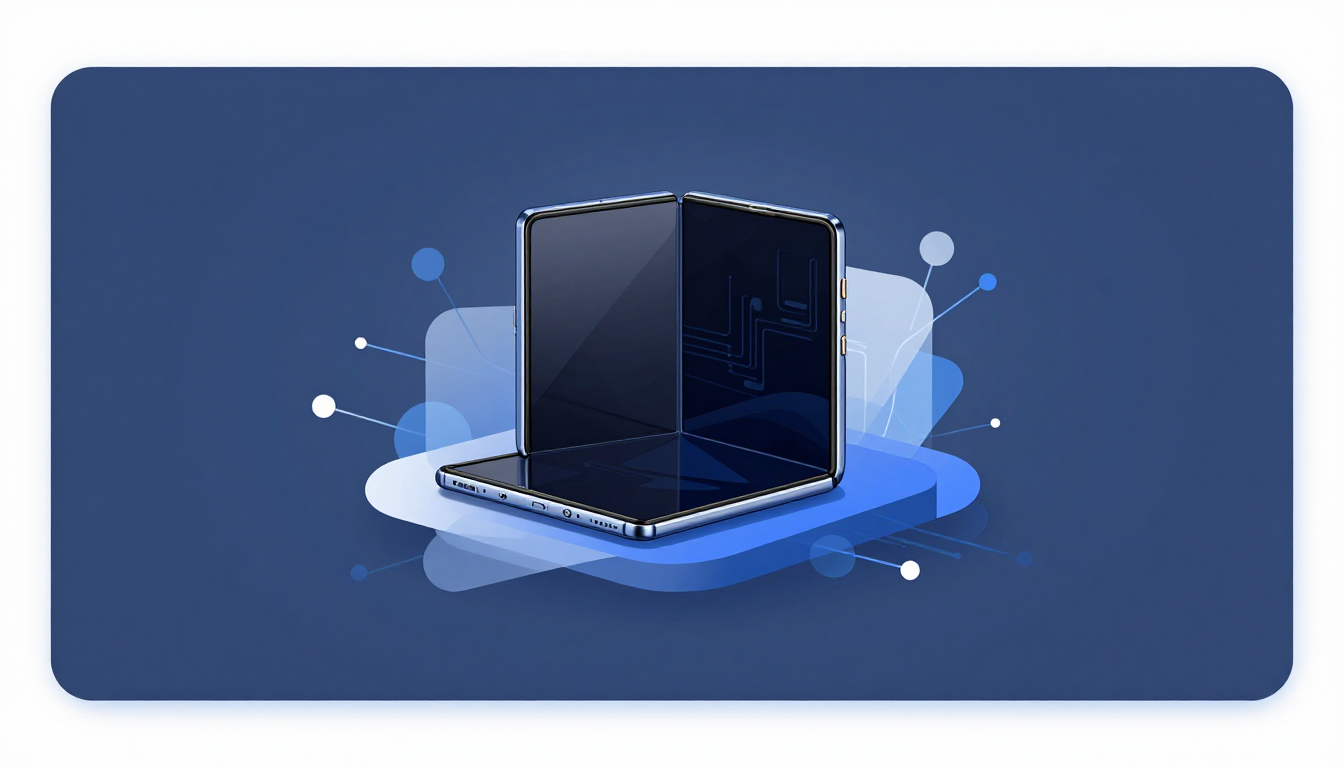
The $6,880 Boardroom Toy
Let's cut the fluff right away. Nobody actually needs a six-thousand-dollar smartphone. Yet Vertu, the long-standing purveyor of diamond-studded hardware for the ultra-wealthy, is betting that corporate executives will sign off on this purchase order anyway. Their new device, the Alphafold, starts at an eye-watering $6,880. That is just for the basic calfskin version. If you want alligator leather, 18-karat gold, and natural diamond accents, the price climbs to a staggering $46,800. And that is before you customize it, which can push the cost even higher.
The launch is Vertu's latest attempt to reinvent itself for the AI era after years of struggling to remain relevant. The Hong Kong-headquartered company, once known for luxury handsets and concierge services popular among wealthy buyers before the rise of the iPhone, has changed ownership multiple times. Mainstream smartphone makers came to dominate the industry, leaving Vertu in a tiny luxury corner. Now, they are betting that the Alphafold can change that narrative.
Vertu is pitching this as an enterprise productivity tool. Let's be real. It is a status symbol designed for the boardroom table. As someone who spends all day optimizing tech budgets, this makes my eye twitch. You can buy eight top-end enterprise laptops or thirty standard corporate phones for the price of one entry-level Alphafold. But the luxury brand claims this is different. It is not just about the hardware this time; it is about the software. Specifically, it is about an AI agent designed to run workflows directly from the screen.
The device is aimed at executives who manage operations on the fly. It is a niche audience. If you look at our analysis on seeking tangible ROI in the era of AI agents, you know companies are already struggling to justify the cost of basic AI software. Bundling it into a luxury handset is an extreme way to solve that problem. Let's look at the numbers. They simply do not add up for standard procurement. From a cost-optimization perspective, buying luxury hardware for a software feature is backward thinking.
Hardware Built to Survive the C-Suite
Under the calfskin outer shell, the Alphafold contains some impressive engineering. It runs Qualcomm's Snapdragon 8 Gen 4 processor. That is the latest and fastest chip available. The screen is a massive 8.05-inch foldable display, paired with a 6.53-inch outer screen. It is heavy, sure, but the folding mechanism is reinforced. The hinge uses metal, titanium, and carbon-fiber components. Vertu rates it for up to 650,000 folds. That is a lot of openings and closings, even for the most hyperactive executive. For comparison, most standard foldables on the market are only rated for 200,000 or 300,000 folds. Double the hinge lifespan is great, but do you really plan to open your phone 650,000 times before replacing it?
To power all this, it holds a massive 6,500 mAh battery. That is significantly larger than the average smartphone battery, which usually hovers around 5,000 mAh. It also features satellite communication capability, meaning you can check your sales pipeline from the middle of the ocean. The camera setup has three lenses: a 50-megapixel primary, a 50-megapixel ultrawide, and a 5-megapixel telephoto.
It is a notable step up from Vertu's previous attempt, the Agent Q. That device was a clamshell-style foldable launched last year. But CEO Molly Ma admitted that Agent Q was just a starting point. The company claims the Alphafold is a massive jump in memory, automation, and native app integration. Google's own foldable updates, like those in the Android 17 starts rolling out on pixel phones and watches rollout, show that the industry is pushing hard on foldable multitasking. Vertu wants to be the first to capture the top tier of that market. Still, the company is starting small. The first batch consists of just 115 units, shipping this week across the US and major markets. If you are one of those 115 buyers, you are paying a massive premium to be a beta tester.

Hermes Agent and the Custom ERP Dilemma
The standout feature is the Hermes Agent. It is built on the open-source Hermes project by Nous Research. Unlike consumer-focused tools that help you write emails or crop photos, this agent is built to hook directly into enterprise infrastructure. We're talking ERP and CRM databases. You can prompt it in plain English to approve purchase orders, track sales, plan business travel, schedule meetings, and generate operational reports.
It also routes queries across multiple AI models. The phone can hit OpenAI's GPT, Anthropic's Claude, Google's Gemini, or open-source models depending on the task. It integrates with more than 80 apps and dozens of native phone tasks. The idea is that the executive doesn't have to navigate five different apps to get a simple report. They just ask the agent, and the agent does the legwork across different platforms.
But here is where the cost-optimizer in me starts screaming. Vertu admitted that the Phone-to-ERP and VPS deployments must be customized for every single buyer. Enterprise migrations and custom API integrations do not happen overnight. They are expensive. If you are already struggling with personal AI agents and enterprise ROI, adding a custom phone integration layer is a recipe for budget bloat. Every enterprise has its own spaghetti-code CRM and bespoke ERP. Designing a custom gateway for a handful of executive phones is a nightmare for IT departments. The development hours to build these custom connectors will easily dwarf the $6,880 hardware cost. This challenge is a key part of moving from tokenmaxxing to value in the enterprise AI space. When you customize software at the individual device level, your maintenance costs skyrocket. It is a management headache that most CIOs would rather avoid.
The Security Promise and the Audit Vacuum
If you are linking a phone to your primary corporate ERP database, security is a non-negotiable priority. Vertu knows this. The Alphafold uses a proprietary security silicon chip called the A5. This chip is built to isolate authentication keys, biometric credentials, and sensitive company information from the main Android OS.
The device processes sensitive data locally. Anything sent to the cloud is redacted or tokenized first. This is a direct response to early Chinese AI agent phones, which ran into major data privacy backlogs. CEO Molly Ma pointed out that those early attempts struggled because they sucked everything into public clouds. The A5 chip is meant to act as a gatekeeper, keeping the crown jewels safe even if the main operating system is compromised.
Here is the kicker: Vertu's entire security system has not undergone a single third-party security audit. No independent certifications. Nothing. They claim it is on the roadmap as a next-stage commitment. Seriously? You want enterprise clients to link their most sensitive financial ledgers to an unaudited device? That is a massive compliance risk. If you look at how startups are securing workflows, like Arcade's $60 million funding round, you will see that securing AI workflows is a complex, high-stakes game. Buying into a closed, unaudited luxury system is a compliance failure waiting to happen. No serious Chief Information Security Officer will approve connecting an unaudited device to their enterprise resource planning database. The risk is simply too high, no matter how shiny the titanium hinge is.
The Reality of Enterprise Mobile Procurement
Let's step back and look at the market. Foldable phones are still a tiny fraction of the global smartphone landscape. According to IDC data, only about 20 million foldables were shipped globally in 2025. That is less than 2% of the overall market. The average price of a foldable was $1,300, which is already three times the price of a standard smartphone. Vertu's starting price is five times that average.
Kiranjeet Kaur from IDC points out that large screens can help multitasking, but enterprise AI adoption on phones is still lagging behind laptops. IT departments do not make mobile phone purchasing decisions based on AI capabilities. They buy phones based on MDM support, ecosystem integration, and cost. If a phone cannot be easily managed under the company's existing MDM policies, it is a non-starter.
For the price of a custom Vertu deployment, you could optimize your entire cloud infrastructure or buy new laptops for your sales team. Spending thousands on a customized luxury phone is an indulgence. The Alphafold is a fascinating piece of hardware, and the open-source Hermes integration is clever. But the business case is thin. If you want to optimize your tech spend, stick to standard enterprise hardware and wait for the software to mature. Spending corporate budgets on luxury status symbols is a fast track to operational waste. Let the CEOs buy their own leather-bound toys. For the rest of the business, stick to what works and keeps the ledger in the black.