A Mystery That Outlived the Drug
Botox has been a cosmetic household name since the early 2000s and a therapeutic tool long before that. We knew what it does once it gets inside a neuron. We did not, until recently, fully know how it gets inside. That gap — embarrassing, given how commercially famous the molecule is — has been one of the more stubborn problems in clostridial neurotoxin biology.
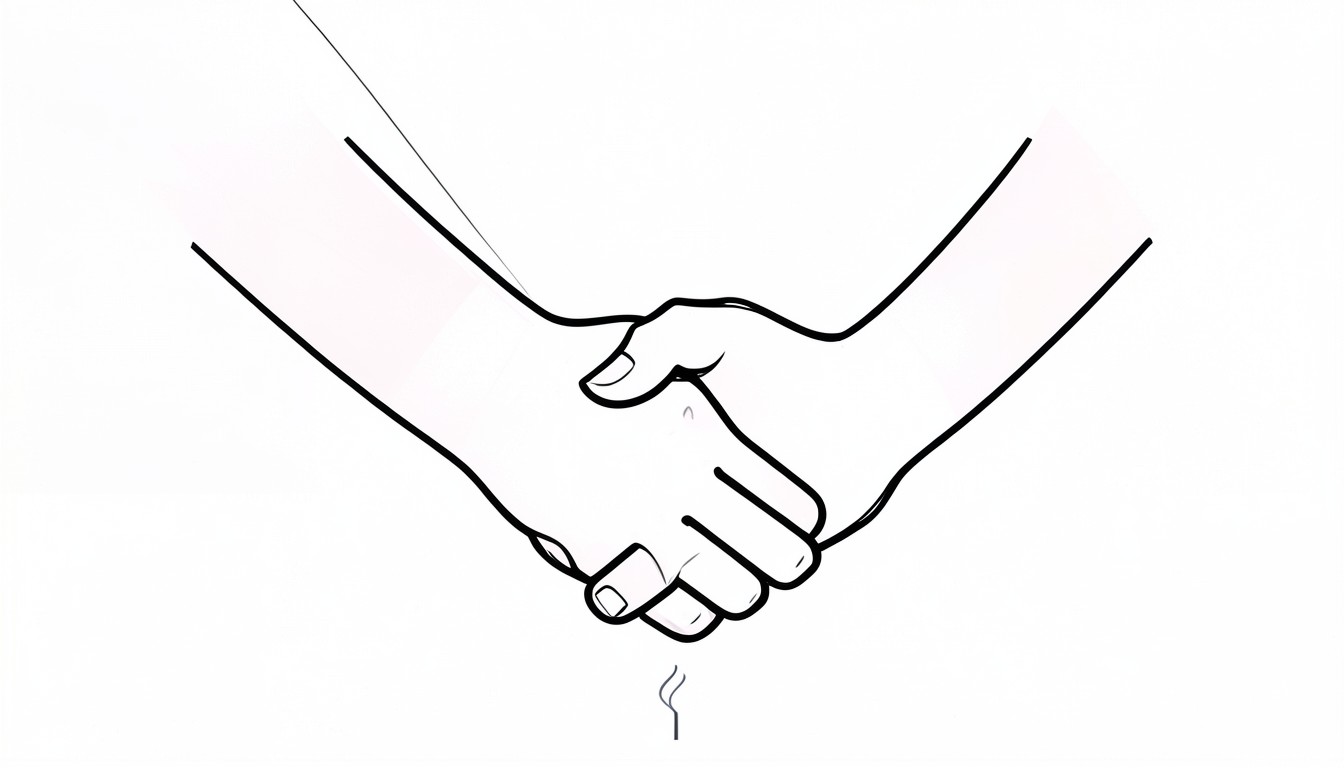
The gap closed in a study from The University of Queensland, published in The EMBO Journal. Professor Frederic Meunier and Dr. Merja Joensuu, both at the Queensland Brain Institute, worked out that Botulinum neurotoxin type-A does not barge in through a single door. It walks up to a three-part handshake already waiting on the neuron's surface, grips all three partners at once, and rides the resulting cluster into the cell. Read the original write-up at Neuroscience News for the institutional framing; below is what the mechanism actually looks like and why a structural biologist should care.
A Three-Part Handshake Waiting on the Surface
For years the textbook story was a list: the toxin binds a ganglioside, it binds a protein receptor, both contacts help it get in. Useful, but vague. The vague part mattered, because endocytosis is not a sum of independent binding events. It is a sorting decision.
What the UQ team showed — using live-cell super-resolution microscopy, a method that finally lets you watch single molecules cluster on a living membrane — is that Synaptotagmin-1 does not stand alone. It is physically associated, before any toxin shows up, with two other partners: polysialogangliosides and SV2. Those three sit together on the plasma membrane of the nerve terminal as a preassembled nanocluster.
The toxin exploits that preassembly. Dr. Joensuu described it cleanly: BoNT/A "simultaneously interacts with the preassembled PSG-Syt1 complex and SV2, facilitating the Syt1-SV2 nanoclustering that controls the endocytic sorting of the toxin into synaptic vesicles." Read that again. The receptor complex is not assembled for the toxin. The toxin walks into an arrangement the neuron already uses for its own purposes and bends it toward the toxin's ends.
The Inside Job After Entry
Once across the membrane, the story is well known and worth restating in one line. Professor Meunier puts it this way: "The toxin enters the nerve terminal by binding to these receptors and once inside, it cleaves the protein SNAP25, which is critical for the fusion of neurotransmitter vesicles with the membrane that allows neurotransmitter release."
No SNAP25 means no vesicle fusion. No vesicle fusion means the nerve cannot tell the muscle to contract. The downstream consequence is flaccid paralysis, which is also, of course, what makes micro-doses of the same molecule useful for wrinkles, migraines, and a handful of muscle disorders. Same mechanism. Different dose, different intent.
The Knockdown That Nailed Down Causality
Imaging alone would have left room for skeptics. A nanocluster seen on a membrane is one thing; proof that the cluster is required for intoxication is another. The UQ team brought both. They used CRISPRi to knock down Synaptotagmin-1, and intoxication by BoNT/A and BoNT/E both dropped, measured against SNAP25 cleavage as the readout for successful entry.
That single experiment is the load-bearing wall of the paper. Without it, you have a correlated arrangement. With it, you have a functional requirement. The same logic carries a practical implication that anyone interested in antiviral-style "entry inhibitors" should recognize: if Syt1 is required across BoNT serotypes, the entry step is a druggable choke point with broad serotype coverage.
Why This Changes the Therapeutic Conversation
Botulism treatment today rests mostly on early antitoxin administration and supportive care, including mechanical ventilation in severe cases. That is not a satisfying therapeutic menu for a toxin that can lock a person's muscles for weeks or months after exposure.
Professor James Whisnant, director of UQ's Centre for Molecular Science and an NHMRC Principal Research Fellow, framed the study's stakes plainly: it "identifies key molecular targets for developing novel therapies to prevent or treat botulism." The targets are specific, the Syt1-PSG-SV2 interface itself, or the nanocluster dynamics that the toxin exploits, not vague "block the toxin" advice. Block the handshake and the toxin never crosses the membrane. Block the inside job once it is in, and you are racing a clock you typically lose, because cleaved SNAP25 is gone and the neuron has to rebuild the machinery.
There is a longer tail too. Meunier and Joensuu's write-up suggests the same entry logic, receptor nanoclustering that controls endocytic sorting at the synapse, could be probed in disease contexts where nerve terminals are damaged and the goal is repair rather than blockade. That is a research-program bet, not a therapy on a shelf. Treat it as a direction, not a deliverable.
The Wider Lesson About How Toxins Find Their Way In
Two ideas from this paper generalize beyond botulinum. The first is that receptor "complexes" on the cell surface are often real complexes, preformed and functionally coherent, not just proteins bumping into each other by chance. The second is that pathogens and toxins tend to be opportunists of preexisting architecture. They do not build doors; they pick locks that already open for some other reason.
A working structural biologist reading this should take one practical note: the era where it was acceptable to call a viral or bacterial entry pathway "polytopic binding" and move on is closing. The tools, live-cell super-resolution imaging paired with CRISPRi knockdowns, are now good enough to show whether those binding events assemble something functional. Botulinum was a famous case where the answer had been assumed. It is unlikely to be the last.
The Botox story is a good-faith reminder that even the most familiar molecules in our pharmacies still hide elementary unknowns. We were injecting this thing for decades. We did not, until now, have a complete picture of how it walked in the door.
Source: University of Queensland via Neuroscience News. Original research published in The EMBO Journal.