
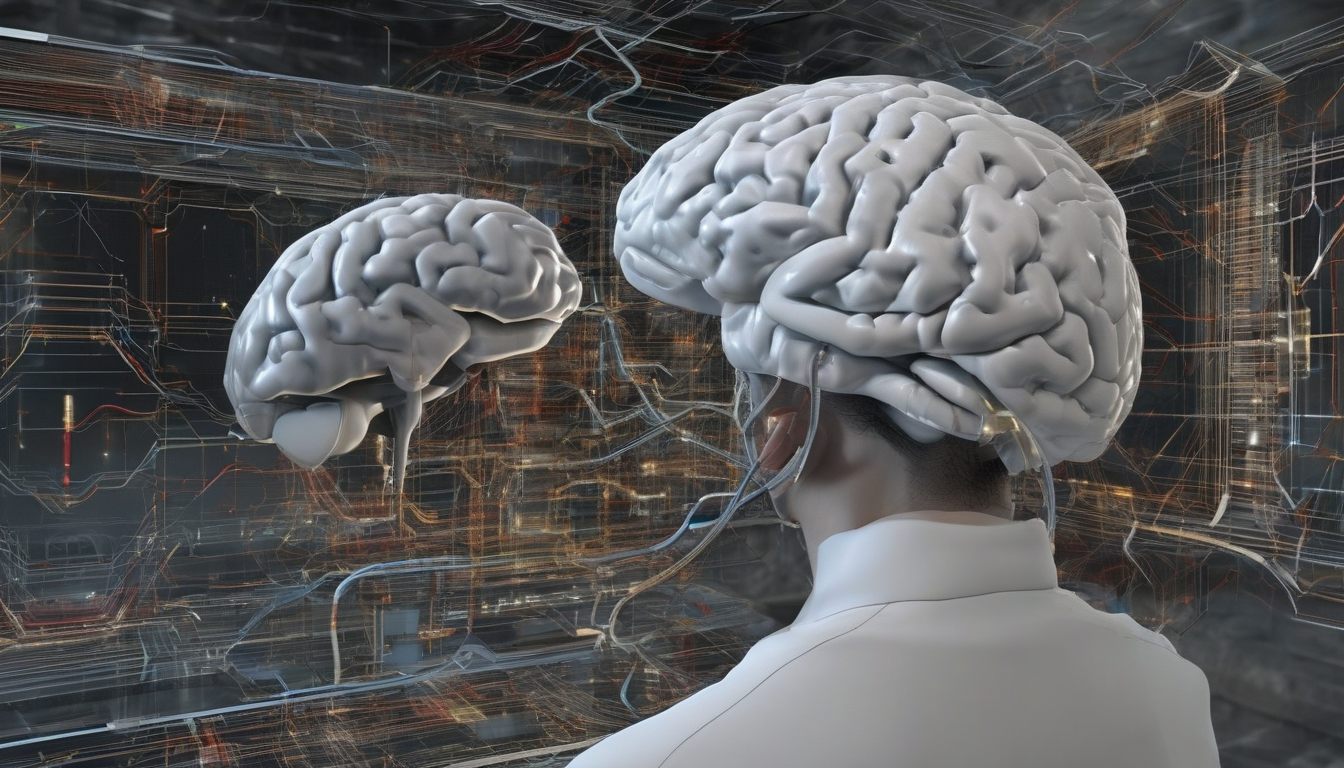
Why the Brain Runs on a 20-Watt Budget
We're currently burning megawatts of power to train and run large-scale AI models. It takes entire data centers, massive cooling systems, and dedicated high-voltage lines just to generate plausible text or find patterns in datasets. Meanwhile, the human brain performs all its complex cognitive tasks—from real-time speech processing to deep abstract reasoning—on a measly 20 watts of metabolic power. That's less than the power needed to run a dim hallway light bulb.
Why is there such a massive energy gap? For decades, computer scientists assumed biology simply had better components. They figured the raw efficiency of organic cells and chemical synapses was something silicon could never match. But a new study, reported by Neuroscience News, suggests that the real secret isn't just the physical medium. It's the math. Researchers Jinxuan Ma and Wanlin Guo at Nanjing University of Aeronautics and Astronautics demonstrated that local functional circuits in the brain operate at up to 79% thermodynamic efficiency, consuming only 1.26 times the Landauer limit.
This isn't a minor engineering tweak. It's a fundamental difference in how information is handled. Instead of forcing transistors to toggle discrete binary states using high-voltage clock cycles, the brain relies on collective dynamic electrical patterns that evolve in time and space. The brain doesn't run on code; it runs on physics.
Reaching 79% Efficiency: The Landauer Limit Decoded
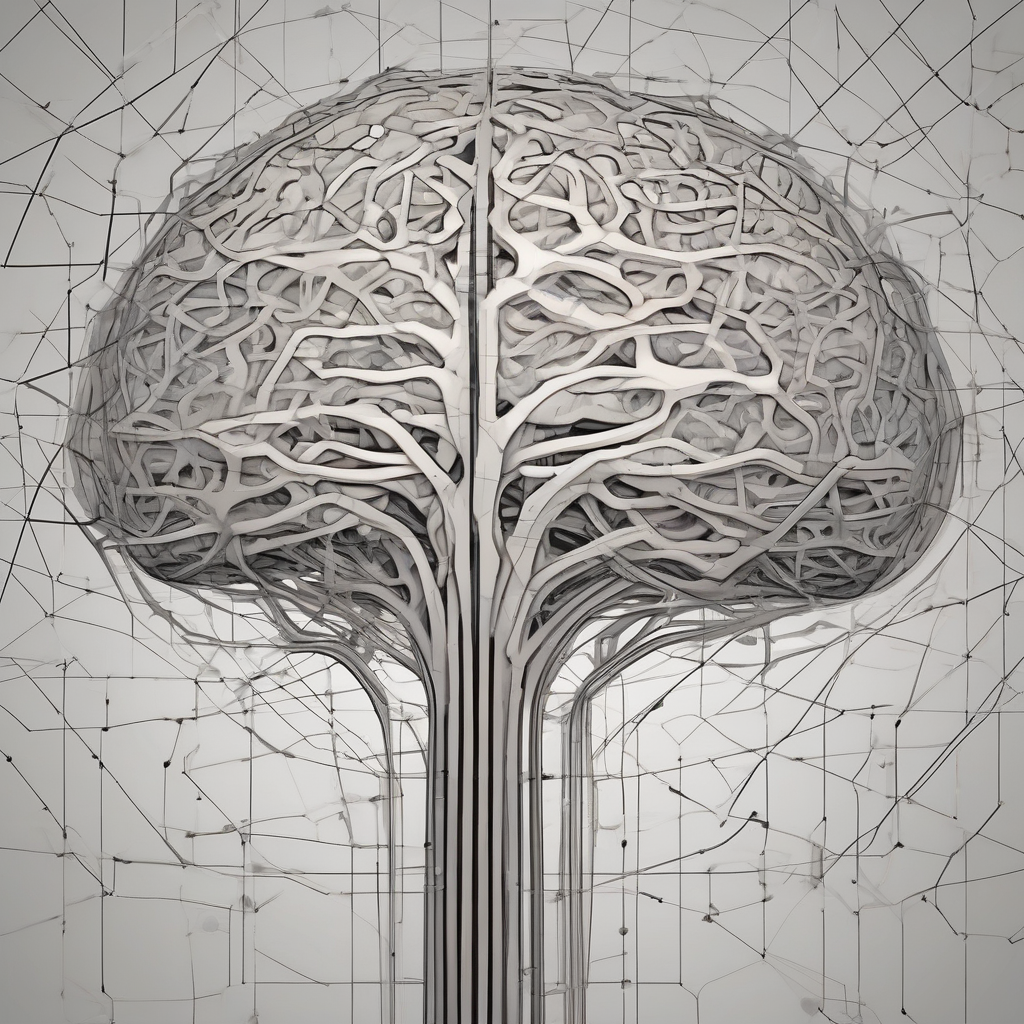
To understand how staggering this 79% efficiency rate is, we have to look at the absolute physical boundaries of computation. In 1961, physical chemist Rolf Landauer established what's now known as the Landauer limit. This principle defines the absolute minimum thermodynamic energy required to erase a single bit of information: $kT \ln(2)$, where $k$ is the Boltzmann constant and $T$ is the temperature in Kelvin. It's the inescapable physical tax that the universe levies whenever information is destroyed or altered.
Modern semiconductor AI hardware doesn't operate anywhere near this limit. In fact, our most advanced silicon chips exceed the Landauer limit by a factor of $10^9$—that's a billion times more energy than physics theoretically requires. Our chips are incredibly wasteful because they rely on brute-force digital logic. Every time a transistor switches, it dissipates energy as heat, forcing us to build massive cooling infrastructure just to keep computer chips from melting.
The human brain, by contrast, operates at roughly 1.26 times the Landauer limit. It's performing calculations almost at the thermodynamic floor of reality. According to Ma and Guo's paper, "Highly energy efficient information handling dynamics of brain" (DOI: 10.1093/nsr/nwag373), this performance suggests that the brain is naturally optimized to exploit physical laws rather than run program configurations that fight against them. By leaving the digital paradigm behind, the brain bypasses the massive energy penalties that hold back our computers. When we study this, it makes the current hype around building larger, more energy-intensive architectures look incredibly naive. Some researchers even warn of computational brain injury from trying to force human cognition to adapt to these inefficient, rigid structures of modern AI.
The Neural Sphere: Physics-Driven Chaotic Computation
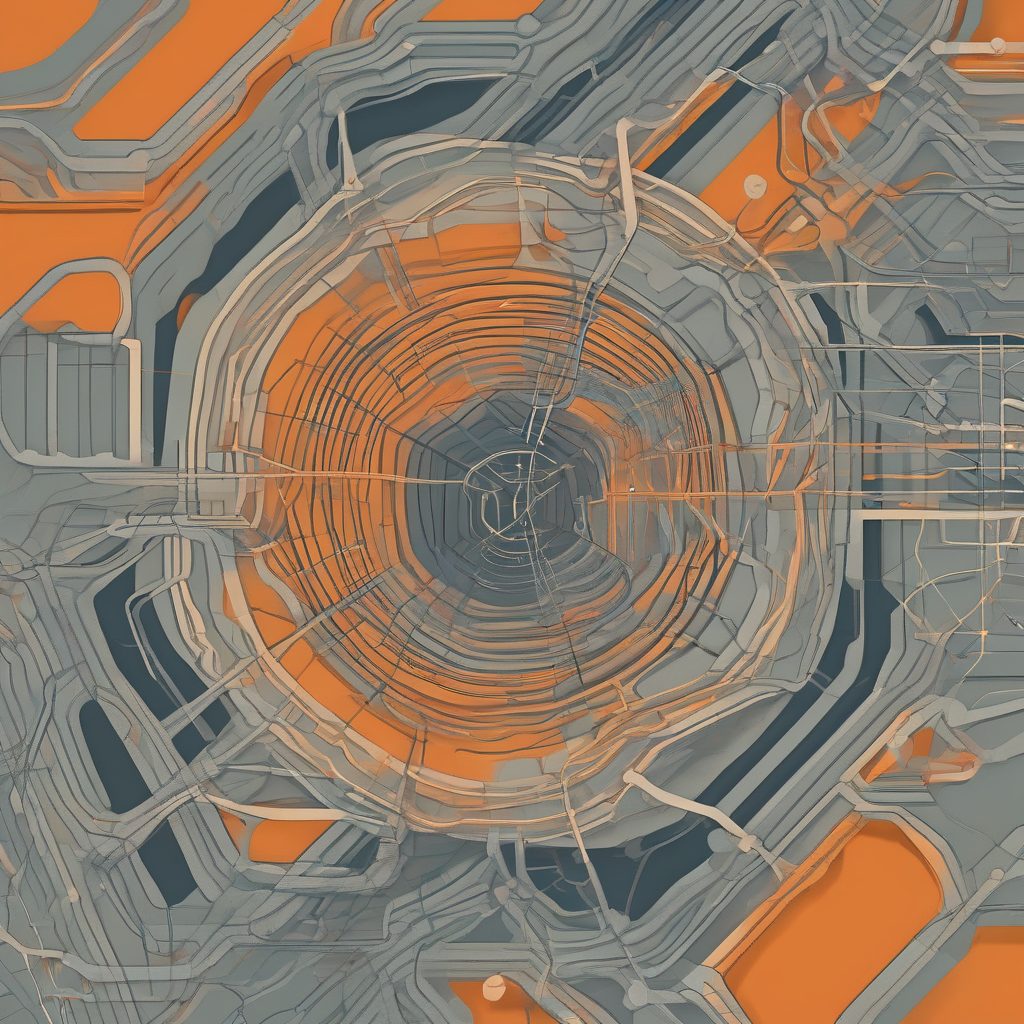
To prove this relationship, the Nanjing research team developed a new mathematical framework called the "neural sphere" model. Instead of analyzing individual neurons or isolated synaptic weights, they modeled local functional neural circuits as parameterized digital neural ensembles. They parameterized biological neurons with realistic morphological and electrophysiological traits, constraining the entire population using a global energy-minimization principle.
What they discovered turns traditional neurobiology on its head. For years, the prevailing model of memory was based on static synaptic states. The assumption was that the brain stores data like a solid-state drive, modifying the physical connections between neurons to record facts. But when the Nanjing team simulated these ensembles under metabolic constraints, they found they produced rich, periodic electrophysiological potential waveforms.
The brain doesn't store information in isolated slots. It encodes it in spatio-temporal electrical patterns governed by nonlinear dynamics, chaos, and fractal theory. When information enters the brain, it acts as a set of initial conditions that shape these neural ensembles. These initial conditions then evolve into ultra-long-period periodic waveforms—what the researchers call "dynamical carriers of information."
Think of it like throwing a stone into a pond. The ripples that form aren't static pixels; they're complex waveforms that carry the physical impact of the stone through space and time. In the brain, these waveforms are electrophysiological "strange attractors" that emerge from the collective cooperation of neurons in the spatio-temporal structure. They don't just preserve the memory; they also participate actively in further processing.
Revising the Theoretical Storage Capacity of the Brain
This shift from static connections to dynamic waveforms changes the scale of what the brain can achieve. Traditional models, which calculated memory capacity by adding up synapses linearly, estimated the brain's storage limit to be relatively modest. But by treating the brain as a dynamic, nonlinear system, the neural sphere model estimates a theoretical maximum storage capacity of $7.48 \times 10^{18}$ bytes.
That's three orders of magnitude higher than previous estimates. By transitioning from a flat, 1D array of synaptic switches to a multidimensional space of electrophysiological waveforms, the available state-space for storing data expands exponentially. The brain doesn't need to grow more physical links to store more information; it simply exploits the endless variety of chaotic attractors available to its neural ensembles.
The model also estimated the human brain's computational throughput at up to $6.24 \times 10^{18}$ floating-point operations per second (FLOPS). To put that in perspective, representing that amount of compute in modern silicon would require approximately 78,000 high-performance graphics processing units (GPUs). All that throughput is happening in a soft, three-pound organ powered by nothing more than the metabolic energy of a modest meal.
This model shows that biological intelligence isn't just slightly optimized—it's based on an entirely different thermodynamic philosophy. It aligns with other neuroscience developments showing how we have systematically underestimated the brain's complexities, such as how the old lizard brain neuromyth ignored the complex, integrated, and systemic nature of brain evolution. It also connects to breakthroughs in connectome mapping, where researchers are working to understand the physical wiring that enables these dynamic computations.
Reconciling the Model With Neuromorphic Engineering
If we want to build AI systems that can scale without requiring their own dedicated nuclear power plants, we have to copy the brain's homework. But copy it correctly this time.
Today's neuromorphic chips attempt to mimic the brain by creating electronic circuits that look like neurons and synapses. But as long as these chips are bound by discrete digital clock cycles and isolated state updates, they'll still hit the thermodynamic wall. True neuromorphic hardware must learn to leverage spatio-temporal dynamics and chaotic waveforms. We must build circuits where information is carried by the physical evolution of the system itself, using initial conditions to trigger self-sustaining electrophysiological attractors.
This change requires a profound paradigm shift. It means giving up on absolute, noiseless deterministic control and embracing the natural chaos of physical systems. It means letting go of static memory blocks and allowing information to live as active, resonant waveforms.
The Nanjing team's research provides the physical framework for this evolution. It shows us that nature has already solved the energy crisis of computing. The answers aren't hidden in more complex code or denser neural networks; they're written in the fundamental physics of the brain. We just need to stop building louder factories and start learning how to build systems that sing.