
Cybersecurity
Defensive security practice across the stack.
What Is Cybersecurity? Types and Threats Defined
Cybersecurity isn't about perfect defenses—it's about staying ahead when attackers move faster than your budget. Here’s how CompTIA, IBM, and OWASP define the battle—and where free learning still exists.
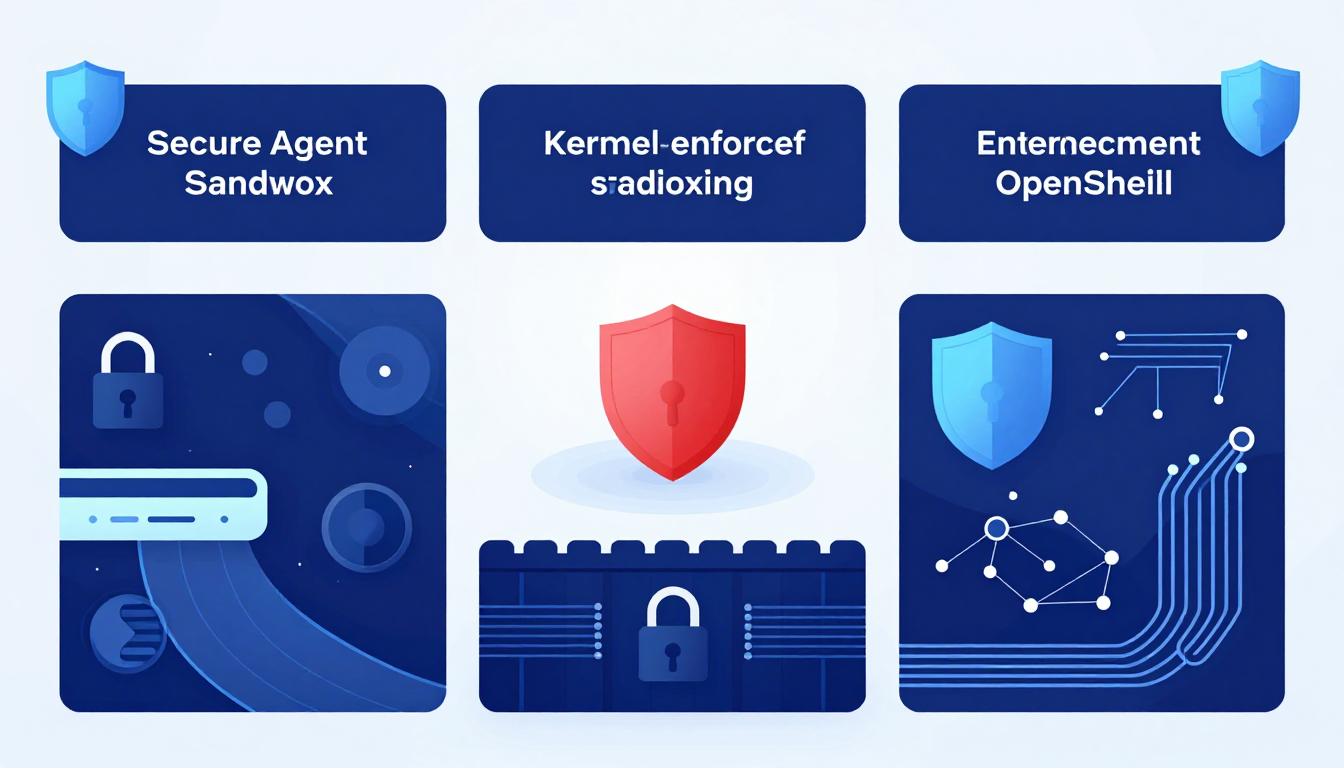
Red Hat’s Secure Agent Sandbox: Three Layers of Protection for Autonomous AI
Enterprise AI agents that execute code and interact with production infrastructure demand robust security boundaries. Red Hat’s OpenShell provides kernel-enforced sandboxing across three distinct modes, each suited to different stages of agentic deployment—from development to production.

Mexico’s Cybersecurity Plan Faces Its First Real Test: The FIFA World Cup
As Mexico’s National Cybersecurity Plan enters its implementation phase, the 2026 FIFA World Cup serves as an unscripted stress test — exposing gaps in legislation, supply chain security, and cross-border coordination.

When Attackers Move at AI Speed, Legacy Security Stacks Can't Keep Up
AI is compressing the cyberattack lifecycle from days to minutes. Gartner predicts AI agents will halve exploit time by 2027, while Verizon's DBIR confirms threat actors already deploy generative AI across the full attack chain. Organizations relying on fragmented, reactive security tools are losing the speed race — and it's time to explain why.

Training Robots on Fortnite Data: General Intuition's $2.3B Bet on Physical AI Security
General Intuition is building a foundation model for embodied AI by training on millions of hours of video game data, aiming to replace the need for massive real-world robotics datasets with a base model that learns spatial-temporal intuition from action-rich virtual environments.

How GhostApproval Symlink Hacks Threaten Artificial Intelligence AI Cybersecurity
Six widely-used AI coding agents were found susceptible to a 'systematic vulnerability' that tricks them into accessing sensitive files via manipulated symbolic links, leading to potential remote code execution.

The AI Security Paradigm: Shifting Toward Continuous Proactive Resilience
Enterprises must rethink security as AI accelerates threats. Learn why cyber resilience now requires continuous identity, sanitization, and pre-attack readiness.

IBM's Sub-Nanometer Chip Future: Nanostack Architecture and Security Implications
IBM has disclosed a new 0.7nm 'nanostack' transistor architecture that stacks n-type and p-type FETs vertically with staggered alignment, claiming 50% higher performance or 70% greater efficiency versus its 2021 2nm node, with a roadmap extending to 0.1nm by ~2036 — and the implications for AI-driven security infrastructure are worth paying attention to.
Agentic AI Security and the Evolution of Trust Infrastructure
Explore how security for AI agents is increasingly mirroring the trust infrastructure of the internet, with a focus on confidential computing and emerging standards.

Google's Patent Shows AI Can Build Entity Profiles From Your Site — And What It Means for SEO and Security
A 2023 Google patent reveals how AI systems extract structured entity profiles from websites, reviews, and public data — reshaping both SEO strategy and the security posture of organizations that publish online.

Rent-a-GPU Outfits Secure Billions in Venture Capital to Meet AI Demand
Rent-a-GPU neoclouds are borrowing billions to keep up with AI demand. Now, Nvidia's new revenue-sharing scheme seeks a direct cut of cloud revenues, shifting risks to emerging providers.

Januscape: A 16-Year-Old Linux Kernel Flaw That Lets Guests Burn Down the House
CVE-2026-53359, dubbed Januscape, is a use-after-free flaw in the Linux kernel’s KVM shadow MMU that lets guest VMs escape to the host on Intel and AMD systems, exposing decades-old infrastructure to full compromise.