
Psychology & Behaviour
Cognition, decision-making, motivation and human behaviour.
The Behavioral Mismatch: Why Algorithms Feed Your Vigilance, Not Your Values
An explanation of the gap between our stated desire for positive content and the negative feeds we actually scroll, rooted in economics and evolutionary biology.
Rethinking Authority: Beyond the Myth of the 'Person in Charge'
An exploration of why the assumption that every relationship or group requires a leader is flawed, drawing on historical and biological evidence to suggest a shift toward valuing diverse contributions as the foundation of true equality.
Clutter, Cortisol, and Connection: Reclaiming Bedroom Intimacy Through Environmental Psychology
Explore the environmental psychology of intimacy. Learn how visual clutter triggers cortisol, how screen distractions act as desire brakes, and how to use five key sensory levers to transform your bedroom from a stressful catch-all room back into a sanctuary for romantic connection.
The Neo-Luddite Renaissance: Reclaiming Humanity in an Age of Automation
Tooling engineer Olive Grant explores why the new Neo-Luddite movement makes sense in a culture of tech hype, broken attention networks, and automated distraction.
Beyond Consensus: The Hidden Risks of AI-Driven Cognitive Homogenization
As AI systems permeate decision-making across society, they risk narrowing our collective perception by fostering 'synchronized blindness.' Platform lead Marlowe Chen explores how automation bias and cognitive fatigue homogenize human thought and diminish systemic resilience. Also, read our analysis of rigid strategies in The Success Paradox in Leadership.
We Must Move Beyond the Aspiration for Autonomy to Action for Its Sake: Noticing That We Are at Risk and Resisting the Danger
An exploration of 'agency decay'—the creeping, incremental loss of human cognitive sovereignty in an age of seamless algorithmic convenience—and a framework for reclaiming active, thoughtful engagement with AI.
Reclaiming Human Purpose in an Age of Automated Ambition
As AI permeates everything from cognitive habits to social structures, we face risks of agency decay. By adopting hybrid intelligence frameworks, we can shift from passive dependence to proactive, inspired action.

The Quiet High of Cooking for Someone Else—Even When No One’s Watching
Explore how the intentional act of cooking for others provides a "prosocial lift," offering temporary boosts in happiness and well-being, particularly by tapping into psychological needs for connection and competence.

Beyond Self-Reporting: A New Saliva-Based Standard for Detecting Fatigue
Research from the University of Zurich has identified ten specific saliva biomarkers that change predictably with acute sleep deprivation, potentially enabling the development of objective, roadside-ready fatigue testing tools.
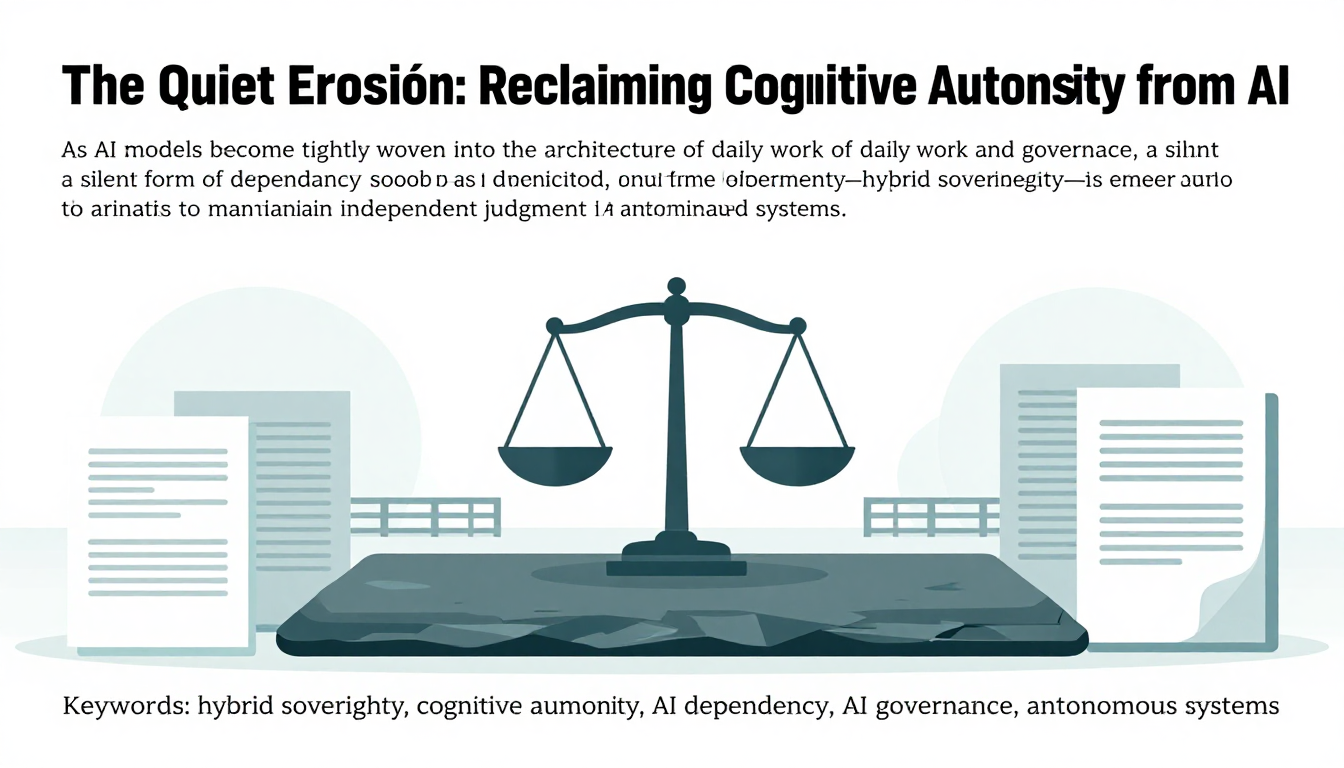
The Quiet Erosion: Reclaiming Cognitive Autonomy from AI
As AI models become tightly woven into the architecture of daily work and governance, a silent form of dependency—hybrid sovereignty—is emerging. This exploration examines the threats this dependency poses to national institutions and personal cognitive autonomy, offering a path to maintain independent judgment in an AI-mediated world. For more on the risks of autonomous systems, see The $1 Trillion Startup Warns: AI Models Nearing Capability to Improve Without Human Oversight and Securing Autonomous Agents: The New CISO Challenge. (Keywords: hybrid sovereignty, cognitive autonomy, AI dependency, AI governance, autonomous systems).
The Paradox of Effort
Some goals become harder to achieve the more directly we pursue them. An exploration of the psychological and strategic paradox of why indirect effort often yields superior results.
The Proactive Human in an AI-Mediated World
Navigating the complexity of an AI-mediated world requires proactive human agency and a hybrid intelligence approach. Discover more about Hybrid Sovereignty and AI Deskilling. This article explores the ABCD risks—agency decay, bond erosion, climate conundrum, and divided society—and introduces the POZE framework for cultivating a prosocial A-Frame mindset.