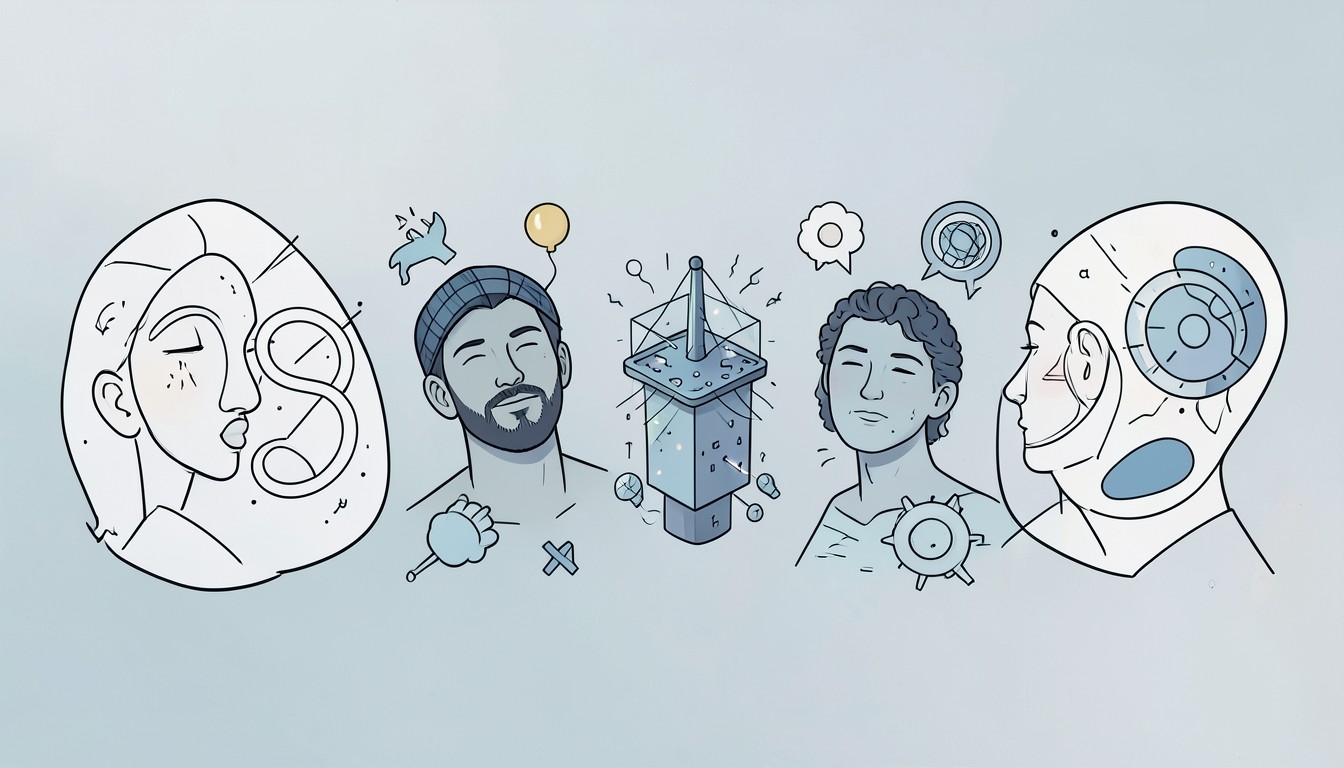
The Norm That Wasn't
For years, the standard story in behavioral science went like this: in competitive situations, people look around, notice what most others are doing, and calibrate their own behavior to match. Social norms, in this telling, are the invisible hand that steadies everyone toward some shared equilibrium. If everyone around you is selfish, you learn to accept selfishness. If generosity is the house style, you go along.
A 2023 study out of the University of Illinois Urbana-Champaign says that story has it backwards. Paul Bogdan, a Ph.D. candidate in the Beckman Institute for Advanced Science and Technology, led a team working with psychology professors Florin Dolcos and Sanda Dolcos across four experiments. Their conclusion, published in Cognitive Science: your own behavior is the primary driver of how you judge and treat others. Social norms are noise. Your own actions are the signal.
This matters beyond the lab because understanding this mechanism is the starting point for any serious conversation about the AI impact on human psychology. When an algorithm mediates competition — assigning tasks, distributing rewards, matching partners — it either exploits or collides with this mirror effect. The specifics of that collision depend on exactly what the mirror does.
What the Mirror Actually Shows
The team used the Ultimatum Game. Two players. A pot of $10. One person proposes a split. The other accepts or rejects. Rejection means neither player gets anything — so a rejection is punishment, pure and simple, that costs the punisher too.
Generous proposers offer fair splits. Selfish proposers lowball. When participants switched roles between proposer and receiver, the pattern was unmistakable: generous people rejected only lopsided offers; selfish people accepted lopsided offers and rejected generous ones. They punished generosity. They even lost money doing it.
"Participants will gain more money with a generous person," Bogdan explained. "But a selfish person will prefer to play with someone who behaves as they do. People really like others who are similar to themselves — to a shocking degree."
Study 2 confirmed that observing selfish offers (lowballs) promoted acceptance of selfishness only if the observer started acting selfishly themselves. Watching a bad actor doesn't make you tolerate bad actors. Being one does.
Study 3 extended the finding into the Public Goods Game and across cultures, where researchers examined "antisocial punishment", the practice of penalizing someone for being too generous. Participants punished based on their own behavioral style, not based on what was most common in their group.
Study 4 used a Trust Game. Participants trusted players who reciprocated their own style as much as they trusted generous players. If the participant was selfish, a selfish partner earned equal trust to a generous one.
The Cross-Cultural Test
The team also re-analyzed data from an existing cross-cultural study on collaborative resource sharing. Same pattern. Generous people punished selfishness. Selfish people punished generosity. The local cultural norm, how many people in that community behaved one way versus the other, had less influence than each individual's own behavioral tendency.
Florin Dolcos put it this way: "Cultural norms toward self-interest or generosity do influence people, as other studies have found. But we are not only observers. This study is showing that we filter information about the world through our own view."
And the filter can shift. People whose behavior changed from generous to selfish over the course of the experiment started punishing generosity and rewarding selfishness, but only after their own conduct had already switched. The mirror reflects who you are right now, not who you were.
How a Level Playing Field Helps Losers
A separate 2021 experiment from Linköping University, published in the Journal of Economic Behavior and Organization, adds a practical wrinkle. Kajsa Hansson and colleagues recruited 444 participants who competed in math tasks of varying difficulty. After the competition, winners and losers decided how to split earnings with their opponent.
The manipulation: half the participants were told the competition was fair (tasks were randomly assigned, no advantage). The other half received no such information.
Among losers who weren't told the process was fair, selfish behavior spiked. They incorrectly believed they'd gotten harder tasks. They'd already lost, and the absence of fairness information let them manufacture a grievance to justify keeping more money for themselves.
Losers who were told the playing field had been level behaved less selfishly. Winners' behavior didn't change either way, they had no motivated reason to question the process.
Hansson connected this to a familiar pattern in everyday life: "When we fail, we overestimate how unfair the situation has been. This increases the risk that we become more egotistical and immoral. For instance, it can result in employees starting to trash talk their colleagues in a recruitment process."
Why This Complicates AI's Role in Social Life
If your own behavior is the lens through which you evaluate others, then any system that shapes your behavior first shapes your social perception downstream. An algorithm that nudges someone toward competitive, lowball behavior doesn't just change that person's financial decisions. It changes who they trust, who they punish, and what they consider fair.
This is where the AI impact on human psychology gets concrete. AI-mediated competitions, freelance marketplaces, ad auctions, performance-ranking systems, don't just allocate resources. They set the behavioral baseline from which participants evaluate each other. And the evidence above says that baseline doesn't just influence people's own next move; it reshapes their entire framework for judging peers. That is also why personal involvement weighs more than secondhand knowledge in these systems, why lived experience overrides public reputation in moral judgment generally. The mirror effect is one mechanism behind that asymmetry: what you do rewires what you see.
The Linköping findings suggest one intervention: transparency about process fairness reduces the selfish backsliding among losers. Make it visible that the game was level. The 444-person study shows this works. Whether AI systems will be designed to surface that information, or instead profit from the ambiguity, is a design question, not a psychological one.
For now, the mirror effect stands as a constraint. Whatever role artificial intelligence takes in structuring human competition, it inherits the oldest finding in social psychology: we are not calibrated by what we see around us. We are calibrated by who we are in the moment of judgment. And that moment, as Bogdan's team showed, can shift within a single experiment.