The Thump That Could Change Air Travel
It’s been over twenty years since the Concorde touched down for the last time, and the sky over America has been quiet—not because we stopped wanting to fly fast, but because we couldn’t. The sonic boom was a dealbreaker. A thunderclap that shattered windows, startled livestock, and made neighborhoods unbearable. So we grounded supersonic flight over land. And we forgot what it felt like to cross the country in under four hours.
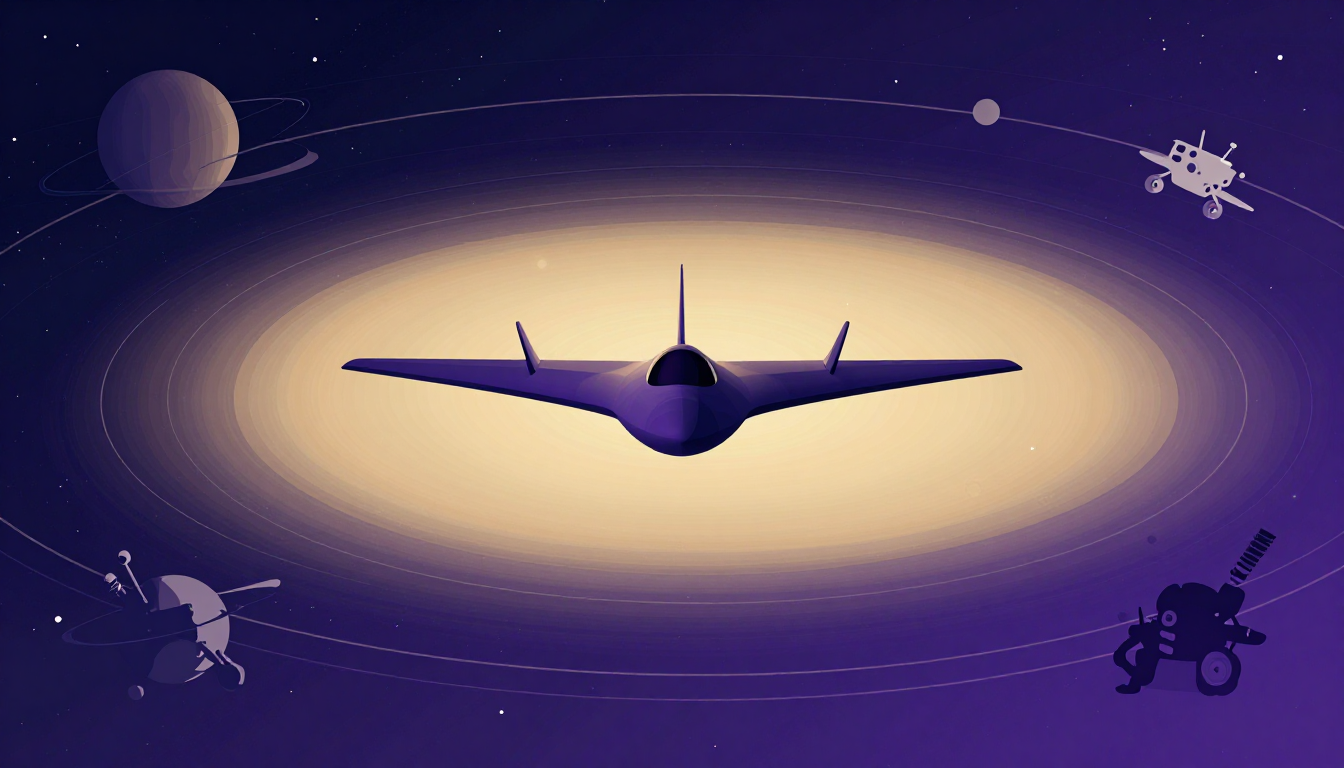
Now, NASA’s X-59 is trying to bring it back—not with more power, but with smarter design. This isn’t a new fighter jet. It doesn’t look like one. It looks like a needle with wings, a 94-foot-long arrow of titanium and carbon fiber, designed not to scream, but to whisper. And on June 5, 2026, it finally completed its first supersonic flight.
The moment it broke Mach 1.1 at 43,400 feet, it didn’t shake the desert floor. It didn’t rattle the control room. It didn’t even make the ground crew flinch. It made a thump. A soft, distant, almost polite thump.
That’s the whole point.
How a Needle Defies Physics
Let’s be clear: supersonic flight doesn’t have to be loud. The boom isn’t a bug—it’s a feature of bad geometry. When a plane flies faster than sound, it compresses air in front of it. Those pressure waves don’t spread out gently. They pile up. Like cars in a traffic jam, they merge into one massive shockwave that slams into the ground like a bomb.
The X-59 doesn’t fight that. It outsmarts it.
Its nose is absurdly long—nearly a third of the entire plane. That’s not for looks. It’s a shockwave sculptor. The shape gently spreads the initial compression over a longer distance, keeping the waves from merging. Then the wings, the tail, even the engine placement—all are tuned like a symphony to keep those pressure pulses spaced just right. Instead of one deafening N-wave, you get a train of tiny, separated ripples. When they hit the ground, they don’t explode. They whisper.
The goal? 75 PldB. That’s quieter than a garbage truck idling down the street. The Concorde? Around 105. A jumbo jet taking off? 110. The X-59 isn’t trying to be silent. It’s trying to be unnoticeable.
The Frankenjet You Didn’t Know You Loved
Here’s the wild part: the X-59 is mostly made of old junk.
The landing gear? From an F-16. The ejection seat? A T-38 trainer. The control stick? Salvaged from an F-117. The throttle? An F-18. Even the engine—F414-GE-100—is just a modified version of what powers the Super Hornet. This isn’t a $200 million dream machine. It’s a $200 million patchwork.
And that’s genius.
Why build a whole new engine when you can tweak one that already works? Why reinvent the cockpit when you’ve got a proven seat and display? The team didn’t waste time on things that didn’t matter. They poured every ounce of innovation into the one thing that could make or break the program: the shape. The rest? They borrowed it. They reused it. They made it work.
It’s the opposite of flashy. It’s the opposite of NASA’s usual "we built it from scratch" ethos, which has sometimes led to stalled hardware and soaring budgets on other complex exploration programs. And honestly? It’s more impressive.
The Cockpit That Can’t See Ahead
The most unsettling thing about the X-59? You can’t see where you’re going.
The long nose? It blocks the pilot’s forward view completely. No windshield. No glass. No horizon.
Instead, you sit in a cockpit with a 4K screen showing you what two external cameras see. It’s called the eXternal Vision System—or XVS. And yes, it’s terrifying.
Imagine landing a plane using only a TV screen. No peripheral vision. No depth cues from the window frame. No instinctive feel for how close the ground is. It’s like driving a car blindfolded… with a live feed from a drone.
NASA tested this on a King Air, and the results were startling. Pilots using XVS detected traffic as well as—or better than—those with real windows. The system is real. It’s reliable. But it’s still a leap of faith. You’re trusting a camera, a processor, and a screen with your life. No wonder the pilots call it "the glass coffin."
But here’s the kicker: it’s not just a workaround. It’s a preview. Future commercial jets will need this. You can’t have a long, sleek, quiet supersonic airliner with a big, blunt nose. You need to see without seeing. And the X-59? It’s the first one to prove it’s possible.
The Real Test: Not the Sky, But the Neighborhood
The science is solid. The engineering is brilliant. The tech works.
But here’s the truth no one wants to say out loud: this mission doesn’t end at Edwards Air Force Base.
It ends on someone’s lawn.
Phase 3 is where the rubber meets the sidewalk. NASA plans to fly the X-59 over 10 to 15 U.S. towns at supersonic speeds. Not for data. For feedback. They’ll hand out surveys. They’ll set up microphones. They’ll ask neighbors: Was that a thump? Or was it a boom?
It’s a radical experiment in public acceptance. We’ve spent decades assuming people would hate supersonic flight. But what if they don’t mind a thump? What if it’s just… background noise? Like a distant train? Like a plane flying high overhead?
If the public says yes—if they don’t call the cops, don’t file complaints, don’t demand it stop—then the FAA will have to rewrite the rules. And suddenly, supersonic travel over land isn’t science fiction. It’s a possibility.
The Quiet Revolution
The X-59 isn’t a plane you’ll book a ticket on. It’s a messenger. A proof of concept. A whisper in a world that’s been screaming for decades.
It’s not about going faster than the speed of sound.
It’s about going faster without making the world stop.
If it works, we won’t just get faster flights.
We’ll get back the sky we gave up. And maybe, just maybe, we’ll learn that sometimes, the most powerful innovation isn’t the loudest one.
It’s the one that doesn’t wake you up.