A Supersonic Milestone: NASA’s X-59 Takes Flight
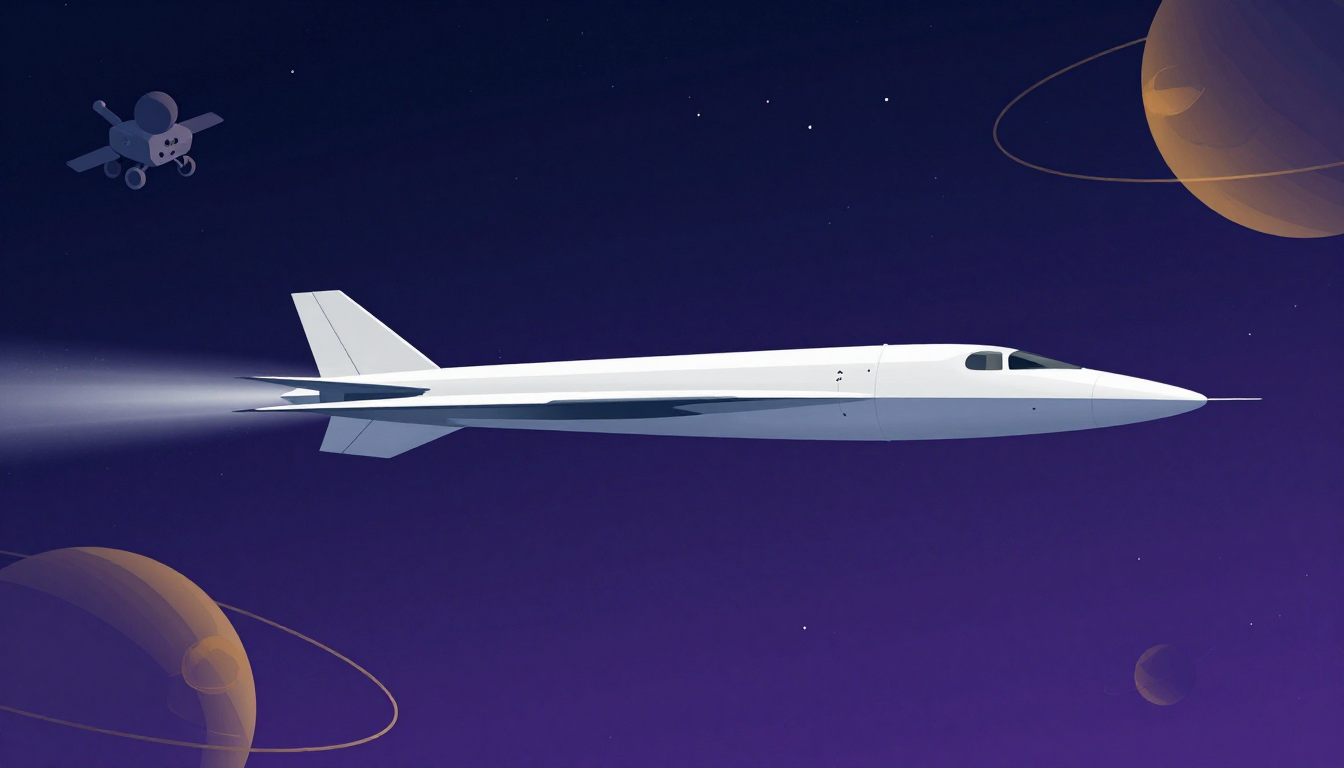
It has been more than twenty years since the last Concorde made its final trip across the Atlantic, leaving a quiet void in the annals of fast aviation. That silence—the absence of civilian supersonic travel overland—is finally being challenged. Earlier this month, NASA’s X-59 QueSST, an experimental aircraft that looks almost like a needle flying through the sky, achieved its first supersonic flight.
This wasn't just another test flight; it was the start of something that could reshape how we think about travel. On June 5, 2026, the X-59 hit Mach 1.1 at 43,400 feet, piloted by former test pilot Jim “Clue” Less. The mission was straightforward in concept but incredibly complex in execution: prove that supersonic speed doesn't have to mean a thunderous, sky-shaking boom. A week later, on June 12, the aircraft pushed further, reaching Mach 1.4 at 55,000 feet.
The goal isn't sheer speed for the sake of speed; it's the sonic thump. For decades, land-based supersonic flight has been effectively banned because the boom was just too loud—like a constant, terrifying rattle for everyone on the ground. NASA is trying to turn that cannon fire into a thump.
Shaping the Shockwave to Quiet the Boom
The primary challenge with supersonic flight is the physics. When a plane travels faster than the speed of sound, it displaces air molecules faster than they can get out of the way. These molecules bunch up, creating shockwaves that propagate out from the aircraft. If left unchecked, these shockwaves combine, intensifying into a loud, jarring 'N-wave' boom that reaches the ground.
NASA’s X-59—the QueSST, or Quiet SuperSonic Technology, demonstrator—attacks this at the source through meticulous airframe design. The nose is exceptionally long and tapered, making up roughly a third of the aircraft’s 100-foot length. This isn't just for aerodynamics; it's engineered to specifically spread out those shockwaves.
By spreading the shockwaves, the team aims to prevent them from merging into one intense, cohesive boom. Coupled with carefully positioned wings and a tail design that manages the shockwave spacing, the aircraft creates a series of much smaller, muffled disturbances. When these disturbances reach the ground, they’re meant to sound more like a distant car door slamming or a muffled "thump" rather than the disruptive boom we’ve associated with supersonic aircraft. The goal is ~75 PldB (Perceived Level of Noise), a massive reduction compared to the Concorde’s roughly 105 PldB signature, which was effectively like a constant sonic insult to anyone nearby.
Inside the "Frankenjet"
The X-59 is an experimental machine, and the engineering reality behind its development is a fascinating exercise in efficiency and resourcefulness. You’ll hear engineers and enthusiasts affectionately call it a "frankenjet," and the nickname is well-earned.
It’s built from a patchwork of proven components from existing aircraft, which makes sense for a technology demonstrator. The landing gear? That’s borrowed from an F-16. The cockpit and ejection seat come from a T-38 trainer. It features a stick reused from an F-117 Nighthawk and a throttle from an F-18.
At the heart of the machine is a custom F414-GE-100 turbofan, providing roughly 22,000 pounds of thrust. It’s an engine derived from those in the F/A-18, specifically modified for this airframe. The beauty of this approach is that it allows the team to focus on the truly innovative part—the shape—without needing to invent a new aircraft from scratch for every component.
Seeing Without a Window
Perhaps the most jarring visual element of the X-59 is the cockpit—or rather, the complete lack of a conventional forward windshield. The long, needle-nose design that is so critical for minimizing the sonic thump leaves the pilot with absolutely zero forward visibility.
The solution is the eXternal Vision System (XVS). Instead of a glass window, the pilot looks at a high-resolution 4K display in the cockpit, which feeds off dual high-speed digital cameras positioned outside the aircraft.
It’s a bold gamble on technology, but the flight tests have been promising. NASA put the system through its paces on a King Air aircraft, and the results showed that the XVS provided equivalent or better traffic detection capabilities than a traditional forward-facing window. It’s a leap of faith for a human pilot to trust a screen for something as critical as taxiing or landing, but the data suggests it's up to the task. The side windows still remain, ensuring the pilot has some level of secondary visibility for ground operations, takeoff, and landing.
The Road Ahead: Community Overflights
Achieving Mach 1.4 is just the beginning. The mission is structured into clear phases, and we are currently in the middle of a massive verification process.
Phase 2 focuses on acoustic validation near Edwards Air Force Base. Engineers will methodically measure the aircraft's acoustic signature under carefully controlled conditions to ensure that the actual noise profile matches the complex computer models.
But the real test comes in Phase 3. That’s when the team plans to fly the X-59 over diverse U.S. communities at supersonic speeds. This isn't for performance data; it’s for people. NASA is going to collect public feedback to determine whether the "thump" is truly acceptable for daily life.
It’s a smart, pragmatic approach. Even if the physics works perfectly, the program will fail if it's still too loud for the general public. Over several weeks, residents in different locations will be exposed to sonic thumps ranging between 70 and 90 PldB. Their input will be the primary data used to inform the FAA and ICAO as they decide if, and how, they might finally allow overland supersonic travel to return.