Defaulting every prompt to top-tier models like Claude Opus is an expensive habit. Most engineering teams know it, but they stick with it because model routing has historically been a brittle guessing game. Standard routers inspect prompt text, guess which LLM might handle it, and hope for the best. Once the response streams back, the router moves on. It never learns whether the generated code compiled, whether the SQL query threw a syntax error, or whether the model hallucinated an unimported library.
That blind spot is what researchers from Singapore and China call an "information deficit." In their paper Agent-as-a-Router: Agentic Model Routing for Coding Tasks, they demonstrate that static routers quickly hit a hard performance ceiling. To fix it, the team built ACRouter, an open-source routing framework that treats model selection as a continuous, execution-grounded agent loop. By analyzing execution feedback in real time, ACRouter matches or beats frontier-model accuracy while cutting inference spending by 2.6x compared to Opus-only setups.
The Flaw in Static Model Routing
Most enterprise AI stacks rely on two primitive strategies for prompt routing. The first is manual heuristics: engineers write hard-coded rules directing simple text prompts to smaller open models like Kimi K2.7 and routing complex queries to high-cost foundation models. The second is static supervised classification: a classifier trained on historical prompt embeddings predicts the optimal model before execution begins.
Both methods break down in production. According to VentureBeat coverage, static routers suffer from three core structural failure modes:
- Frozen Information State: Static routers cannot accumulate new execution feedback during active deployment. They stay locked into whatever snapshot of capabilities was captured during initial training.
- Out-of-Distribution Breakdown: When user prompts, codebase architectures, or enterprise schemas shift over time, static classifiers fail to adapt.
- Model Churn Fragility: Provider API updates and monthly model drops render pre-trained static classifiers obsolete overnight.
Because static routers operate entirely pre-execution, they evaluate prompts without context regarding execution success. A prompt might look simple to an embedding model, yet fail miserably due to subtle environment constraints that only surface when code actually runs.
The Information Deficit in Single-Turn Routing
To quantify this gap, the researchers conducted baseline tests comparing standard static routers against routing policies augmented with execution statistics. Augmenting a basic router with dimension-level execution statistics alone yielded a 15.3% relative performance gain over static heuristic routers.
The reason is simple: model capability isn't linear across task dimensions. Single-model strategies assume a strict hierarchy where the most expensive model wins across every metric. The data tells a different story.
During benchmark tests on eight frontier models—including Claude Opus 4.6, GPT-5.4, Qwen3-Max, GLM-5, and Kimi-K2.5—no single model dominated every domain. While Claude Opus 4.6 achieved the highest overall average score, smaller niche models consistently outperformed it in targeted sub-tasks. GLM-5 delivered an 86% relative performance gain over Opus in algorithm design tasks. Qwen3-Max beat Opus by 111% in automated test generation. Yet Opus costs roughly 12 times more per token than smaller tier models. Static routers miss these domain-specific advantages because they never see the compiler errors or test pass rates that reveal model strengths.
Inside the C-A-F Loop
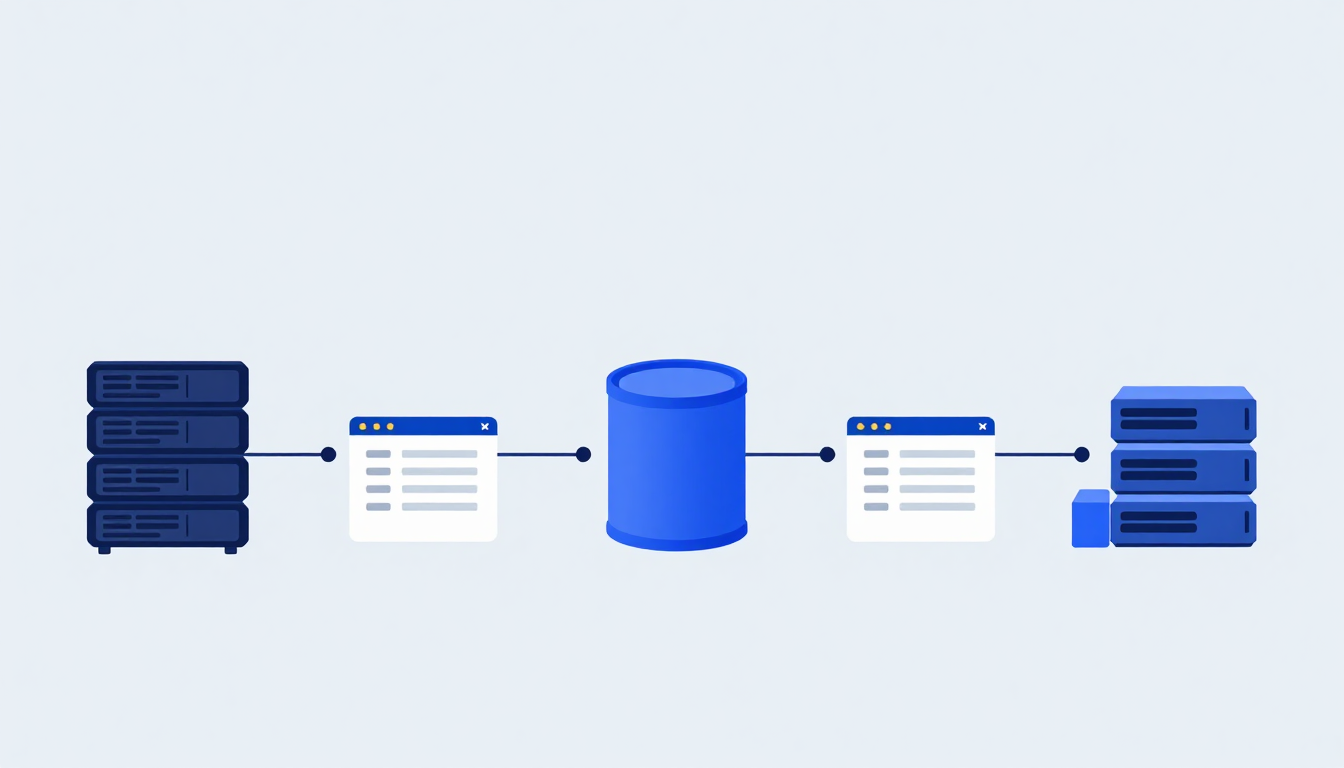
The core innovation of the Agent-as-a-Router framework is reframing model routing as an iterative Context-Action-Feedback (C-A-F) loop. Instead of treating prompt selection as a one-shot classification task, the router operates as an active agent across four continuous phases:
- Context Phase: Upon receiving a task prompt along with metadata like language or task type, the router searches its internal memory for historical execution traces of similar problems.
- Action Phase: Combining the incoming prompt with retrieved historical memory, the system selects the target model best suited for the specific task profile.
- Feedback Phase: The selected model generates its output, which is immediately sent to an execution environment—such as a Python sandbox, database engine, or unit test runner.
- Update Phase: The execution outcome (success, compiler crash, or test failure) is parsed into a structured feedback signal and written back into memory to refine future routing decisions.
Consider an enterprise data team running automated SQL generation. The router sends an ambiguous query to a lightweight model. The query fails against the database engine with a missing column error. The C-A-F loop captures the schema execution error, logs the failure signal, and updates its memory. When a similar query arrives seconds later, the router reads the context and routes the job to an advanced model like Claude Opus 4.8.
Breaking Down ACRouter Architecture
The reference open-source implementation, ACRouter, splits this agentic routing loop across three main modules supported by a physical execution tool layer:
- The Memory Module: Built on a dynamic vector repository, Memory maintains task embeddings alongside their historical execution results across different LLMs.
- The Orchestrator: The decision engine that processes input prompts and retrieved memory records. Rather than running a massive LLM for routing decisions, the researchers trained a sub-billion parameter Qwen 3.5 adapter (0.8B parameters) using LoRA. It runs locally with negligible latency overhead.
- The Verifier: Evaluates output validity by interfacing with runtime execution tools. It converts stdout, exit codes, and test assertions into clear binary or scalar feedback signals.
The tool layer provides the physical execution boundary, connecting the Verifier directly to isolated sandboxes, database engines, or command-line wrappers like Claude Code Router and cc-switch.
CodeRouterBench and Real-World Performance
To evaluate execution-grounded routing, the authors created CodeRouterBench, a benchmark suite containing roughly 10,000 task instances paired with verified execution outputs from 8 frontier models. The evaluation spans both in-distribution (ID) task streams and out-of-distribution (OOD) agentic programming workloads requiring multi-step planning, file tree navigation, and test debugging.
Across both ID and OOD evaluation sets, ACRouter demonstrated the lowest cumulative regret—a metric measuring total performance loss relative to an oracle that always picks the single best model per prompt.
On the in-distribution test stream, always defaulting to Claude Opus cost $34.02 across the test suite. ACRouter achieved equivalent overall benchmark accuracy for $13.21, representing a 2.6x cost reduction. On out-of-distribution agentic benchmarks (such as OOD176), ACRouter successfully adapted to novel coding patterns without needing offline fine-tuning, maintaining high success rates while steering routine coding steps toward cheaper endpoints.
The Economics of Execution-Grounded Routing
For platform engineers building multi-agent systems, ACRouter shifts model cost optimization from manual prompt tuning to automated infrastructure feedback.
| Routing Approach | Execution Grounding | Out-of-Distribution Handling | Relative Cost Scale |
|---|---|---|---|
| Manual Heuristics | None (Static rules) | Poor (Breaks on schema/prompt shift) | Baseline |
| Static Classifiers | None (Prompt embeddings only) | Fragile (Requires retrain on model churn) | Moderate |
| Opus Defaulting | None (Over-provisioned) | High (Expensive safety net) | 2.6x Baseline |
| ACRouter (C-A-F Loop) | Continuous (Compiler & sandbox feedback) | Adaptive (Learns from execution signals) | Optimal (Pareto Frontier) |
By positioning model selection along the Pareto frontier of performance and cost, teams can maintain frontier accuracy without over-allocating token budgets across high-volume developer workloads.
Operational Limits and Adoption Guidance
Despite its performance gains, execution-grounded routing isn't a universal drop-in replacement for every LLM integration. Engineering leaders evaluating ACRouter should consider key operational constraints:
- Verifiable Tasks Required: ACRouter relies on definitive execution signals. It performs exceptionally well on deterministic tasks like software engineering, SQL generation, and schema parsing where compilers and unit tests provide binary pass/fail feedback.
- Subjective Task Constraints: For open-ended creative writing, marketing copy, or unstructured summarization, standardized verifiers don't exist. Without objective feedback signals, the C-A-F loop can't reliably update memory.
- Infrastructure Overhead: Running an execution loop requires maintaining sandboxed runners, verifier tools, and a vector memory store. For low-volume applications, the operational complexity may outweigh potential token cost savings.
The ACRouter codebase is released under the open-source MIT license, while the orchestrator model weights are available on Hugging Face under Apache 2.0. With native support for tools like Claude Code, Codex, and OpenCode, teams can integrate execution-based routing directly into existing CLI pipelines and gateway proxies to bring empirical rigour to enterprise AI inference spend.