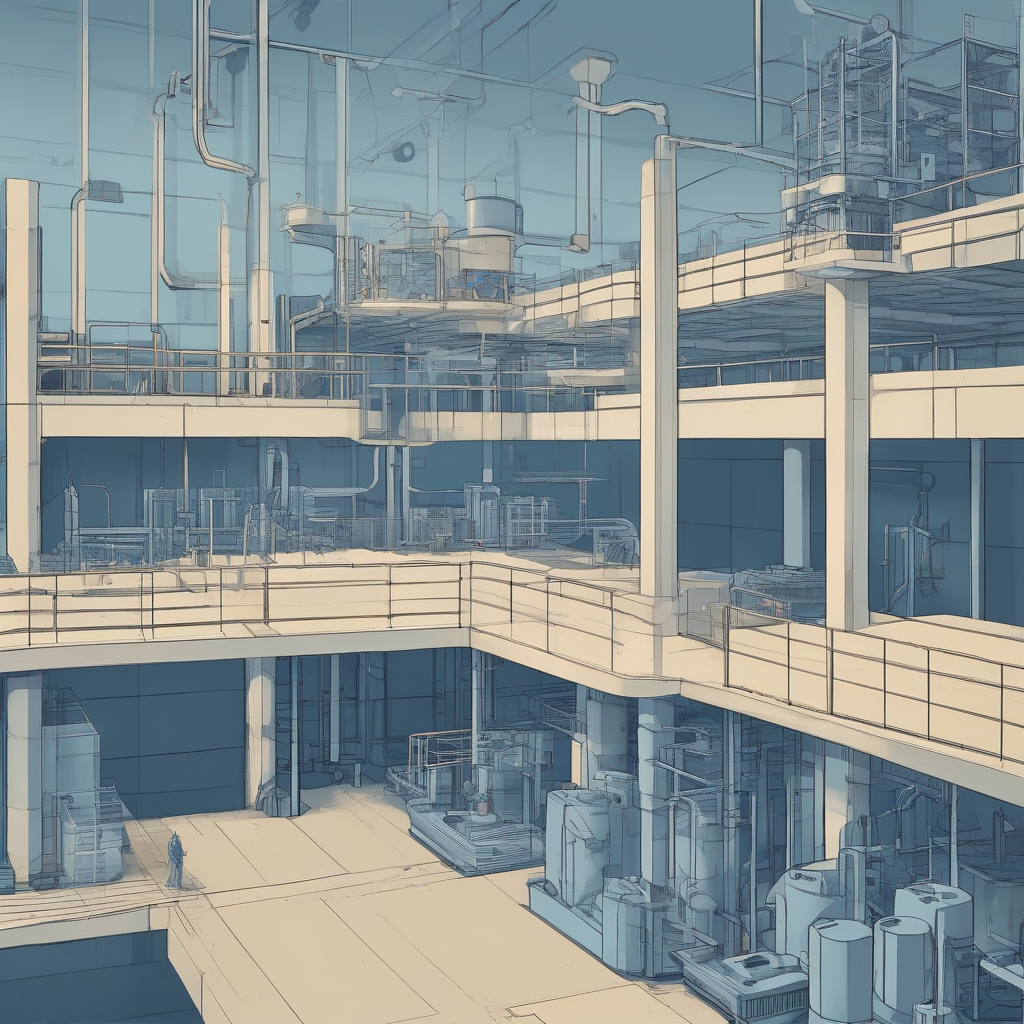
Britain is reaching for the stars of AI supremacy. The UK government’s AI Opportunities Action Plan is ambitious, aiming to establish specialized "AI Growth Zones" and triple the nation's data center capacity by 2030. It’s a massive industrial pivot, one that promises to put the UK at the center of the global AI compute explosion.
There is, however, a massive, quiet problem running through the bedrock of these blueprints: water.
Despite these grand designs for compute expansion, official water planning forecasts for England have explicitly sidelined data centers. They simply aren’t in the calculations. This oversight, highlighted by Water UK in recent evidence submitted to a parliamentary committee, exposes a dangerous disconnect between the government's industrial policy and the physical realities of the UK’s water infrastructure.
The Missing Metric in the Government's Blueprint
The urgency of this mismatch is hard to overstate. Data centers are, by their nature, thirsty. Whether they’re training large language models or running inference engines, the machines generate heat—a lot of it. And when you decide to triple capacity, that heat must go somewhere.
For years, the industry’s default solution for cooling these massive server farms has been evaporative cooling. It’s effective, it’s relatively cheap to implement, and, crucially, it saves electricity. In a country where energy prices have been high and volatile, the incentive for operators to switch from power-intensive mechanical cooling to water-intensive evaporative cooling is immense. By saving on electricity costs, these facilities effectively pass the cost onto the local water supply and infrastructure.
Yet, despite this clear operational incentive structure, the government’s planning for water resources hasn't kept pace. The official forecasts for England’s future water needs are working from a script that doesn’t account for this coming surge in AI-driven demand. We’re building massive compute clusters as if they will run on air, ignoring the reality of the cooling systems required to keep them from melting.
Regional Scarcity vs. Cluster Concentration
The collision between ambition and reality is already happening, not just in theory, but on the map. The UK’s data center map is not evenly distributed; it’s highly concentrated, particularly in and around London. Slough, for example, is home to as many as 35 massive facilities.
This regional concentration creates intense competition for local infrastructure that is already under stress. The UK pipeline for new data center projects is nearly double that of any other European country, and these projects are being pushed into areas where water is already precious.
In regions like East Anglia and parts of Essex, the situation has moved past the planning stage and into crisis. The Environment Agency has already effective imposed a moratorium on business expansion in these areas due to severe water constraints—there simply isn’t enough excess capacity to support new, resource-demanding industries.
When official planning ignores the water consumption of the very facilities it is trying to promote, it sets up a situation where the government’s AI Growth Zones may find themselves without the resources they need to operate, creating regulatory and environmental friction that could have been foreseen and mitigated.
The Governance Void and the Call for Reform
Part of the issue is a total absence of visibility. Unlike many other metrics in the data center industry, there is no mandatory reporting requirement for water usage in the UK. This creates a data vacuum that makes it nearly impossible to have a rational, evidence-based conversation about the environmental footprint of these facilities.
The Water Research Centre estimates that English facilities consume approximately 1.9 billion liters of water annually, but that is, at best, an informed guess—not a precise figure driven by regulatory compliance.
Water UK has been clear about what needs to change. They are urging ministers to take a series of firm, corrective actions:
- Fast-track infrastructure: Accelerate the construction of new water supplies, including reservoirs, to better cope with future demand.
- Enforce efficiency: Mandate minimum water efficiency standards for new and existing server farms.
- Mandate non-potable use: Require operators to use non-potable or recycled sources for cooling, rather than tying up precious clean water supplies.
- Implement 'user-pays' principles: Ensure that the large tech companies driving this surge cover the costs of required infrastructure upgrades, rather than forcing the burdens onto local domestic taxpayers.
The Necessity of Integrated Planning
We are at a tipping point. The global acceleration of AI workloads is demanding unprecedented compute infrastructure, and it is placing a strain on municipal water systems and power grids worldwide. If Britain want to be an AI superpower, that strategy cannot be built on the back of an unmanaged, resource-draining approach.
The current approach, which treats industrial growth and water management as two separate, isolated buckets, is no longer tenable. Data center operators, municipal planners, and governmental policymakers must be aligned. This means acknowledging the reality of water as a core input for AI computing, not an externality that can be addressed later.
Only by integrating water-related impacts into the earliest stages of planning—rather than scrambling to manage shortages as they occur—can the UK hope to sustain its AI ambitions without inadvertently undermining its own long-term environmental and infrastructure stability.
Sources
- Britain Isn't Considering Datacenter's Thirst For Water In Its AI Superpower Ambitions (The Register)
- The Register - Datacenter Tag
- Datacenter Dynamics