
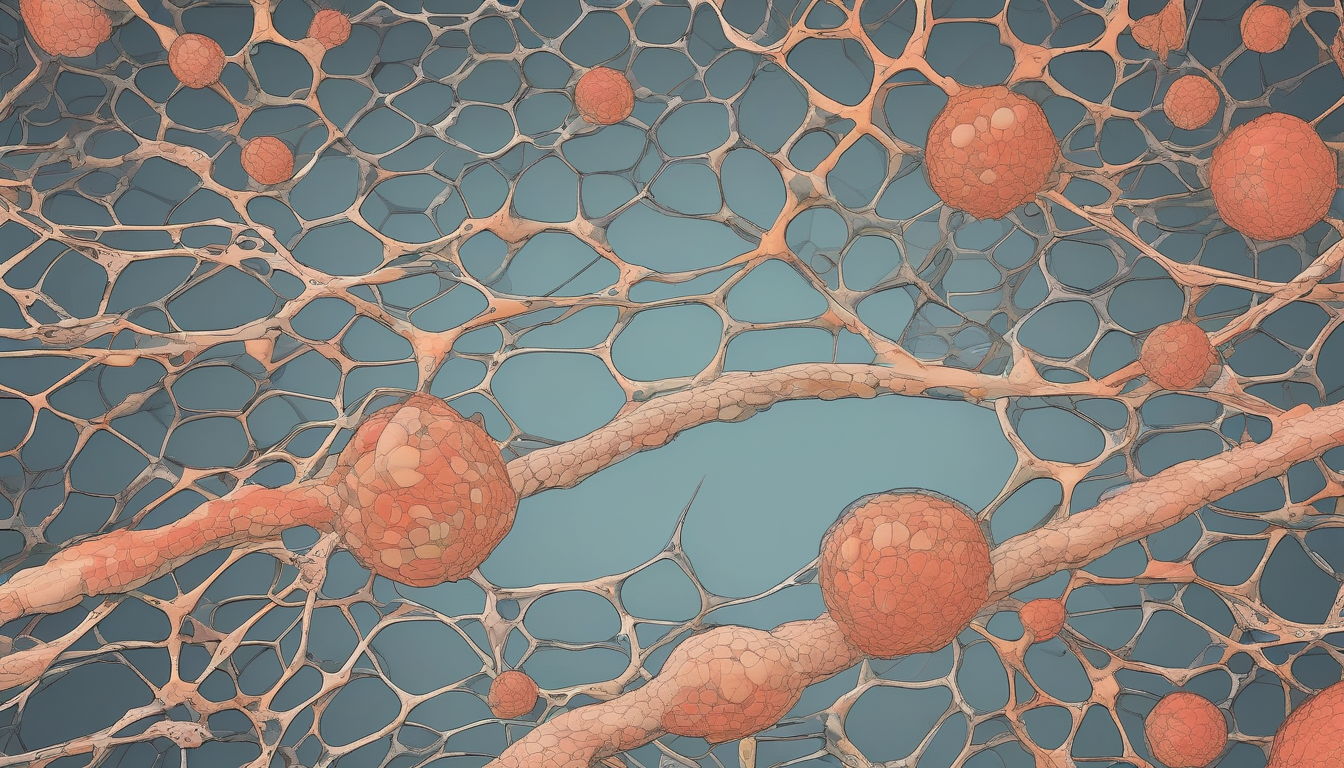
The Promise That Keeps Stalling
Here's the thing about artificial cells: they work. Sort of. You can build a droplet from fatty acids, slap an osmotic stress on it, and watch it pinch in half. Two rounds? Sure. Three? Maybe. Then it just... stops.
That's the story Kurihara and Nakamura told in their 2017 Nature Chemistry paper, and it's become a defining moment for synthetic biology. Not because the results were disappointing, but because they were so honest about what we're missing.
The artificial cells they built from oleic acid droplets could divide when exposed to water dilution. The osmotic shock would swell the droplet, stretch the membrane, and trigger a clean split. Beautiful in principle. Terrible in practice—because each division required fresh fatty acid material added by the researchers. No hand-feeding, no second act.
That's the gap we're still trying to close.
How the Droplets Actually Divide
The setup is deceptively simple. You take oleic acid molecules—long chains with a fatty acid head and a hydrophobic tail—and let them self-assemble into droplets in water. The molecules arrange themselves with heads facing outward toward the aqueous environment and tails tucked inside. Classic amphiphilic behavior.
Then you introduce osmotic stress. Drop the external solute concentration, and water rushes into the droplet. It swells. The membrane stretches. Eventually it gets so taut that it pinches in the middle and splits into two smaller droplets.
The researchers watched this happen. Multiple times, if they kept adding fresh oleic acid to the system. Each generation of daughter droplets could divide again, but only because the researchers were constantly replenishing the fuel.
It's like watching a fire burn. Impressive until you realize someone keeps throwing logs on it.
The Material Problem
Here's where the story gets frustrating. Every time those droplets divided, they distributed their fatty acid content between two daughters. Smaller droplets mean higher curvature stress on the membrane. Less stable. More prone to falling apart.
After two or three rounds, the system ran out of usable material. The droplets got too small. The membranes became too strained. Division stopped.
The researchers had to add more oleic acid from the outside just to keep the cycle going. And even then, each division produced smaller and less robust daughters. The system was leaking complexity faster than they could replace it.
Real cells don't work this way. Your cells synthesize their own membrane components. They regulate size through internal feedback loops. They don't need a scientist pipetting fresh lipids into the petri dish every few hours.
That's the difference between something that mimics life and something that actually is alive. One needs constant external input. The other generates its own sustainability.
Why This Matters More Than You'd Think
You might be reading this and thinking: so what? We've built artificial cells that divide. That's huge.
But the limitation reveals something fundamental about what life actually requires. It's not just about replication. It's about self-sustaining replication. The ability to maintain the machinery that maintains itself.
This is the boundary between chemistry and biology, and we're still fumbling across it. The Kurihara-Nakamura system sits firmly on the chemistry side. It's elegant, it's reproducible, and it's fundamentally dependent on external resource input.
Real cells solve this through metabolism. They break down nutrients, generate energy, and use that energy to rebuild their components. The artificial cells had no equivalent. No way to scavenge materials from the environment and convert them into membrane components.
Until we close that gap, we're building things that look like cells but function more like soap bubbles—impressive until the physics catches up.
What Comes Next
The field hasn't given up. Other groups have built systems with different division mechanisms—cytoskeleton-inspired contractile rings, phase-separated droplets that pinch via internal dynamics, lipid vesicles with embedded protein machinery.
Some of these show more promise for self-sustenance. The 2024 Nature Communications work from Schwille's group combined actomyosin rings with bacterial Min protein systems to achieve more spatially controlled division. Still required external components, but the autonomy was incrementally better.
The question isn't whether artificial cells can divide. We've proven that. The question is whether they can divide themselves—without us holding the bottle of fatty acids.
That's the hurdle. And honestly? We're not there yet.
The Bigger Picture
This limitation matters beyond academic curiosity. If we ever want to build synthetic organisms for drug delivery, environmental remediation, or computational purposes, they need to be self-sustaining. You can't deploy a therapeutic cell that requires constant external feeding.
The Kurihara-Nakamura system was a proof of concept. It showed us the path forward and the obstacles in our way. The division mechanism works. The material sustainability doesn't.
That's progress, but it's incomplete progress. We've mapped the territory. Now we need to cross it.
The artificial cells divide. Then they starve. Until we figure out how to feed them from the inside, that's the story.