Beyond the Terminal: Why Cognition Bought Poke
The honeymoon phase of AI coding assistants—where the developer is satisfied just by raw syntax generation—is ending. When agents capable of autonomous pull requests and terminal execution hit the scene, the industry fixated on benchmark scores and raw problem-solving accuracy. But after months of throwing increasingly complex, ambiguous tasks at autonomous agents, engineers hit a wall. Running commands in isolation gets tiresome fast when the tool behaves like a rigid, robotic box instead of a partner.
Software development isn’t just about typing code into an editor. It’s an inherently collaborative, back-and-forth process. It requires debate, trade-off analysis, rapid status updates, and occasionally blowing off steam when a release pipeline breaks on a Friday afternoon. Cognition realized that building a truly effective coding partner requires more than raw benchmark scores. It requires an agent that feels like a colleague.
That is the driving force behind Cognition’s acquisition of The Interaction Company of California, the team behind the viral messaging assistant Poke, in a deal valued in the low nine figures. When foundational AI models inevitably converge on performance, interface and interaction design become the main competitive moats. A developer might tolerate a dry command-line tool for a quick script, but relying on an autonomous agent to handle complex codebase refactors requires genuine trust.
The Nine-Figure Bet on Chatbot Personality
Poke launched in March 2026 with a simple proposition: what if an AI assistant communicated the way your friends do? Instead of responding with the predictable, bulleted corporate prose common in today’s LLM-powered interfaces, Poke used humor, informal phrasing, and casual conversational rhythms. Users interacted with the assistant across everyday chat platforms, including iMessage, SMS, Telegram, and WhatsApp.
The strategy yielded remarkable user engagement metrics. Over just a three-month span, users exchanged more than 100 million messages with Poke. While users utilized the assistant for varied tasks—including travel, health, finance, and scheduling—Poke’s conversational flair was a key differentiator.
Interestingly, Cognition co-founders Scott Wu and Walden Yan were early angel investors in the company behind Poke, giving them a front-row seat to its interaction model. They saw early on that Poke had solved something traditional chat interfaces struggled with: friction. As Interaction Company co-founder Marvin von Hagen noted, engineers prefer collaborating with teammates who have a real personality rather than dry robots. By integrating Poke’s conversational capabilities, Cognition is shifting to humanize an agent that previously felt purely transactional.
Fixing Devin’s Single-Task Bottleneck
This deal serves a purpose far beyond giving Devin a friendlier demeanor. It addresses fundamental architectural limitations in how autonomous coding agents operate today.
Currently, Devin is largely task-bound. You hand it an issue, it iterates through the problem, and reports back. If you need it to monitor long-running CI/CD pipelines while simultaneously refactoring legacy code in a different module, the system often struggles. Devin lacks the orchestration and long-term memory required to manage concurrent project tracks, a bottleneck common in current agentic development workflows.
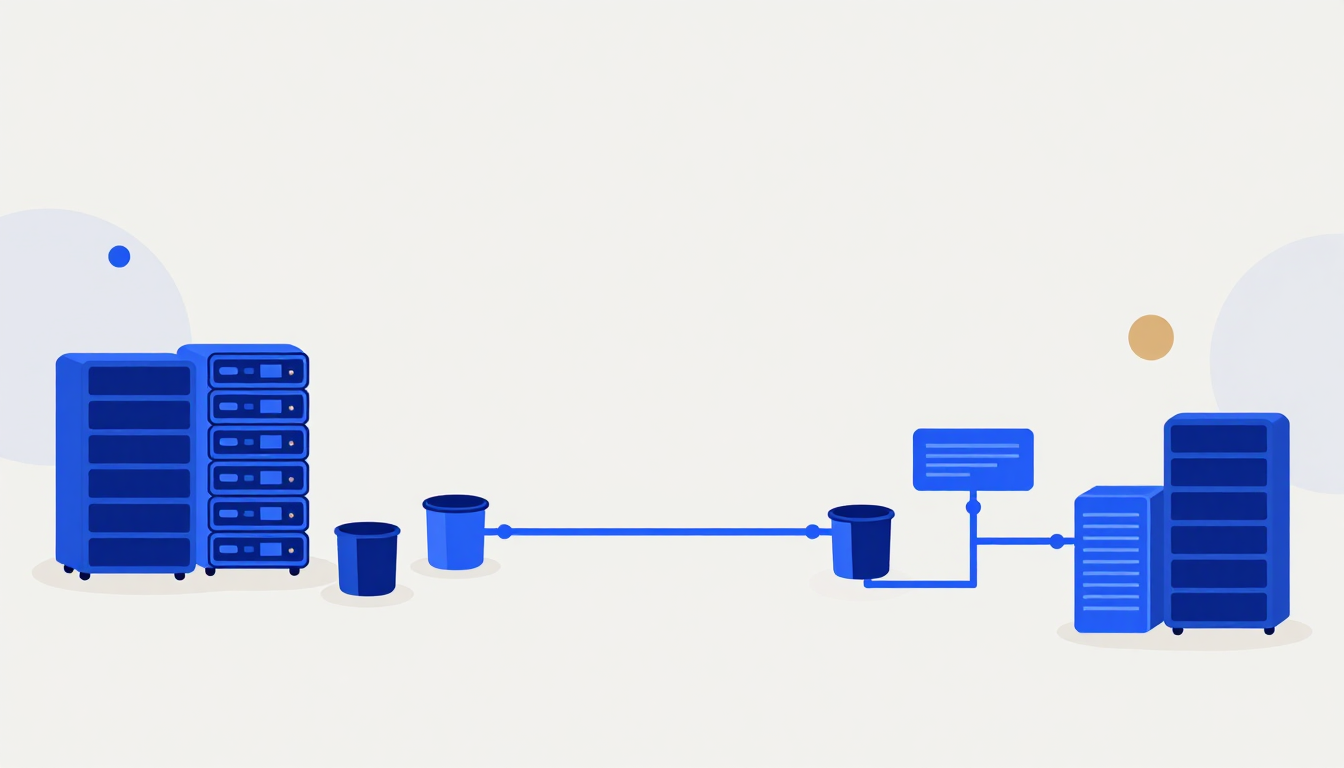
Poke’s native architecture offers a roadmap to address this. Von Hagen highlighted that Poke could eventually serve as an orchestration layer sitting atop multiple Devin instances. Instead of spinning up isolated, context-blind terminal sessions, a developer could essentially text a single Poke-powered manager, which then coordinates parallel Devin sessions in the background. Poke maintains necessary cross-session context, remembers project-specific quirks, and delivers proactive updates. This evolution shifts Devin from a single-shot execution script to a persistent digital co-worker that understands your entire repository history.
The Economics of Messaging-First AI
Despite Poke's explosive user growth, running a consumer-facing AI assistant on high-frequency messaging rails comes with brutal unit economics. Processing tens of millions of chat messages daily requires massive compute resources, making standalone profitability a challenging hurdle before the acquisition.
However, Poke achieved critical distribution milestones prior to being absorbed by Cognition. In June 2026, it became the first AI agent approved to operate on Apple’s Messages for Business platform. That approval provided Poke native access to Apple’s ecosystem, letting users text the assistant directly within Apple Messages alongside commercial business conversations.
Acquisition by Cognition essentially settles Poke’s operational overhead and long-term funding concerns. Cognition provides the venture backing, top-tier compute allocation, and advanced internal model stacks needed to scale the service. For Poke, merging with Cognition enables continued development without needing to impose aggressive monetization tactics into everyday consumer text threads.
The Roadmap: From 2027 and Beyond
Cognition isn't rushing to pull the plug on Poke. Through the remainder of 2026, Poke will remain fully operational across its existing messaging channels, including Apple Messages for Business. Current users will experience no immediate disruption in how they interact with the assistant.
The significant transition points occur in 2027. Cognition plans to experiment by replacing Poke's backend infrastructure with its flagship SWE-1.7 software engineering model. This upgrade aims to improve Poke's speed, factual accuracy, and task-handling depth.
Longer term, the boundary between the Poke assistant and Devin will likely continue to blur. Cognition is betting that conversational personality and deep software engineering execution belong within the same product experience. If AI coding assistants are to become substantive contributors in the software engineering pipeline, they can no longer be seen as passive tools. They must become active teammates, accessible through the same intuitive, low-latency interfaces developers use to talk to each other within modern agentic AI infrastructure.