Putting Autonomous Agents in the Same Channel as Humans
Slack was built for people typing messages to each other. It works fine for human conversation, but modern engineering teams don't just chat with humans anymore. They run autonomous software agents that generate code, run infrastructure checks, and execute deployments. Plugging those agents into Slack usually means dealing with clunky webhooks, noisy notification channels, or bot integrations that feel bolted on after the fact.
That friction is what drove Twitter and Block co-founder Jack Dorsey to announce Buzz, a new workplace group chat platform developed by Block. Rather than treating synthetic workers as background scripts that occasionally post a message, Buzz places human team members and AI agents inside the exact same chat channels as equal participants.
The goal isn't just another chat client. Block—which also operates Square, Cash App, Afterpay, and Tidal—built Buzz to rethink how teams collaborate as the agentic shift reshapes modern offices. When software workers take on multi-step execution, having them hidden behind separate terminal windows or buried in third-party dashboards slows everyone down. Bringing them directly into team conversations makes their decisions visible to everyone in real time.
Core Technical Pillars: Open-Source, Model-Agnostic, and Self-Sovereign
Dorsey summarized the platform's core architecture in four distinct attributes: model-agnostic, decentralized, self-sovereign, and open-source. Each of these design choices targets a specific pain point that enterprise teams face with centralized SaaS platforms.
Being model-agnostic means organizations aren't locked into a single LLM vendor. A team can run lightweight open-source models for quick triage while delegating complex reasoning to high-parameter commercial models in the same thread. Self-sovereignty and decentralization go a step further. Instead of handing company conversations and proprietary prompt histories over to a centralized cloud provider, organizations retain complete ownership of their data nodes and network traffic.
Block has already released free desktop applications for macOS, Windows, and Linux, and uploaded the codebase to GitHub. Because the platform is fully open-source, engineering teams aren't forced to wait for vendor feature roadmaps. If an enterprise needs specialized compliance filters, custom protocol extensions, or internal telemetry hooks, they can fork the repository and deploy those changes directly to their self-hosted instances.
Merging Code Management and Real-Time Chat
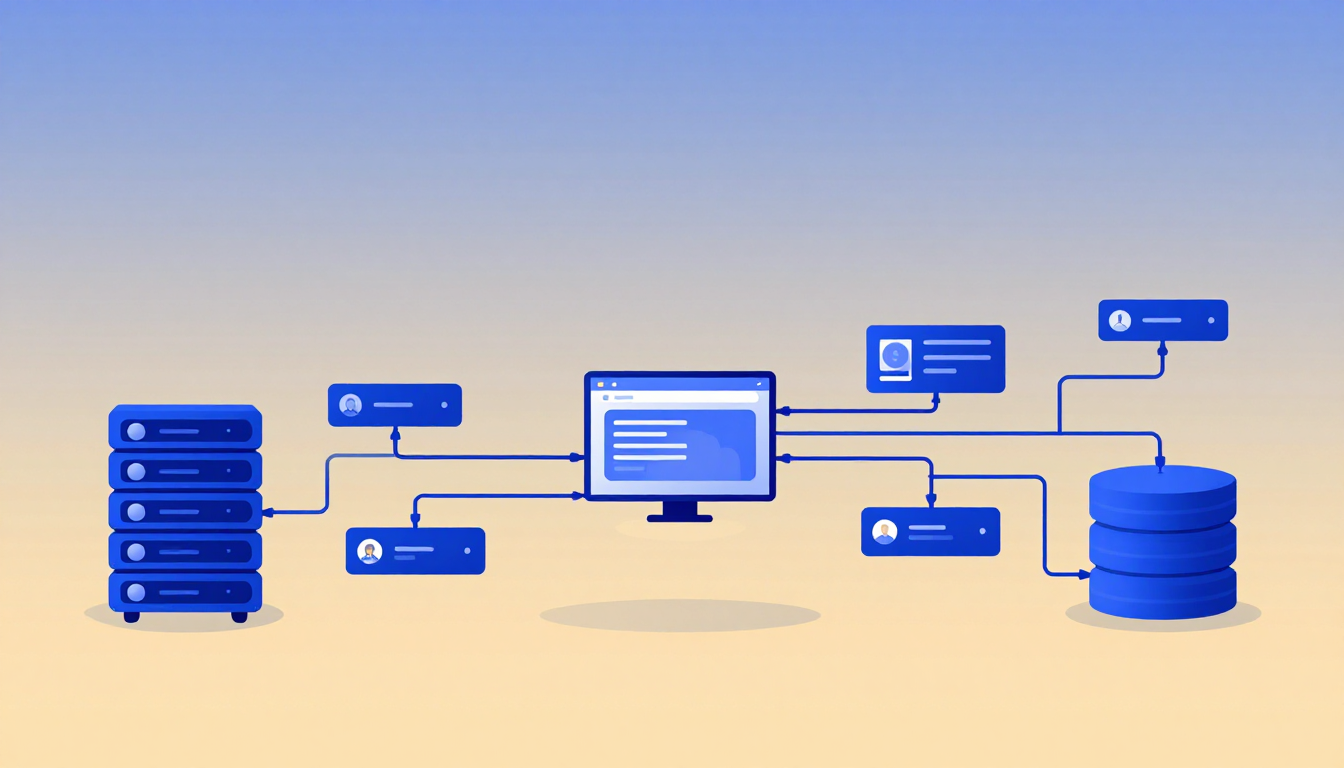
Traditional software development relies on a fractured workflow. Developers discuss features in Slack, manage issues on GitHub, and monitor build pipelines across separate browser tabs. Buzz aims to collapse that separation into a unified workspace.
In a typical engineering team today, an engineer might prompt an agent to refactor a service or fix a failing unit test. Without a unified interface, tracking what that agent changed requires bouncing between pull requests and chat threads. Buzz integrates project management and repository updates directly alongside team chatter.
This structural shift alters how human engineers supervise automated actions. When an agent opens a pull request or updates a task status, that action occurs right inside the group discussion. Teammates can review code modifications, debate implementation details, and issue approval commands without context-switching. For teams running dozens of autonomous tasks concurrently, eliminating that back-and-forth friction saves dozens of engineering hours every week.
Open Ecosystem vs. Enclosed Agent Frameworks
Block isn't alone in recognizing that legacy enterprise chat fails autonomous workers. Other technologists are pushing competing approaches to integrate synthetic teammates into existing corporate infrastructure.
For instance, Paradigm CTO Georgios Konstantopoulos recently launched Centaur, an open-source "virtual employee" system designed to run inside Slack or connect through an API. Centaur focuses on giving existing Slack setups AI capabilities without forcing teams to migrate to a new chat client. Konstantopoulos noted that enterprise environments demand self-hosted setups for security and control, but argued that keeping tools inside Slack minimizes adoption friction for non-technical staff.
Buzz takes the opposite bet. Block's team argues that legacy platforms carry too much technical debt to support agent-native workflows effectively. Instead of forcing agents to fit inside Slack's legacy architecture, Buzz rebuilds the client ground-up around decentralized protocols. It's a riskier strategy because changing workplace tools is notoriously hard, but it provides far more freedom for deep protocol-level integration between humans and software agents.
Governance and Security: The Next Frontier
As Buzz pushes the boundary of putting agents and humans in the same channel, it raises the same governance questions that companies like Rubrik are tackling with their Semantic AI Governance Engine. Rubrik's SAGE system judges every agent action in real time using semantic intent analysis rather than rigid allow-and-deny lists — a model that may become essential as platforms like Buzz scale into enterprise environments where credential sharing and unauthorized agent actions pose serious risks. See The AI That Judges AI Agents Has No Scorecard for a deep dive into how Rubrik is building enforcement mechanisms for autonomous agent behavior.
Early-Stage Realities and What Infrastructures Require Next
Despite its ambitious goals, Buzz remains in its early stages. Block itself acknowledges that the platform is far from a turnkey replacement for established enterprise communications suites.
Migrating an enterprise stack requires more than just compiling desktop apps. Organizations rely on rich compliance archives, granular access permissions, single sign-on integrations, and enterprise-grade reliability. Early adopters will likely be smaller, agile engineering teams and AI-native startups that haven't yet locked themselves into rigid Slack or Microsoft Teams enterprise agreements.
Security considerations will also dictate how quickly enterprise IT departments take the leap. When human workers and autonomous agents share equal access to chat controls, access delegation and identity management become essential. IT managers need ironclad guarantees that an agent won't leak sensitive credentials or execute unauthorized system commands during a conversation.
Still, the arrival of Buzz signals a clear direction for workplace software. Chat interfaces are evolving from simple message boards into interactive operational centers. As AI agents move from experimental sidekicks to core engineering contributors, platforms built specifically to host that hybrid workforce will define how modern software gets built.